

Tropic of Cancer
The clearest ancestor of Miller’s hungry, humiliated writer wandering a city.
Read our take
by Knut Hamsun
Knut Hamsun’s feverish portrait of a penniless young writer walking Kristiania while hunger dismantles his reason and pride.
A nearly penniless writer wanders Kristiania trying to preserve his dignity while hunger makes his thinking increasingly irrational. The novel turns deprivation, artistic obsession, pride, and humiliation into an intensely modern interior voice.
A nameless young writer wanders Kristiania, the city now called Oslo, with almost no money and very little food. He is proud, intelligent, funny, irrational, and increasingly unstable. He pawns his clothes, invents excuses, rejects help, gives away money he needs, and keeps convincing himself that one good article will rescue him. It rarely does.[1]
The novel has very little conventional plot. Its real drama is what starvation does to the narrator’s mind. Hunger sharpens his senses and wrecks his judgment at the same time. He can become euphoric over a phrase, furious at a stranger, ashamed of accepting charity, or convinced that some private gesture proves his moral greatness. The result is absurd, manic, humiliating, and often very funny.[1]
Hamsun wanted to describe the mind’s unpredictable activity rather than write a social problem novel with a tidy lesson. That is why Hunger still feels modern. The narrator is not simply a victim of poverty. He is also his own worst enemy, and the book follows the wild reasoning that makes him worsen his situation again and again.[1]
The narrator begins the novel already poor and hungry. He rents a room he can barely afford and tries to support himself by writing newspaper articles. A successful piece brings temporary relief, but most of his work is rejected or pays too little to matter. He pawns possessions, skips meals, and walks the streets for hours because he has nowhere else to be.[1]
His pride makes survival harder. He refuses assistance when it is offered, invents elaborate lies to strangers, and sometimes gives away money he desperately needs because he wants to prove that he does not cling to money. He protects an image of independence even while his body is failing.[1]
During one walk, he notices a young woman and impulsively gives her the invented name Ylajali. Their encounters become a source of fantasy and excitement. When they finally spend time together in private, he wants intimacy but feels ashamed of his poverty and erratic behavior. The relationship never becomes a stable refuge.[1]
Hunger increasingly distorts his perception. He talks to himself, grows suspicious, experiences bursts of grandiosity, and becomes fixated on trivial details. He also has suicidal thoughts. He tries to write an ambitious philosophical piece while physically unable to concentrate. At other points he chews wood shavings or considers eating things that are not food.[1]
He moves from lodging to lodging as debts accumulate. Even when small sums of money arrive, he cannot stabilize his life because pride, impulse, and chance keep undoing him. Near the end, after another period of desperation, he sees a ship preparing to leave the city and asks for work aboard it despite having little relevant experience.[1]
The narrator is taken on as a crew member on a ship bound for England. There is no grand recovery, reconciliation, or artistic triumph. He simply leaves Kristiania because staying has become unbearable.
Hamsun refuses to convert suffering into a moral reward. The narrator has not learned how to manage money, accept help, or behave rationally. He has survived one stretch of hunger and found a way to move on.
The ship gives the ending motion rather than resolution. The narrator is not cured. He is temporarily released from the city and the cycle that has consumed him.
The narrator’s pride is not a noble defense of dignity. It repeatedly becomes absurd. He would rather go hungry than admit need, and he often turns small acts of self-sabotage into evidence of moral superiority.
In the opening street encounter, the narrator pawns his waistcoat so that he can give money to a man who has asked for help. Yet the gift becomes a quarrel when he thinks the recipient is inspecting his worn trousers. What offends him is the possibility of being recognized as another poor man. His generosity needs an audience that confirms his imagined prosperity. Hamsun lets the act of helping expose the dependence on other people's judgment that the narrator wants to deny.
Starvation changes the way the narrator thinks. Hamsun makes bodily deprivation inseparable from imagination, language, paranoia, humor, and madness. The book is interested less in poverty as an abstract subject than in what an empty stomach does to a mind.
The narrator believes writing can save him materially and justify him spiritually. His faith in his own talent survives almost everything, which makes his ambition both moving and ridiculous.
In Part I, a little pencil stops a grand philosophical undertaking. The narrator has eaten and feels ready to challenge major thinkers, but his pencil is still in his pawned waistcoat. When he returns for it, the unwritten article has become a completed three-volume achievement in the story he tells the pawnbroker. The leap is comic, but it also separates two kinds of authorship: he cannot yet produce the article that might earn a meal, while effortlessly producing the celebrated author he wants a stranger to see.
He invents names, stories, identities, and explanations constantly. Some lies are strategic. Others seem to exist because his mind wants to create. Writing and deception become uncomfortable neighbors.
The narrator often stages moral tests that nobody else recognizes. He then treats his own invented rules as proof that he is generous, independent, or unfairly treated.
Kristiania is full of editors, landlords, police, shopkeepers, and strangers who may help or humiliate him. The city is not a romantic backdrop. It is the setting in which his pride repeatedly turns ordinary encounters into crises.
Many scenes are funny because the narrator responds to ordinary problems with wildly disproportionate logic. Hamsun lets tragedy and comedy occupy the same paragraph.
Hamsun writes in a close first-person voice that can turn from lucid observation to manic self-argument almost instantly. The prose follows thought rather than orderly explanation. A small embarrassment can expand into pages of paranoia, while a moment of confidence can make the narrator feel almost invincible.
That instability gives the book much of its energy. Hunger is bleak, but it is not slow or solemn. The narrator is wild, absurd, proud, funny, and sometimes nearly delirious. Readers who like Henry Miller or Louis-Ferdinand Céline for the force of a narrator’s personality may respond to Hamsun for the same reason.
The original language is Norwegian. English readers will encounter several translations, and the translator matters because the narrator’s rhythm, abruptness, humor, and shifts of register are central to the book. Sverre Lyngstad’s translation is widely available and aims to preserve Hamsun’s modernist strangeness.
Henning Carlsen directed the 1966 film Hunger, with Per Oscarsson as the starving writer. The film is highly regarded, but it must show mental states that the novel presents through first-person narration.
Its pride, artistic obsession, irrationality, and humiliation established the broke-writer novel decades before Tropic of Cancer.
Hamsun shows how hunger can sharpen observation while damaging judgment, memory, and self-control.
The first-person voice makes humiliation and deprivation unexpectedly quick, strange, and funny.

The unnamed young writer whose hunger, pride, and imagination make survival more difficult.

The young woman whom the narrator first turns into a fantasy and later meets as a real person.

The newspaper editor who sometimes pays for the narrator’s work and offers a legitimate route out of poverty.

The people who rent rooms and beds to the narrator as his money and social standing disappear.

The tradesman who turns the narrator’s dwindling possessions into small amounts of money.
1890
Sult is first published in Norway.
1899
An early English translation by Mary Chavelita Dunne appears.
1966
Henning Carlsen’s film adaptation, starring Per Oscarsson, is released.
1967
Sverre Lyngstad’s English translation is published and later becomes a widely used modern version.
1998
Penguin Classics issues Lyngstad’s translation in a major modern edition.

The clearest ancestor of Miller’s hungry, humiliated writer wandering a city.
Read our take
Another broke writer whose pride and ambition make his material difficulties worse.
Read our take
A nonfiction counterpart focused on the daily mechanics of hunger and poverty.
Read our take
A later, darker descendant of the manic first-person voice.
Read our take
A major precursor in the literature of self-sabotaging consciousness.
Read our take

Another intensely subjective account of alienation and self-destructive performance.
Read our takeIt draws heavily on Knut Hamsun’s years of poverty and failed attempts to establish himself as a writer. The narrator is still a fictional construction rather than a documentary version of Hamsun.
The lack of a name keeps attention on consciousness rather than biography. It also makes his unstable sense of self more pronounced.
No. The narrator invents the name for her before he knows her, which fits his habit of turning reality into private fiction.
He experiences paranoia, irrational impulses, hallucination-like moments, and extreme mood shifts, many intensified by starvation. The novel does not give him a formal diagnosis.
Pride is one of his defining traits. He would rather maintain an image of independence than admit how desperate he is.
Not within the novel. He occasionally sells articles, but he never achieves stable literary success before leaving the city.
Poverty drives the plot, but Hamsun is equally interested in consciousness, pride, imagination, and irrational behavior.
Only cautiously. Leaving the city gives the narrator a possible reset, but the book gives no evidence that his deeper patterns have changed.
Explore authors with a similar voice, perspective, and influence.
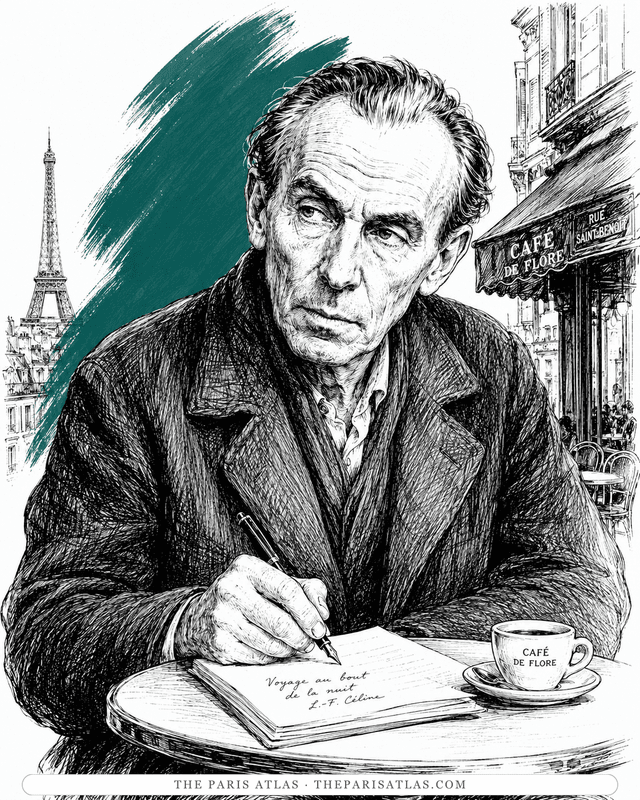
The doctor of the Paris slums who wrote the century's blackest, funniest novel — and changed the sound of French prose.
View author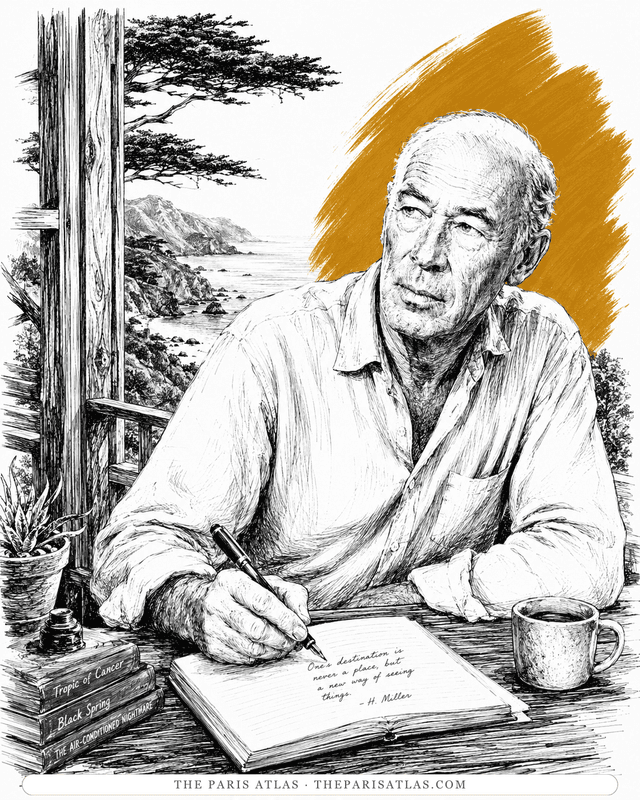
The Brooklyn dropout who arrived in Paris broke at thirty-eight and wrote the exuberant, banned books that ended American censorship.
View author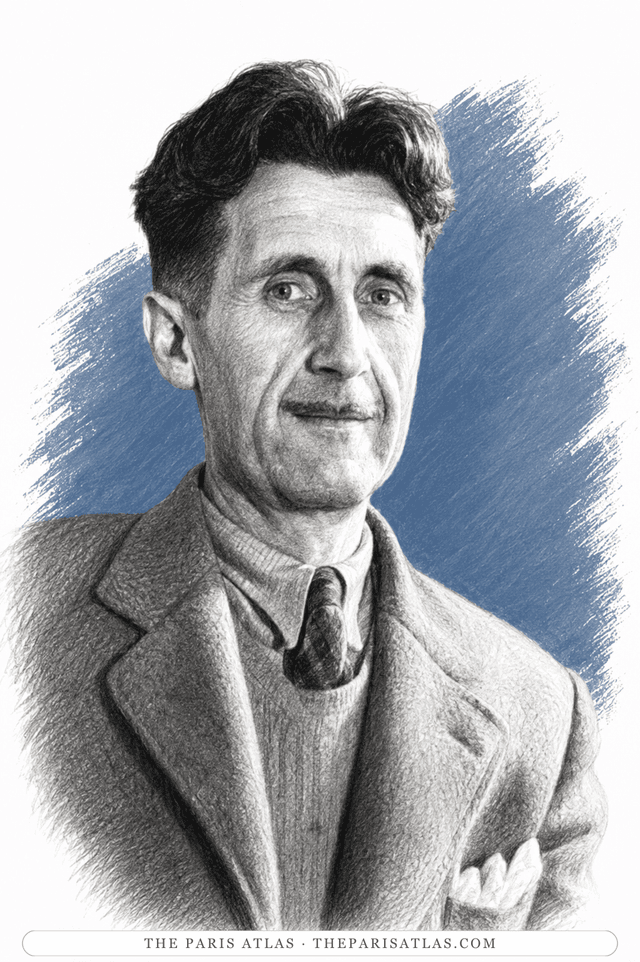
English novelist, essayist and journalist, born Eric Arthur Blair, who wrote Animal Farm and Nineteen Eighty-Four. He was an imperial policeman in Burma, a plongeur in Paris kitchens off the rue Mouffetard, and a militiaman shot through the neck in Spain before any of it.
View authorThe sources below include the primary text, editions, scholarship, archival materials, and other records that informed this page. They document Hunger, its publication, and its place in literary history.


Primary text included as part of the documented record for Hunger.

Publisher record for the Sverre Lyngstad translation, publication history, and Penguin Classics edition.
Biographical context for Hunger’s 1890 breakthrough and literary significance.
National-library record for scholarly work on Hunger and its reception.
The primary text is the baseline reference for every book page. Additional references document publication history, interpretation, and historical context where that evidence is available.
 Explore more resources