The Paris AtlasCharting the artists, works, and places worth returning to.
  • Author
  • Playwright
· American · 1922–2007

Kurt Vonnegut

American novelist whose fiction combines satire, science fiction, and the experience of surviving the bombing of Dresden.

5 books on our shelves

Details

Lived
1922–2007
Born
11 November 1922
Birthplace
Indianapolis, Indiana
Birth name
Kurt Vonnegut Jr.
Died
11 April 2007 · aged 84
Place of death
New York City
Nationality
American
Profession
Novelist, essayist and playwright
Major works
Player Piano, The Sirens of Titan, Mother Night, Cat's Cradle, Slaughterhouse-Five, Breakfast of Champions
Married
Jane Marie Cox · married 1945, divorced 1971Jill Krementz · married 1979 until his death in 2007
Children
Mark Vonnegut, Edith Vonnegut, Nanette Vonnegut, James Adams, Steven Adams, Kurt Adams, Lily Vonnegut
Roles
AuthorPlaywright

About Kurt Vonnegut

American novelist and satirist, the author of Slaughterhouse-Five and Cat's Cradle

Kurt Vonnegut was an American novelist and satirist. He was born in Indianapolis, Indiana, on 11 November 1922 and published fourteen novels, three short-story collections, five plays and five books of nonfiction over fifty years. The best known are Cat's Cradle (1963) and Slaughterhouse-Five (1969).

The fact at the centre of his work is that he was there when Dresden burned. Captured by the German army in December 1944, Vonnegut was held as a prisoner of war in a Dresden slaughterhouse. He survived the Allied firebombing of February 1945 in an underground meat locker, and was put to work digging bodies out of the rubble. It took him more than twenty years to find a way to write about it. The result, Slaughterhouse-Five, told the story through a time-jumping everyman named Billy Pilgrim, went to the top of The New York Times best-seller list, and made him famous.

What he changed was the sound of the serious American novel. Vonnegut wrote about war, machines and death in short, plain, conversational sentences, with jokes, drawings and science-fiction furniture, and he was eventually taken seriously anyway. The New York Times called him the counterculture's novelist. He died in New York City on 11 April 2007, aged 84, of brain injuries from a fall at his home.

Indianapolis, the brewery money, and the Depression, 1922–1940

Kurt Vonnegut Jr. was born in Indianapolis on 11 November 1922, the youngest of three children of Kurt Vonnegut Sr. and Edith Lieber Vonnegut. His father and grandfather were architects whose firm designed prominent Indianapolis buildings, including the German cultural hall now called the Athenaeum. His mother came from one of the wealthiest families in the city, brewers whose fortune ended when Prohibition closed the Lieber brewery in 1921.[1]

Both parents spoke fluent German and taught their son none of it. Hostility toward German Americans during and after the First World War had persuaded them to drop the language, the food and the traditions, and Vonnegut later said the loss left him feeling ignorant and rootless. He credited Ida Young, the African American cook and housekeeper who worked for the family through his first decade, with raising him. He said she gave him decent moral instruction and was as great an influence on him as anybody.

The Great Depression finished what Prohibition had started. Architectural clients disappeared, his father withdrew into what Vonnegut called the life of a dreamy artist, and his mother became depressed and bitter. She took night courses in short-story writing and tried without success to sell stories to Collier's and The Saturday Evening Post. Her son was moved from private school to Public School No. 43.[1]

At Shortridge High School, which he entered in 1936, Vonnegut played clarinet in the band and co-edited the Tuesday edition of the student daily, The Shortridge Echo. Writing for thousands of classmates instead of a single teacher, he discovered the thing he could do easily. He said it just turned out that he could write better than a lot of other people.

Cornell, the Army, and the Battle of the Bulge, 1940–1944

Vonnegut enrolled at Cornell University in 1940. He wanted the humanities, but his father and his older brother Bernard, an atmospheric scientist, pushed him toward a useful discipline, so he majored in biochemistry and did it badly. The part of Cornell he cared about was the student newspaper, The Cornell Daily Sun, where he rose from staff writer to columnist and argued in print against American entry into the Second World War.

Poor grades put him on academic probation in May 1942, and he dropped out the following January. Rather than wait to be drafted, he enlisted in the Army in March 1943. The Army trained him on howitzers, then sent him to study mechanical engineering at the Carnegie Institute of Technology and the University of Tennessee. When that program was cancelled, he was assigned as an infantry scout at Camp Atterbury, close enough to Indianapolis that he slept at home on weekends.

On 14 May 1944, home on leave for Mother's Day, Vonnegut found that his mother had died by suicide the night before, from an overdose of sleeping pills. She had been drinking, and was taking prescription drugs. The family's lost wealth, her failure to sell her writing, and her son's coming deployment have all been named as circumstances behind her death. Three months later he shipped to Europe as an intelligence scout with the 106th Infantry Division.[2]

In December 1944 the division was overrun in the Battle of the Bulge, the last major German offensive of the war. Vonnegut was captured on 22 December with about fifty other American soldiers. The prisoners were moved east in boxcars; en route, British aircraft mistakenly attacked the trains, killing about 150 of the men inside. The survivors were delivered to Dresden.[3]

Dresden and the meat locker, 1945

Dresden was the first grand European city Vonnegut had ever seen, and it was essentially undefended. He was quartered in a slaughterhouse and put to work in a factory making malt syrup for pregnant women. Air-raid sirens sounded regularly, but the alarms were always for somewhere else. The city had few shelters and, as he later pointed out, no war industries to speak of, just cigarette factories, hospitals and clarinet factories.

On the night of 13 February 1945, British and American bombers set the city on fire. The raids continued into 15 February, and about 25,000 civilians were killed. Vonnegut survived because his prison building had a meat locker three storeys underground. When the prisoners came up, the city was gone.[4]

It was cool there, with cadavers hanging all around. When we came up the city was gone… They burnt the whole damn town down.[2]

Kurt Vonnegut, on surviving the Dresden firebombing in a meat locker

The Germans put the American prisoners to work digging bodies out of the rubble, an operation Vonnegut described as a terribly elaborate Easter-egg hunt. He was freed in the spring of 1945, reached an American repatriation camp at Le Havre in May, and finished his service at Fort Riley, Kansas, typing discharge papers. Of his decoration he said that he had been awarded his country's second-lowest, a Purple Heart for frostbite.

Chicago, General Electric, and the first novel, 1945–1952

Back in the United States, Vonnegut married Jane Marie Cox, his high-school girlfriend and a classmate since kindergarten, on 1 September 1945. They moved to Chicago, where he studied anthropology at the University of Chicago on the G.I. Bill and worked nights as a police reporter for the City News Bureau. Every thesis idea he proposed was rejected, including one on the shapes of stories, and he left without a degree. Twenty-five years later the university accepted his novel Cat's Cradle in place of a thesis and gave him the master's degree.

In 1947 General Electric hired him as a publicist for its research laboratory in Schenectady, New York, where his brother Bernard was a scientist working on cloud seeding. The job put him inside a company town of engineers and gave him his first novel's material. On 11 February 1950 Collier's published his first story, "Report on the Barnhouse Effect", about a scientist afraid his discovery will become a weapon, and paid him $750.[1]

Vonnegut quit General Electric on 1 January 1951 and moved his family to Cape Cod, Massachusetts, to write full time. Player Piano, published by Scribner's in 1952, imagined an automated America run by corporations, in which machines have replaced the workers and are starting on the managers. The reviews were respectful. But a science-fiction book-club edition and a paperback reissue titled Utopia 14 filed him under science fiction, a label the literary press then held in contempt and one he spent decades arguing with.

Cape Cod, the lean years, and Cat's Cradle, 1952–1965

For most of two decades the writing did not pay. Vonnegut sold short stories to magazines to keep the household running, opened a Saab dealership on Cape Cod in 1957 that went bankrupt within the year, and designed a war board game no publisher would buy. He and Jane had three children, Mark, Edith and Nanette.

In 1958 his sister Alice died of cancer, two days after her husband, James Carmalt Adams, was killed in a commuter-train crash. The Vonneguts took in three of the couple's four sons, James, Steven and Kurt Adams, aged fourteen, eleven and nine, and raised them. A household of six children ran on magazine stories and advances.[2]

The novels of these years found few readers at the time and a large audience later. The Sirens of Titan (1959) sent a bored billionaire through a universe whose whole history turns out to serve an alien errand. Mother Night (1961) followed an American who broadcasts propaganda for the Nazi regime while spying for the United States, and is destroyed by the performance. Vonnegut drew the moral in a later foreword.

We are what we pretend to be, so we must be careful about what we pretend to be.

Kurt Vonnegut, foreword to a later edition of Mother Night

Cat's Cradle (1963) gave the writer his first full-strength book, in the judgment of most of his critics. It invented ice-nine, a form of water that freezes everything it touches, and Bokononism, an island religion built on comforting lies. The scientist who makes ice-nine was modelled on Irving Langmuir, his brother's Nobel Prize-winning boss at General Electric. God Bless You, Mr. Rosewater followed in 1964. By the middle of the decade Vonnegut was, in his own words, broke and out of print. In 1965 he took a teaching job at the Iowa Writers' Workshop, an offer he compared to the rescue of a drowning man.[5]

Iowa, Dresden revisited, and Slaughterhouse-Five, 1965–1969

Vonnegut taught at the University of Iowa for almost two years. In March 1967 he won a Guggenheim Fellowship for research in Germany and went back to Dresden, where he found prominent buildings still in ruins more than twenty years after the firestorm. He had been trying to write the Dresden book since 1945. Nothing he produced was acceptable to himself or to his publishers, and the first chapter of the finished novel is an account of the failure.

Slaughterhouse-Five was published in 1969. Its hero, Billy Pilgrim, is born in 1922, survives Dresden as a prisoner of war, and comes "unstuck in time", living the moments of his life out of order, including his kidnapping by aliens from the planet Tralfamadore. The structure let Vonnegut put the firebombing at the centre of the book without pretending it could be explained. After every death the narration repeats the same three words: so it goes.[4]

The novel reached the top of The New York Times best-seller list and made Vonnegut famous at forty-six. Its refusal of war-story heroics landed in the middle of the Vietnam War, and a generation of readers adopted it. Reviewing it in The New Republic, Michael Crichton wrote that Vonnegut wrote about the most excruciatingly painful things, subjects inaccessible to normal novelists.[6]

New York and the later books, 1970–2005

Fame changed the shape of his life. Vonnegut spoke at anti-war rallies and commencement ceremonies, taught creative writing at Harvard University in 1970, reported from Biafra during the Nigerian civil war, and saw his play Happy Birthday, Wanda June open in New York in October 1970. In 1971 he left the Cape Cod household and moved to New York, and the marriage to Jane Cox ended in divorce, though the two stayed friends until her death in 1986. From 1973 he lived in a brownstone at 228 East 48th Street in Manhattan. In 1979 he married the photographer Jill Krementz, with whom he adopted a daughter, Lily.

The decade after his breakthrough was harder than it looked from outside. His son Mark suffered a mental breakdown in 1972, later recounted in Mark's own book The Eden Express. Vonnegut struggled with depression, and Breakfast of Champions (1973) and Slapstick (1976) were dismissed by many of the same critics who had praised Slaughterhouse-Five. In 1984 he attempted suicide. He wrote about the attempt afterward, and kept working.

The later novels came steadily:

  • Jailbird (1979), a Watergate novel that put his reputation back on its feet
  • Deadeye Dick (1982)
  • Galápagos (1985), narrated a million years after the end of big-brained humanity
  • Bluebeard (1987), the memoir of a fictional Abstract Expressionist painter
  • Hocus Pocus (1990)
  • Timequake (1997), which he announced as his last novel

He kept a public voice to the end. A Man Without a Country, a collection of essays driven by his anger at the administration of President George W. Bush, became a best seller in 2005, when Vonnegut was eighty-two. He served as honorary president of the American Humanist Association, called himself at various times a pacifist, a socialist and a Christ-worshipping agnostic, and kept Eugene V. Debs's line about the lower class as a personal creed.[7]

How Vonnegut wrote

The sentences are short, the words plain, the paragraphs brief, and the tone is a man talking to you. Vonnegut credited the manner to journalism, first at his high-school daily and then at the Chicago City News Bureau, where stories were dictated over the telephone and had to be clear the first time. The posthumous book Pity the Reader, assembled by his former student Suzanne McConnell, records the standing instruction he gave himself: write like a human being.[8]

He built novels from interruption rather than flow. Chapters run two or three pages, scenes are cut into fragments, the author walks into his own fiction, and refrains recur like bell strikes, most famously the "so it goes" that follows every death in Slaughterhouse-Five. Breakfast of Champions added his own felt-tip drawings. The fragments made difficult material bearable, and they were also honest bookkeeping: the first chapter of Slaughterhouse-Five says outright that there is nothing intelligent to say about a massacre.

His stated models were plain-spoken moralists. He called George Orwell his favourite writer and said he tried to emulate him. He admired Mark Twain's use of humour on the largest questions, took from Henry David Thoreau the wide-eyed narrating voice, and called George Bernard Shaw an enormous influence. Critics filed him under black humour and postmodernism. He resisted every label, arguing that labels gave readers permission to ignore whatever did not fit, and described himself instead as a person telling the truth as entertainingly as he could.[9]

Reception and changing reputation

For his first fifteen years Vonnegut was shelved with the science-fiction paperbacks, admired inside that world and invisible outside it. Slaughterhouse-Five changed his standing in one season in 1969. Through the 1970s he was among the most widely read serious novelists in America, especially on college campuses, even as reviewers turned on the books that followed the breakthrough.[10]

The same book that made him famous made him one of the most banned authors in American schools. Slaughterhouse-Five has been challenged or removed from schools and libraries in at least eighteen recorded cases. A school board in Republic, Missouri, withdrew it from its libraries as late as 2011, and the Kurt Vonnegut Memorial Library answered by offering a free copy to every student in the district. In Island Trees School District v. Pico in 1982, the United States Supreme Court ruled against a New York district that had pulled the novel and eight other books from its shelves.[5]

He was endlessly disappointed in humanity and in himself, and he expressed that disappointment in a mixture of tar-black humor and deep despair.[11]

Lev Grossman, Time, April 2007

His standing has kept rising since his death. The Library of America collected his novels in volumes published in 2011 and 2012, two full biographies appeared in 2011, and the Kurt Vonnegut Museum and Library opened in Indianapolis in 2010. Scholars who once had to argue that he was worth studying now treat the question as settled; the critic Robert T. Tally Jr. wrote in 2013 that the time for saying why Vonnegut is worth reading had definitively ended.

Death in Manhattan, April 2007

Vonnegut died on the night of 11 April 2007 in Manhattan, aged 84. Several weeks earlier he had fallen at his brownstone on East 48th Street and suffered brain injuries, and he did not recover. His wife, Jill Krementz, reported his death. He had smoked unfiltered Pall Malls since his early teens, and joked in his last year that he planned to sue the manufacturer for false advertising, because the package had promised to kill him and had not.

He left fourteen novels, three short-story collections, five plays and five books of nonfiction. His son Mark compiled a book of unpublished pieces, Armageddon in Retrospect, the year after his death, and Complete Stories, gathering the short fiction, followed in 2017. The New York Times obituary fixed the standing label: the counterculture's novelist.

Life events

  1. 1922

    Born Kurt Vonnegut Jr. in Indianapolis, Indiana, on 11 November, the youngest of three children.

    — Kurt Vonnegut

  2. 1940

    Graduates from Shortridge High School and enrols at Cornell University, majoring reluctantly in biochemistry.

    — Kurt Vonnegut

  3. 1943

    Drops out of Cornell and enlists in the U.S. Army in March.

    — Kurt Vonnegut

  4. 1944

    His mother dies by suicide on the eve of Mother's Day. In December he is captured in the Battle of the Bulge.

    — Kurt Vonnegut

  5. 1945

    Survives the firebombing of Dresden in an underground meat locker on 13–15 February. Marries Jane Marie Cox on 1 September.

    — Kurt Vonnegut

  6. 1947

    Joins General Electric in Schenectady, New York, as a publicist after leaving the University of Chicago without a degree.

    — Kurt Vonnegut

  7. 1950

    Sells his first story, "Report on the Barnhouse Effect", to Collier's for $750.

    — Kurt Vonnegut

  8. 1952

    Publishes his first novel, Player Piano, after quitting General Electric and moving to Cape Cod.

    — Kurt Vonnegut

  9. 1958

    His sister Alice dies of cancer two days after her husband dies in a train crash; the Vonneguts take in three of the orphaned sons.

    — Kurt Vonnegut

  10. 1963

    Publishes Cat's Cradle, later accepted by the University of Chicago in place of a master's thesis.

    — Kurt Vonnegut

  11. 1965

    Broke and out of print, takes a teaching post at the Iowa Writers' Workshop.

    — Kurt Vonnegut

  12. 1967

    A Guggenheim Fellowship takes him back to Dresden to research the book he had failed to write for twenty years.

    — Kurt Vonnegut

  13. 1969

    Slaughterhouse-Five is published and rises to the top of The New York Times best-seller list.

    — Kurt Vonnegut

  14. 1971

    Moves from Cape Cod to New York; the marriage to Jane Cox ends in divorce.

    — Kurt Vonnegut

  15. 1979

    Marries the photographer Jill Krementz in New York.

    — Kurt Vonnegut

  16. 1984

    Attempts suicide during a long depression, and later writes about the attempt.

    — Kurt Vonnegut

  17. 1997

    Publishes Timequake, announced as his final novel.

    — Kurt Vonnegut

  18. 2005

    A Man Without a Country, a collection of essays, becomes a best seller in his eighty-third year.

    — Kurt Vonnegut

  19. 2007

    Dies in Manhattan on 11 April, of brain injuries from a fall at his home several weeks earlier.

    — Dinitia Smith, Kurt Vonnegut, Counterculture's Novelist, Dies (2007)

  20. 2010

    The Kurt Vonnegut Museum and Library opens in Indianapolis.

    — Kurt Vonnegut

Who Inspired Kurt Vonnegut

People whose work inspired Kurt Vonnegut. They did not necessarily meet or know one another.

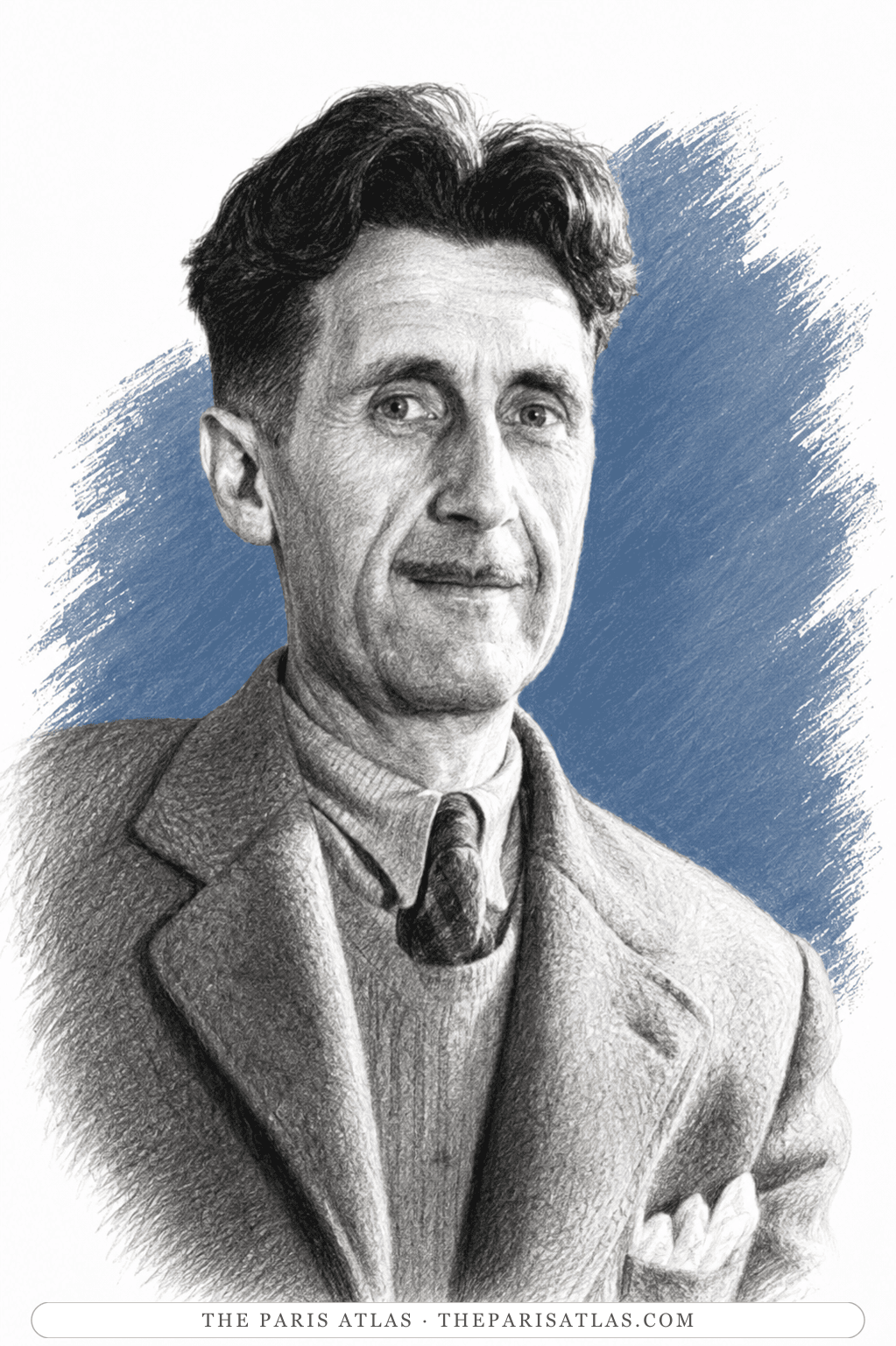
Illustrated portrait of George Orwell

George Orwell

Vonnegut called George Orwell his favourite writer and said he tried to emulate him: "I like his concern for the poor, I like his socialism, I like his simplicity." He named Nineteen Eighty-Four as a direct influence on his first novel, Player Piano, whose automated America is a corporate cousin of Orwell's surveillance state.
— Kurt Vonnegut

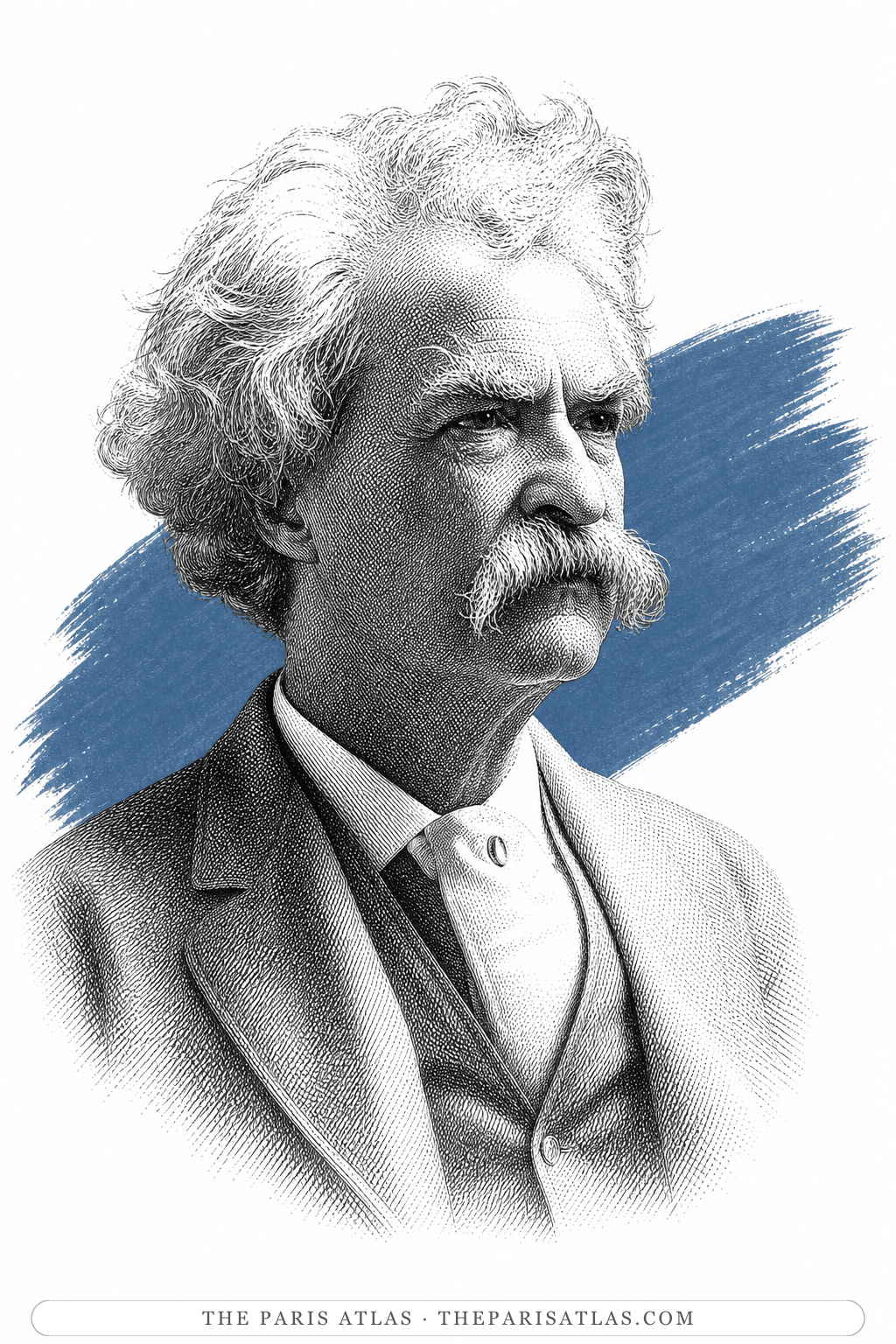
Illustrated portrait of Mark Twain

Mark Twain

Vonnegut claimed the kinship himself, noting that both he and Mark Twain were pessimists about humanity, skeptics about religion, and, through the Civil War and his own German name, "associated with the enemy in a major war". What he took is the method: humour aimed at the largest questions. His New York Times obituary drew the same comparison.

— Kurt Vonnegut; Dinitia Smith, Kurt Vonnegut, Counterculture's Novelist, Dies (2007)

Books by Kurt Vonnegut

Cover of The Sirens of Titan by Kurt Vonnegut

Science fiction

Kurt Vonnegut's second novel: the richest man in America is sent to Mars, Mercury and a moon of Saturn, and finds out why.

4.5
Cover of Cat's Cradle by Kurt Vonnegut

Science fiction

Kurt Vonnegut's 1963 novel about a writer, the children of an atomic scientist, and a speck of ice that can freeze all the water on Earth.

4.7
Cover of Welcome to the Monkey House by Kurt Vonnegut

Short stories

Kurt Vonnegut's 1968 collection of magazine stories, including "Harrison Bergeron", the tale of a future America that makes everyone equal by force.

4.4
Cover of Breakfast of Champions by Kurt Vonnegut

Modernist fiction

Kurt Vonnegut's 1973 novel, with his own drawings, in which a forgotten science-fiction writer meets a car dealer who is losing his mind.

4.3

Questions about Kurt Vonnegut

Who was Kurt Vonnegut?

Kurt Vonnegut (1922–2007) was an American novelist and satirist, the author of Slaughterhouse-Five, Cat's Cradle, The Sirens of Titan and Breakfast of Champions. He was born in Indianapolis, survived the firebombing of Dresden as a prisoner of war in 1945, and turned that experience into Slaughterhouse-Five in 1969. He published fourteen novels, three short-story collections, five plays and five books of nonfiction over fifty years.

What happened to Kurt Vonnegut in Dresden?

He was a prisoner of war there when the Allies burned the city. Captured in the Battle of the Bulge in December 1944, Vonnegut was held in a Dresden slaughterhouse and put to work in a malt-syrup factory. On 13–15 February 1945, British and American bombers set the city on fire, killing about 25,000 civilians. Vonnegut survived in a meat locker three storeys underground, and the prisoners were afterwards made to dig bodies out of the rubble. Slaughterhouse-Five, published twenty-four years later, is built directly on those weeks.

What does "so it goes" mean in Slaughterhouse-Five?

It is the phrase the novel repeats after every death, and it carries the book's attitude toward mortality. In the story it is the response of the Tralfamadorians, aliens who see all moments of time at once, for whom a dead person is simply in bad condition in that particular moment and alive in plenty of others. The refrain follows deaths large and small, from a bottle of champagne going flat to the 25,000 dead of Dresden. It is both a shrug and a tolling bell, and readers have argued ever since about how much protest is in it.

Was Kurt Vonnegut a science fiction writer?

He used the genre's tools and spent his career resisting the label. His first novel, Player Piano, was reissued as science fiction, and aliens, time travel and invented technologies run through his books. But Vonnegut argued that critics used the file drawer marked science fiction as a urinal, and that labels let readers dismiss whatever did not fit. His reputation eventually settled where he wanted it: the Library of America collected his novels, and obituaries treated him as a major American novelist who happened to use rockets.

How did Kurt Vonnegut die?

He died in Manhattan on the night of 11 April 2007, aged 84, of brain injuries suffered in a fall at his East 48th Street brownstone several weeks earlier. His wife, the photographer Jill Krementz, reported his death. A lifelong smoker of unfiltered Pall Malls, he joked in his final year that he intended to sue the manufacturer because the package had promised to kill him and had not done it.

Did Kurt Vonnegut have a college degree?

Not in the usual way. He dropped out of Cornell University in 1943 with poor grades, and after the war studied anthropology at the University of Chicago, where every thesis topic he proposed was rejected, so he left without a degree. Twenty-five years later the university accepted his novel Cat's Cradle in place of a master's thesis and awarded him the degree. He also collected honorary doctorates, including one from Indiana University in his home state.

Why has Slaughterhouse-Five been banned from schools?

Because of its profanity, its sexual content and its irreverence about war and religion, the novel has been challenged or removed from American schools and libraries in at least eighteen recorded cases. The most famous fight reached the United States Supreme Court in Island Trees School District v. Pico in 1982, where the court ruled against a New York school board that had removed it along with eight other books. When a Missouri district withdrew the novel in 2011, the Kurt Vonnegut Memorial Library in Indianapolis offered a free copy to every student in the district.

Connections and Sources

Kurt Vonnegut’s connections to people, places, and works, with the sources behind each one.

Influenced by

George Orwell

Vonnegut called George Orwell his favourite writer and said he tried to emulate him: "I like his concern for the poor, I like his socialism, I like his simplicity." He named Nineteen Eighty-Four as a direct influence on his first novel, Player Piano, whose automated America is a corporate cousin of Orwell's surveillance state.

— Kurt Vonnegut

Influenced by

Mark Twain

Vonnegut claimed the kinship himself, noting that both he and Mark Twain were pessimists about humanity, skeptics about religion, and, through the Civil War and his own German name, "associated with the enemy in a major war". What he took is the method: humour aimed at the largest questions. His New York Times obituary drew the same comparison.

— Kurt Vonnegut; Dinitia Smith, Kurt Vonnegut, Counterculture's Novelist, Dies (2007)

References

References

The sources below include biographies, scholarly essays, interviews, and primary materials that informed this page. They reflect both the historical record and ongoing critical conversations about Kurt Vonnegut and their work.

  1. 1abcVonnegut, Kurt Jr.

    Periodical
    American National Biography Online, 2014
    Used for

    Gregory Sumner's American National Biography entry, used for the family background and the Depression years.

    View source
  2. 2abcAnd So It Goes: Kurt Vonnegut, a Life

    Biography
    Henry Holt and Company, 2011
    Used for

    Charles J. Shields's 2011 biography, one of the two full lives published four years after Vonnegut's death.

  3. 3↑Kurt Vonnegut

    Website
    Encyclopaedia Britannica
    Used for

    Encyclopaedia Britannica's biography, used to confirm dates and the career outline.

    View source
  4. 4abSlaughterhouse-Five

    Novel
    Kurt Vonnegut, 1969
    Used for

    The novel itself, for the structure, the Billy Pilgrim story, and the 'so it goes' refrain.

  5. 5abCritical Companion to Kurt Vonnegut: A Literary Reference to His Life and Work

    Nonfiction
    Infobase Publishing, 2009
    Used for

    Susan E. Farrell's critical companion, used for the works chronology and the reception record.

  6. 6↑Kurt Vonnegut, Counterculture's Novelist, Dies

    Periodical
    The New York Times, 2007
    Used for

    Dinitia Smith's obituary of 12 April 2007: the death from brain injuries after a fall, and the 'counterculture's novelist' label.

    View source
  1. 7↑A Man Without a Country

    Essays
    Kurt Vonnegut, 2005
    Used for

    His final essay collection, the 2005 best seller written against the Bush administration.

  2. 8↑Pity the Reader: On Writing with Style

    Nonfiction
    Rosetta Books and Seven Stories Press, 2019
    Used for

    Pity the Reader, by Vonnegut and Suzanne McConnell, for his stated rules of style.

  3. 9↑Kurt Vonnegut

    Periodical
    The Guardian, 2007
    Used for

    The Guardian's obituary, used for his self-description as pacifist, anarchist and planetary citizen.

    View source
  4. 10↑Kurt Vonnegut and the American Novel: A Postmodern Iconography

    Nonfiction
    Continuum Books, 2011
    Used for

    Robert T. Tally Jr.'s study of the novels, used for the account of Vonnegut's posthumous scholarly standing.

  5. 11↑Kurt Vonnegut, 1922–2007

    Periodical
    Time, 2007
    Used for

    Lev Grossman's assessment in Time at Vonnegut's death, quoted in the reception section.

    View source
  6. 12Kurt Vonnegut

    Website
    Wikipedia
    Used for

    Reference article cross-checked for the family history, the war record, the publication chronology, the marriages, and the banning cases.

    View source
i
Why these sources are here

These references anchor the page in the documented record and in the scholarly conversations around Kurt Vonnegut. Every claim on this page traces back to one or more of the works listed here.

Explore more resources
Browse all authors