The Paris AtlasCharting the artists, works, and places worth returning to.
  • Author
  • Poet
  • Critic
· Canadian · 1939–

Margaret Atwood

Canadian novelist and poet whose fiction examines power, gender, language, memory, and environmental collapse.

Official site5 books on our shelves

Details

Lived
1939–
Born
18 November 1939
Birthplace
Ottawa, Ontario
Birth name
Margaret Eleanor Atwood
Nationality
Canadian
Profession
Novelist, poet and critic
Major works
The Handmaid's Tale, Cat's Eye, Alias Grace, The Blind Assassin, Oryx and Crake, The Testaments
Married
Jim Polk · married 1968, divorced 1973
Partner
Graeme Gibson · 1973 until his death in 2019
Children
Eleanor Jess Atwood Gibson
Roles
AuthorPoetCritic

About Margaret Atwood

Canadian novelist and poet, the author of The Handmaid's Tale

Margaret Atwood is a Canadian novelist, poet and critic, born in Ottawa, Ontario, on 18 November 1939. Since 1961 she has published eighteen novels, eighteen books of poetry, eleven books of nonfiction, nine collections of short fiction, children's books and graphic novels. Her best-known work is The Handmaid's Tale (1985), the story of a theocratic American republic told by a woman kept for enforced childbearing.

Her standing rests on range and on rule-keeping. The novels move from social satire to historical reconstruction to speculative futures, and the speculative ones follow a rule she has stated many times: nothing goes into the book that people have not already done, built or begun. That discipline made The Handmaid's Tale a portable political reference, revived on best-seller lists decades after publication, and made the MaddAddam trilogy a standard text on engineered catastrophe. She has won the Booker Prize twice, for The Blind Assassin in 2000 and The Testaments in 2019.

Atwood also helped build the institutions of Canadian writing. Her 1972 survey Survival argued that Canadian literature had a shape of its own, and she co-founded the Writers' Trust of Canada and the Griffin Poetry Prize. She lives in Toronto.

The bush, the comic books, and Leaside High School, 1939–1957

Margaret Eleanor Atwood was born in Ottawa on 18 November 1939, the second of three children of Carl Atwood, a forest entomologist, and Margaret Killam Atwood, a former dietitian from Woodville, Nova Scotia. Her father's insect research kept the family moving between Ottawa, Sault Ste. Marie and Toronto and, for long stretches, in the backwoods of northern Quebec. She did not attend school full time until she was twelve.[1]

The reading in those years was omnivorous: literature, Dell pocket-book mysteries, Grimms' fairy tales, Canadian animal stories and comic books. The myths and fairy tales stayed; much of her poetry draws on them directly. She began writing plays and poems at six, and decided at sixteen that she wanted to write professionally. She graduated from Leaside High School in Toronto in 1957.

Toronto, Harvard, and the first books, 1957–1969

Atwood studied English at Victoria College in the University of Toronto from 1957 to 1961, publishing poems in the college literary journal. Her teachers included the critic Northrop Frye, whose ideas about Canadian literature's garrison mentality would later underpin her own criticism. She took a master's degree at Radcliffe College of Harvard University in 1962 on a Woodrow Wilson fellowship, and pursued a doctorate for two years without finishing the dissertation.[1]

Her first collection of poems, Double Persephone, appeared as a pamphlet in 1961 and won the E. J. Pratt Medal. The Circle Game (1966) won the Governor General's Award, Canada's leading literary prize, when she was twenty-seven. Through the decade she taught English at the University of British Columbia, Sir George Williams University in Montreal and the University of Alberta. Her first novel, The Edible Woman (1969), a satire about a market researcher who progressively stops being able to eat, was read from the start as an early statement of the concerns her fiction kept: consumption, gender and the body.

Survival, Surfacing, and the Alliston farm, 1970–1979

Two books published in 1972 made Atwood the voice of a national literature. Surfacing, her second novel, sent a woman into the Quebec bush of Atwood's own childhood in search of a missing father. Survival: A Thematic Guide to Canadian Literature argued that Canadian writing had a defining symbol, survival itself, and a cast of victims measured by how far they fought back. The book is still a standard introduction to Canadian literature, and still argued over. By 1976 Maclean's called her Canada's most gossiped-about writer.

Her marriage to Jim Polk, an American writer she had met at Harvard, ended in divorce in 1973. Soon afterward she formed a partnership with the novelist Graeme Gibson, and the two moved to a farm near Alliston, Ontario, where their daughter, Eleanor Jess Atwood Gibson, was born in 1976. The family returned to Toronto in 1980. Atwood and Gibson remained together until his death in 2019. The decade's work ran steadily alongside: six poetry collections, the novels Lady Oracle (1976) and Life Before Man (1979), and a first story collection, Dancing Girls (1977).

The Handmaid's Tale, 1985

The Handmaid's Tale (1985) imagines the United States replaced by Gilead, a theocratic republic in which environmental collapse has crashed the birth rate and fertile women are conscripted as Handmaids to bear children for the regime's commanders. The narrator, Offred, tells the story from inside a household in what was once Cambridge, Massachusetts, on the ground of the Harvard that Atwood herself had studied at. Canada appears as the escape route.

Atwood built the book on a documentary rule she has restated ever since: there is a precedent in real life for everything in it, and she put nothing in that somebody, somewhere, had not already done. The novel won the Governor General's Award and the first Arthur C. Clarke Award, and was a finalist for the 1986 Booker Prize. It has since been adapted as a 1990 film scripted by Harold Pinter, an opera, and a graphic novel. The Hulu television series that began in 2017 won eight Emmy Awards in its first season, with Atwood in a cameo as an Aunt. Sales surged again after the 2016 American election, and Amazon reported it as the most-read book of 2017.[2]

Alias Grace, The Blind Assassin, and the second rise, 1988–2000

Cat's Eye (1988), a painter's reckoning with the cruelties of girlhood friendship, was a finalist for both the Governor General's Award and the Booker Prize. The Robber Bride (1993) built a modern Toronto novel around a female villain, a figure Atwood defended as part of writing women with the full range. Alias Grace (1996) reconstructed the case of Grace Marks, a real Irish-Canadian servant convicted in the 1843 murders of her employer Thomas Kinnear and his housekeeper Nancy Montgomery. It won the 1996 Giller Prize and was again a Booker finalist.[3]

The Blind Assassin (2000), a novel folded around a novel-within-a-novel and a 1945 car crash, won the Booker Prize outright. Atwood was sixty. The next year she was inducted into Canada's Walk of Fame.

Oryx and Crake, The Testaments, and the platform years, 2003–present

Oryx and Crake (2003) opened a trilogy, completed by The Year of the Flood (2009) and MaddAddam (2013), about a world after a designed pandemic, where gene-spliced animals outlive the corporations that made them. Atwood applied the same precedent rule as ever, noting that the trilogy contains no technology that does not already exist, is not under construction, or is not possible in theory. She has preferred the label speculative fiction to science fiction, telling interviewers that science fiction has monsters and spaceships while speculative fiction could really happen, a distinction that has kept its own argument running for twenty years.

The other work of these decades is scattered and inventive:

  • The Penelopiad (2005), The Odyssey retold by Penelope and her twelve hanged maids
  • Payback (2008), the Massey Lectures on debt, later a documentary film
  • the LongPen, a remote signing device she invented in 2004 to tour without flying, now an electronic-signature company
  • Scribbler Moon, the first manuscript deposited in the Future Library project, sealed until 2114
  • Angel Catbird (2016), a superhero comic with illustrator Johnnie Christmas
  • Hag-Seed (2016), The Tempest retold in a prison theatre program
  • Dearly (2020), poems on ageing and grief written after Graeme Gibson's death
  • Book of Lives: A Memoir of Sorts (2026)

The Testaments (2019), the sequel to The Handmaid's Tale published thirty-four years after it, took the Booker Prize jointly, making Atwood a two-time winner. Its television adaptation began airing in 2026, with Atwood in a cameo as a prison guard. Graeme Gibson died in September 2019, after living with dementia, days after the book's launch began; Atwood wrote about him in the title poem of Dearly.

How Atwood writes

The signature is control: cool, exact sentences, a narrator whose testimony the reader must audit, and structures that fold documents inside documents. Alias Grace splices quilting patterns, period documents and competing confessions. The Blind Assassin nests a pulp science-fiction serial inside a novel inside an obituary notice. The Handmaid's Tale ends with the transcript of an academic conference coldly analysing the story just told. The Journals of Susanna Moodie and Alias Grace rebuild history from its gaps, a method critics have filed under historiographic metafiction.

Underneath the structures sit myth and fairy tale, the reading of her bush childhood. The Penelopiad and Hag-Seed are open retellings; the poetry returns constantly to metamorphosis and descent. The speculative books run on the documentary rule, precedent only, which is why their futures read as reporting. She resists most labels attached to her, feminist included, preferring to ask what the labeller means by the word. Her stated definition of her own position is a belief in the rights of women, held alongside a distrust of orthodoxies of any stripe.[4]

Reception, prizes, and the public Atwood

Atwood's prize record is among the largest in contemporary literature: two Booker Prizes, the Governor General's Award twice, the Giller Prize, the Arthur C. Clarke Award, the Franz Kafka Prize (2017), the PEN Pinter Prize (2016), the Peace Prize of the German Book Trade (2017), the Dayton Literary Peace Prize (2020), and companionship in the Order of Canada. She is a Fellow of the Royal Society of Literature and of the Royal Society of Canada, and holds honorary doctorates from Harvard and the Sorbonne, among many others.[5]

She has also spent six decades as a public combatant: against the 1987 Canada–United States free-trade deal, for imprisoned writers through PEN, and for bird conservation with Graeme Gibson through BirdLife International. Her 2018 op-ed "Am I a Bad Feminist?", defending her call for due process in a university misconduct case, drew heavy criticism and she stood by it. The Handmaid's Tale keeps returning to the news on its own. The red Handmaid costume has become a protest uniform at legislative hearings on women's rights in several countries, and Oryx and Crake appeared on Utah's first statewide school-removal list in 2024.[6][7]

Life events

  1. 1939

    Born Margaret Eleanor Atwood in Ottawa, Ontario, on 18 November, the daughter of a forest entomologist.

    — Margaret Atwood

  2. 1961

    Graduates from Victoria College, University of Toronto; her first poetry pamphlet, Double Persephone, wins the E. J. Pratt Medal.

    — Margaret Atwood

  3. 1962

    Takes a master's degree at Radcliffe College, Harvard, on a Woodrow Wilson fellowship.

    — How Atwood became a writer (2001)

  4. 1966

    The Circle Game wins the Governor General's Award for poetry.

    — Margaret Atwood

  5. 1969

    Publishes her first novel, The Edible Woman.

    — Margaret Atwood

  6. 1972

    Surfacing and Survival appear in the same year and make her the defining voice of Canadian literature.

    — Margaret Atwood

  7. 1976

    Her daughter, Eleanor Jess Atwood Gibson, is born on the farm near Alliston, Ontario, she shared with the novelist Graeme Gibson.

    — Margaret Atwood

  8. 1985

    The Handmaid's Tale is published, winning the Governor General's Award and the first Arthur C. Clarke Award.

    — Margaret Atwood

  9. 1996

    Alias Grace, reconstructing the 1843 Grace Marks murder case, wins the Giller Prize.

    — Winners - The Giller Prize

  10. 2000

    The Blind Assassin wins the Booker Prize.

    — Margaret Atwood

  11. 2003

    Oryx and Crake opens the MaddAddam trilogy. The next year, stuck on a book tour, she conceives the LongPen remote-signing device.

    — Margaret Atwood

  12. 2016

    Receives the PEN Pinter Prize; publishes Hag-Seed and the comic series Angel Catbird.

    — Margaret Atwood awarded 2016 PEN Pinter Prize (2016)

  13. 2017

    The Hulu adaptation of The Handmaid's Tale wins eight Emmy Awards; Atwood receives the Franz Kafka Prize and the Peace Prize of the German Book Trade.

    — The Franz Kafka International Literary Prize 2017 (2017)

  14. 2019

    The Testaments takes the Booker Prize jointly, her second win. Graeme Gibson, her partner of forty-six years, dies in September during the launch.

    — Margaret Atwood

  15. 2020

    Publishes Dearly, poems written in the years around Gibson's death, and receives the Dayton Literary Peace Prize.

    — Dan Sewell, Margaret Atwood awarded 2020 Dayton Literary Peace Prize (2020)

  16. 2026

    Publishes Book of Lives: A Memoir of Sorts, and appears in a cameo in the television adaptation of The Testaments.

    — Margaret Atwood

Who Inspired Margaret Atwood

People whose work inspired Margaret Atwood. They did not necessarily meet or know one another.

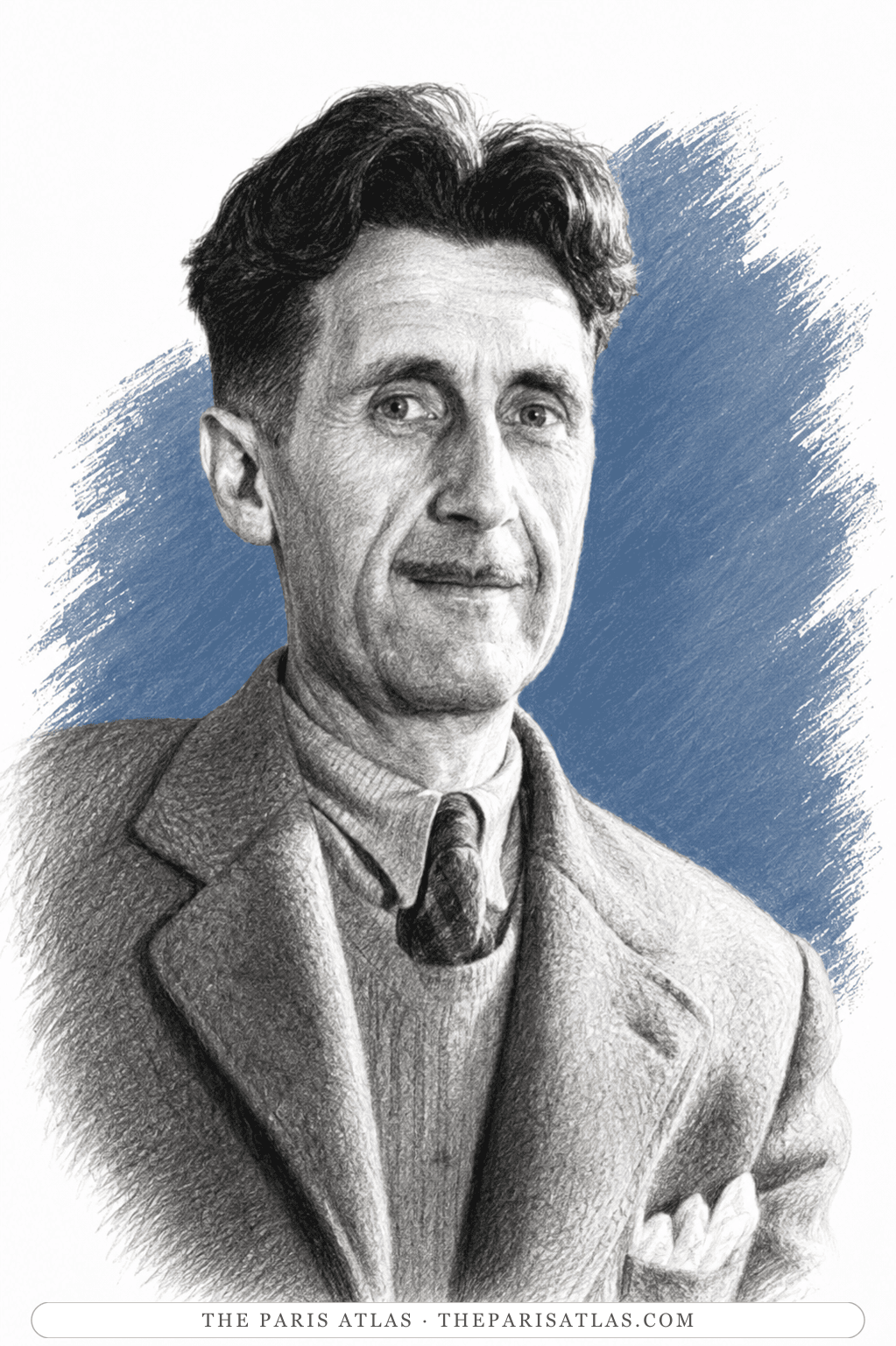
Illustrated portrait of George Orwell

George Orwell

Atwood laid out the debt herself in the centenary essay "Orwell and me": she read Animal Farm at nine, without knowing what it was about, and cried her eyes out. She named Nineteen Eighty-Four as a direct model for The Handmaid's Tale, which she framed as the same totalitarian machinery seen from the point of view of the regime's women.
— Margaret Atwood, Orwell and me (2003)

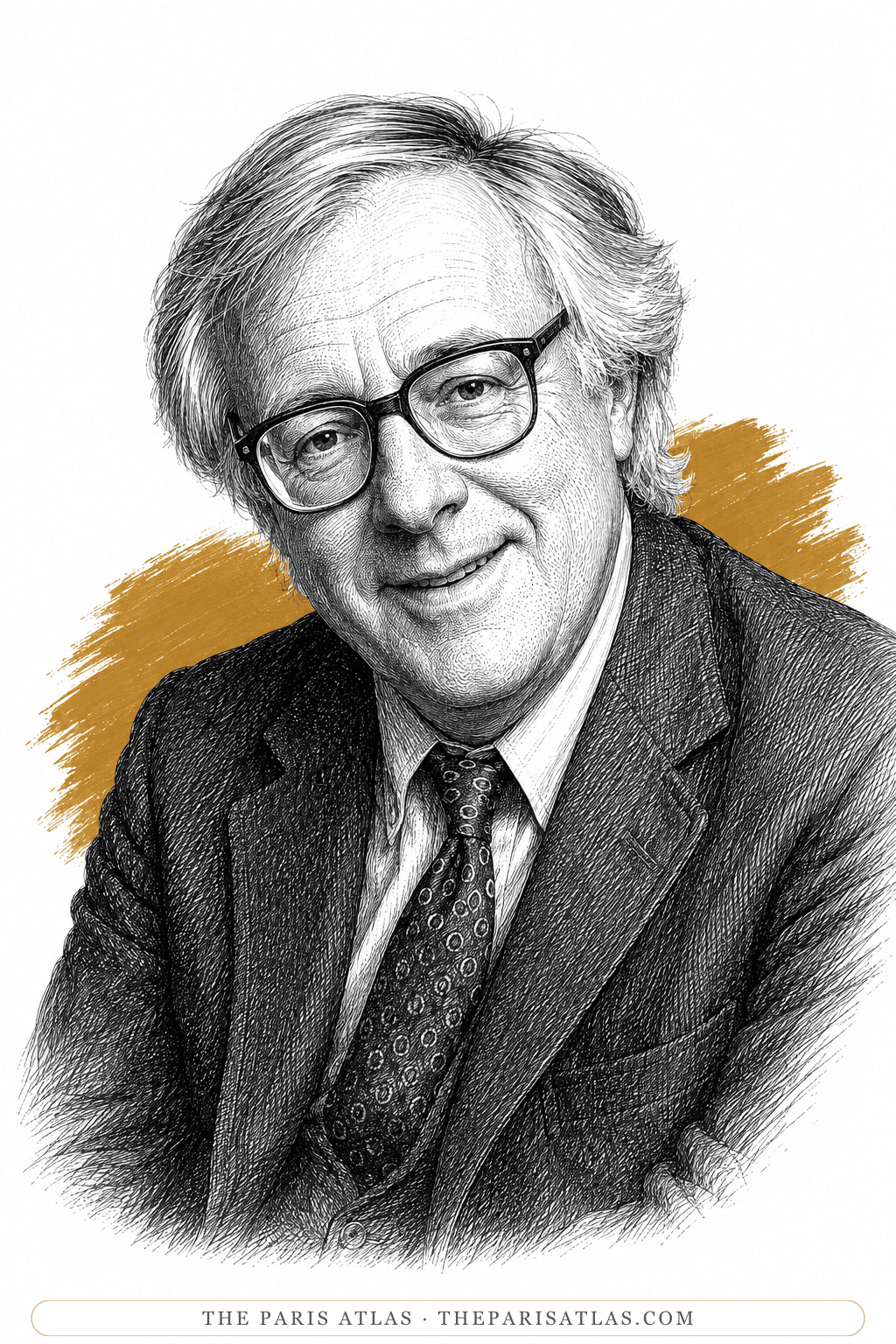
Illustrated portrait of Ray Bradbury

Ray Bradbury

When Ray Bradbury died in 2012, Atwood wrote the Guardian's appreciation, tracing what she had absorbed from reading him in the 1950s: the small-town gothic underside of Fahrenheit 451, The Martian Chronicles and Something Wicked This Way Comes, the strain of American fable-making her own speculative fiction works in.

— Margaret Atwood, Margaret Atwood on Ray Bradbury: the tale-teller who tapped into the gothic core of America (2012)

Books by Margaret Atwood

Cover of The Handmaid's Tale by Margaret Atwood

Dystopian fiction

One woman remembers freedom while authoritarian rules become ordinary through repetition, fear, and religious language.

4.7
Cover of Alias Grace by Margaret Atwood

Historical fiction

Margaret Atwood's novel about Grace Marks, a real Irish servant girl convicted of murder in Canada in 1843, who says she cannot remember the day it happened.

4.6
Cover of The Blind Assassin by Margaret Atwood

Historical fiction

Margaret Atwood's Booker Prize winner: an old woman in a small Canadian town finally tells the truth about her sister, who drove off a bridge in 1945.

4.6
Cover of Oryx and Crake by Margaret Atwood

Dystopian fiction

Margaret Atwood's novel about the last man alive after an engineered plague: Snowman looks after a tribe of gene-spliced people and works out how his best friend ended the world.

4.5
Cover of The Testaments by Margaret Atwood

Dystopian fiction

Margaret Atwood's sequel to The Handmaid's Tale: fifteen years on, three women write down what they know about Gilead, and one of them is Aunt Lydia.

4.5

Questions about Margaret Atwood

Who is Margaret Atwood?

Margaret Atwood (born 18 November 1939 in Ottawa) is a Canadian novelist, poet and critic, the author of The Handmaid's Tale, Alias Grace, The Blind Assassin, Oryx and Crake and The Testaments. Since 1961 she has published eighteen novels, eighteen books of poetry, and dozens of other works, and she has won the Booker Prize twice. She is also a founder of the Writers' Trust of Canada and the Griffin Poetry Prize, and the inventor of the LongPen remote-signing device.

What is Margaret Atwood's most famous book?

The Handmaid's Tale (1985), the story of Offred, a woman conscripted for childbearing in Gilead, a theocratic republic built on the ruins of the United States. It won the Governor General's Award and the first Arthur C. Clarke Award, became a Hulu television series that won eight Emmy Awards in 2017, and returned to best-seller lists more than thirty years after publication. Its sequel, The Testaments (2019), won Atwood her second Booker Prize.

Is The Handmaid's Tale science fiction?

Atwood calls it speculative fiction rather than science fiction, and her distinction is famous: science fiction has monsters and spaceships, speculative fiction could really happen. Her working rule for the book was that it contains nothing without a real-world precedent; every practice in Gilead is something some society has already done. She has conceded the borders are fluid, and after a public exchange with the writer Ursula K. Le Guin she allowed that the two of them simply use the labels differently.

How many Booker Prizes has Margaret Atwood won?

Two. The Blind Assassin won in 2000, and The Testaments won jointly in 2019, when Atwood shared the prize with Bernardine Evaristo. She had been a finalist several times before and since, for The Handmaid's Tale (1986), Cat's Eye (1989), Alias Grace (1996) and Oryx and Crake (2003).

What did Margaret Atwood invent?

The LongPen, a remote robotic signing device. She conceived it in 2004, during the paperback tour for Oryx and Crake, as a way to sign books anywhere in the world without flying, and founded a company to build it. The technology shifted from book tours to business and legal document signing, and the company, renamed Syngrafii, now offers electronic-signature services. Atwood has remained a director and holds patents on the technology.

Who was Margaret Atwood's partner?

The Canadian novelist Graeme Gibson, from 1973 until his death on 18 September 2019, after living with dementia. They raised their daughter, Eleanor Jess Atwood Gibson, born in 1976, first on a farm near Alliston, Ontario, and from 1980 in Toronto. The two were joint honorary presidents of the Rare Bird Club of BirdLife International. Atwood's 2020 poetry collection Dearly, and its title poem, came out of the years around his death. Earlier she was married to the American writer Jim Polk, from 1968 to 1973.

What is Survival, and why does it matter?

Survival: A Thematic Guide to Canadian Literature (1972) is Atwood's most influential work of criticism. It argued that Canadian literature has a defining symbol, survival, and that its stories are populated by victims classified by how far they resist. Published the same year as her novel Surfacing, it helped convince readers that Canadian writing was a literature with its own shape rather than a branch office of British or American letters. It remains a standard introduction to the field, and arguing with it remains a standard Canadian critical exercise.

Connections and Sources

Margaret Atwood’s connections to people, places, and works, with the sources behind each one.

Influenced by

George Orwell

Atwood laid out the debt herself in the centenary essay "Orwell and me": she read Animal Farm at nine, without knowing what it was about, and cried her eyes out. She named Nineteen Eighty-Four as a direct model for The Handmaid's Tale, which she framed as the same totalitarian machinery seen from the point of view of the regime's women.

— Margaret Atwood, Orwell and me (2003)

Influenced by

Ray Bradbury

When Ray Bradbury died in 2012, Atwood wrote the Guardian's appreciation, tracing what she had absorbed from reading him in the 1950s: the small-town gothic underside of Fahrenheit 451, The Martian Chronicles and Something Wicked This Way Comes, the strain of American fable-making her own speculative fiction works in.

— Margaret Atwood, Margaret Atwood on Ray Bradbury: the tale-teller who tapped into the gothic core of America (2012)

References

References

The sources below include biographies, scholarly essays, interviews, and primary materials that informed this page. They reflect both the historical record and ongoing critical conversations about Margaret Atwood and their work.

  1. 1abHow Atwood became a writer

    Periodical
    Harvard University Gazette, 2001
    Used for

    Harvard Gazette profile covering the Radcliffe years and her account of becoming a writer.

    View source
  2. 2↑Orwell and me

    Periodical
    The Guardian, 2003
    Used for

    Her Orwell centenary essay, for the debt to Nineteen Eighty-Four behind The Handmaid's Tale.

    View source
  3. 3↑Winners - The Giller Prize

    Website
    The Giller Prize
    Used for

    The Giller Prize's winner roll, confirming Alias Grace in 1996.

    View source
  4. 4↑Margaret Atwood on Ray Bradbury: the tale-teller who tapped into the gothic core of America

    Periodical
    The Guardian, 2012
    Used for

    Her Guardian appreciation of Ray Bradbury, for what she took from reading him in the 1950s.

    View source
  5. 5↑Awards and Recognitions

    Website
    margaretatwood.ca
    Used for

    Her own site's award ledger, used to confirm the prize list.

    View source
  6. 6↑Margaret Atwood awarded 2016 PEN Pinter Prize

    Website
    English PEN, 2016
    Used for

    English PEN's announcement of the 2016 PEN Pinter Prize.

    View source
  1. 7↑The Franz Kafka International Literary Prize 2017

    Website
    Franz Kafka Society, 2017
    Used for

    The Franz Kafka Society's 2017 prize announcement.

    View source
  2. 8Margaret Atwood

    Website
    Wikipedia
    Used for

    Reference article cross-checked for the chronology, the bibliography counts, the prizes, and the adaptations.

    View source
  3. 9Ehrung des Buchhandels: Margaret Atwood erhält Friedenspreis

    Periodical
    Der Spiegel, 2017
    Used for

    Der Spiegel's report of the 2017 Peace Prize of the German Book Trade.

    View source
  4. 10Margaret Atwood awarded 2020 Dayton Literary Peace Prize

    Periodical
    CBC, 2020
    Used for

    CBC's report of the 2020 Dayton Literary Peace Prize.

    View source
  5. 11Atwood, Margaret

    Website
    Royal Society of Literature
    Used for

    Royal Society of Literature fellowship record.

    View source
  6. 12Canada Gazette, Part I, Volume 155, Number 26: Government House

    Official record
    Government of Canada, 2021
    Used for

    Canada Gazette record of her Order of Canada standing.

    View source
i
Why these sources are here

These references anchor the page in the documented record and in the scholarly conversations around Margaret Atwood. Every claim on this page traces back to one or more of the works listed here.

Explore more resources
Browse all authors