The Martian Chronicles, The Illustrated Man, Fahrenheit 451, Dandelion Wine, Something Wicked This Way Comes
Married
Marguerite McClure · married 1947 until her death in 2003
Children
Susan Bradbury, Ramona Bradbury, Bettina Bradbury, Alexandra Bradbury
Roles
AuthorPoetPlaywright
About Ray Bradbury
American writer of fantasy, science fiction and horror, and the author of Fahrenheit 451
Ray Bradbury was an American writer of fantasy, science fiction, horror and mystery stories. He was born in Waukegan, Illinois, on 22 August 1920 and lived in Los Angeles from the age of fourteen. He published around 600 short stories and more than 27 novels and collections, among them The Martian Chronicles (1950), The Illustrated Man (1951), Fahrenheit 451 (1953) and Dandelion Wine (1957).
What he changed was where this kind of writing was printed and how it read. Bradbury took subjects that belonged to the pulp magazines, including Mars, rockets, carnivals and book burning, and wrote them in the metaphor-heavy, character-centred prose of mainstream fiction. He then sold them outside the pulps. Mademoiselle published "Homecoming" in 1946, The Saturday Evening Post ran "The Veldt" in 1950, and Playboy serialised Fahrenheit 451 in 1954. He also found a way for a short-story writer to publish novels, by grouping stories he had already written and adding new passages to connect them.
The New York Times obituary called him the writer most responsible for bringing modern science fiction into the literary mainstream. Bradbury rejected that description for nearly all of his work, arguing that only Fahrenheit 451 was science fiction and that the rest was fantasy. He died in Los Angeles on 5 June 2012, aged 91.
Waukegan, the carnival, and the move west, 1920–1934
Ray Douglas Bradbury was born in Waukegan, Illinois, on 22 August 1920. His father, Leonard Spaulding Bradbury, was a power and telephone lineman. His mother, Esther Moberg Bradbury, had emigrated from Sweden. The middle name Douglas came from the film actor Douglas Fairbanks. His grandparents lived next door, and an aunt read him short stories.
The family moved to Tucson, Arizona, twice while his father looked for work, in 1926 and again in 1932, and returned to Waukegan each time. In 1934 they settled in Los Angeles, where Bradbury was fourteen. They arrived with forty dollars. His father found a job making wire at a cable company for fourteen dollars a week, which was enough to keep them in Hollywood.
Over the Labor Day weekend of 1932 a carnival came to Waukegan with a performer who called himself Mr. Electrico. He sat in an electric chair, took a charge of fifty thousand volts, and touched the twelve-year-old Bradbury on both shoulders and the tip of the nose with an electrified sword. Bradbury said the man shouted at him to live forever. He told the story for the rest of his life as the moment he started writing.
I felt changed. And so I went home and within days I started to write. And I've never stopped.
Waukegan became Green Town, Illinois, in his fiction. Green Town is the setting of Dandelion Wine, Something Wicked This Way Comes and Farewell Summer, and of many of the short stories. It stands for safety and home, and it is also where he put the carnivals, the deaths and the supernatural visitors.
Los Angeles, the library, and the newspaper corner, 1934–1941
Bradbury attended Los Angeles High School and joined the drama and poetry clubs. He took poetry classes with Snow Longley Housh and short-story courses with Jeannet Johnson, both of whom encouraged him. Outside school he roller-skated around Hollywood collecting autographs, and he met the special-effects animator Ray Harryhausen and the radio comedian George Burns. His first payment as a writer came at fourteen, for a joke Burns used on the Burns and Allen radio show.
He graduated in 1938 and did not go to college. The Depression had left the family with no money for tuition, so he sold newspapers at the corner of South Norton Avenue and Olympic Boulevard and read in the public library three days a week for ten years. He described the arrangement plainly: libraries had raised him, and he had graduated from the library at twenty-eight.
Libraries raised me. I don't believe in colleges and universities. I believe in libraries because most students don't have any money.
The reading had started in the Carnegie Library at Waukegan, with H. G. Wells, Jules Verne and Edgar Allan Poe. Bradbury began writing horror stories at twelve and imitated Poe until he was about eighteen. He also read Edgar Rice Burroughs, and at twelve he wrote his own sequel to The Warlord of Mars.
In 1936 he found a handbill in a Hollywood secondhand bookshop advertising the Los Angeles Science Fiction Society. He joined its Thursday meetings at sixteen. They were held at Clifton's Cafeteria downtown, and the writers he met there included Robert A. Heinlein, Leigh Brackett, Henry Kuttner, Fredric Brown and Jack Williamson.
His first published story, "Hollerbochen's Dilemma", appeared in January 1938 in Imagination!, a fanzine edited by Forrest J Ackerman. In July 1939 Ackerman and his girlfriend, known as Morojo, paid the nineteen-year-old Bradbury's way to the first World Science Fiction Convention in New York. They also funded his own fanzine, Futuria Fantasia, which ran to four issues. Between 1940 and 1947 he wrote for Rob Wagner's film magazine Script.
The pulps, the first books, and The Martian Chronicles, 1941–1950
Bradbury's first paid story, "Pendulum", written with Henry Hasse, ran in the pulp magazine Super Science Stories in November 1941 and earned him fifteen dollars. He sold his first solo story, "The Lake", for $13.75 at twenty-two, and was writing full time by twenty-four. Poor eyesight kept him out of military service in the Second World War, which left him free to build the career.
His first collection, Dark Carnival, was published in 1947 by Arkham House, the small press August Derleth ran at Sauk City, Wisconsin. Reviewing it in the New York Herald Tribune, Will Cuppy pronounced Bradbury "suitable for general consumption" and predicted he would become a writer of the calibre of the British fantasist John Collier.
The same years took him out of the pulps. Weird Tales rejected his story "Homecoming", so he sent it to the fashion magazine Mademoiselle, where an editorial assistant named Truman Capote found it in the slush pile and pushed it through. It was published in 1946, with an illustration by the cartoonist Charles Addams, and it won a place in the O. Henry Award Stories of 1947.
In 1947 Bradbury married Marguerite McClure, whom he called Maggie. He was twenty-seven and had lived with his parents until the wedding, at which Ray Harryhausen was best man. They had four daughters, Susan, Ramona, Bettina and Alexandra, and stayed married until her death in 2003. Bradbury never obtained a driving licence, and travelled by public transport or bicycle.
In 1949, with his wife expecting their first child, Bradbury took a Greyhound bus to New York and a room at the YMCA for fifty cents a night. A dozen publishers turned his short stories down. Over dinner, a Doubleday editor named Walter Bradbury asked whether the stories might be tied together into one book, and supplied the title: The Martian Chronicles. Bradbury sat up all night typing an outline, and Doubleday gave him a cheque for $750 the next morning.
The Martian Chronicles was published in 1950. A chance meeting in a Los Angeles bookshop with the British writer Christopher Isherwood put a copy in the hands of a respected critic, and Isherwood's review was enthusiastic.
Fahrenheit 451 and the rented typewriter, 1951–1954
Fahrenheit 451 began as "The Fireman", a story of about 25,000 words published in Galaxy Science Fiction in February 1951. Bradbury was asked to add another 25,000 words so that it could appear as a novel.
He wrote it in a study room in the Powell Library at the University of California, Los Angeles, where typewriters could be rented for ten cents per half-hour. The finished book ran to about 50,000 words and cost him $9.80 in rental fees. The title came from the Los Angeles fire chief, who told him that book paper burns at 451 degrees Fahrenheit.
The novel was published in 1953 and serialised in the March, April and May 1954 issues of Playboy. It remains a fixture of arguments about censorship, and it is the Bradbury title most often taught in schools.
Bradbury gave more than one account of what the book was about. He often described it as a warning about mass media rather than about the state. He said he had once watched a husband and wife walk their dog in Beverly Hills while the woman listened through an earpiece to a pocket radio and noticed neither of them. Asked in 1994 how the story had aged, he answered that it worked better than when he wrote it, because political correctness had become "thought control and freedom of speech control". Readers and critics have generally taken the novel as a book about censorship and book burning. Both readings are on the record, given decades apart, and Bradbury did not withdraw either one.
Hollywood, the theatre, and television, 1953–1994
Bradbury worked in film and television for most of his career. In 1953 the producer William Alland released It Came from Outer Space, whose screenplay Harry Essex developed from a Bradbury treatment called "Atomic Monster". Three weeks later The Beast from 20,000 Fathoms opened with one scene taken from his story "The Fog Horn", animated in stop motion by Ray Harryhausen.
That same year the director John Huston hired him to write the screenplay of Moby Dick, released in 1956 with Gregory Peck as Ahab and Orson Welles as Father Mapple. Bradbury worked in Ireland during the production. He wrote about Huston and the making of the film in Green Shadows, White Whale, a semi-fictional account published in 1992.
1956 — appeared on Groucho Marx's quiz show You Bet Your Life on 24 May, talking about his story "The Veldt"
1962 — "I Sing the Body Electric" was adapted as the hundredth episode of The Twilight Zone, broadcast on 18 May
1964 — consultant to the United States Pavilion at the New York World's Fair, writing the narration for The American Journey; he later worked on the first Spaceship Earth exhibit at Epcot
1964 — co-founded the Pandemonium Theatre Company in Los Angeles with the director Charles Rome Smith, opening with one-act adaptations of "The Pedestrian", "The Veldt" and "To the Chicago Abyss"
1966 — François Truffaut filmed Fahrenheit 451 with Oskar Werner and Julie Christie
1980 — NBC broadcast The Martian Chronicles as a three-part miniseries with Rock Hudson, which Bradbury called "just boring"
1985–1992 — hosted The Ray Bradbury Theater, a syndicated anthology series for which he adapted 65 of his own stories
1994 — won an Emmy Award for his screenplay of The Halloween Tree
Comics came earlier than any of it. Between 1950 and 1954 the EC Comics line adapted 31 of his stories, at first without asking. Bradbury sent the company a polite letter, and EC paid him and licensed the adaptations properly. Sixteen of them were later collected in the paperbacks The Autumn People and Tomorrow Midnight, with covers by Frank Frazetta.
How Bradbury wrote, 1932–2012
Bradbury wrote every day from the age of twelve, and dated the habit to the carnival performer who told him to live forever. He composed fast. He typed the outline of The Martian Chronicles in a single night at a New York YMCA, and drafted Fahrenheit 451 on coin-fed typewriters for $9.80 in rental fees. He described his working method as reactive rather than planned.
My stories run up and bite me in the leg—I respond by writing them down—everything that goes on during the bite. When I finish, the idea lets go and runs off.
The prose carries far more simile and metaphor than the pulp writing around it, and Bradbury put that down to verse. Asked where the lyrical quality came from, he said it came from reading so much poetry every day of his life. He had taken poetry classes at school and published collections of his own, among them They Have Not Seen the Stars in 2001.
He was specific about what he had taken from other writers. From John Steinbeck he said he learned "how to write objectively and yet insert all of the insights without too much extra comment". He studied Eudora Welty for her "remarkable ability to give you atmosphere, character, and motion in a single line". He stopped reading science fiction in his twenties and read Alexander Pope and John Donne instead.
His books are usually assembled rather than written straight through. The Martian Chronicles was built out of stories he had already published, joined by short bridging passages written afterwards. Dandelion Wine came out of an abandoned novel: he took seventeen stories from a manuscript called Summer Morning, Summer Night, added three more Green Town tales, and bridged them into the 1957 book. What was left of that manuscript appeared in 2006 as Farewell Summer, and the remaining fragments in 2007 under the original title. Fahrenheit 451 was an expanded novella. The method let a writer whose natural unit was the short story publish novels.
The recurring subject is comfort with something wrong inside it. Green Town stands for safety and home, and it is where the macabre happens. Carnivals work the same way: he had loved them since childhood, and they carry the threat in The Illustrated Man and Something Wicked This Way Comes. He was once described as a Midwest surrealist, which fits the pairing better than the genre labels do.
He objected to being called a science-fiction writer at all. He defined science fiction as the art of the possible, and said only Fahrenheit 451 met the definition, because it described something that could happen. Everything else, The Martian Chronicles included, he called fantasy, on the grounds that it could not.
First of all, I don't write science fiction. I've only done one science fiction book and that's Fahrenheit 451, based on reality. Science fiction is a depiction of the real. Fantasy is a depiction of the unreal.
Reception, honours, and the argument over the label, 1947–2012
The early notices were good, and they came from outside the genre press as well as inside it. Will Cuppy reviewed Dark Carnival warmly in the New York Herald Tribune in 1947, and Christopher Isherwood praised The Martian Chronicles in 1950. More than eight million copies of Bradbury's books have since been sold, in over 36 languages. He published more than 27 novels and story collections, holding many of his roughly 600 short stories.
The awards arrived from several directions at once, which is itself a comment on the difficulty of placing him. The Science Fiction Writers of America made him its tenth Grand Master in 1989, and the Horror Writers Association gave him its lifetime achievement award the same year. The World Fantasy Convention had honoured him for life achievement in 1977. In 2000 the National Book Foundation awarded him its medal for distinguished contribution to American letters.
President George W. Bush presented him with the National Medal of Arts on 17 November 2004. On 16 April 2007 the Pulitzer Prize jury gave him a special citation for what it called his distinguished, prolific and deeply influential career as an unmatched author of science fiction and fantasy. France made him a Commandeur of the Ordre des Arts et des Lettres in the same year.
The tributes after his death came mostly from writers and film-makers who had read him as children. Stephen King wrote that Bradbury had produced three great novels and three hundred great stories. Margaret Atwood said she had been warped early by Ray Bradbury, and described reading him at night with a flashlight when she should have been asleep.[1] Steven Spielberg called him his muse for science fiction. President Barack Obama's statement said his storytelling had reshaped American culture.[2]
The argument over what to call him outlived him. The obituaries and the Pulitzer citation both described him as a science-fiction writer, which is the description he had spent decades rejecting. The Center for Ray Bradbury Studies opened in 2007 and holds his papers, and his home office was rebuilt inside the Ray Bradbury Center in Indianapolis. In 2012 NASA named the Curiosity rover's landing site on Mars Bradbury Landing.
Illness, death, and what he left, 1999–2015
Bradbury had a stroke in 1999 that left him partly dependent on a wheelchair. He went on appearing at science-fiction conventions until 2009, when he stopped travelling to them, and he kept writing. An essay about where his ideas came from was published in The New Yorker's science-fiction issue a week before he died.
He spent those years arguing against electronic reading. In 2010 he said there were too many machines and that we had to get rid of some of them. When the publishing rights to Fahrenheit 451 came up for renewal in December 2011, he allowed an electronic edition on one condition, that any library patron be able to download it. It remains the only title in the Simon & Schuster catalogue published on those terms.
Ray Bradbury died in Los Angeles on 5 June 2012, aged 91, after a long illness. No more specific cause was given. He had been in poor health since the stroke thirteen years earlier. He is buried at Westwood Village Memorial Park Cemetery in Los Angeles, in a plot he had chosen himself, under a headstone that reads "Author of Fahrenheit 451".
He left his personal library to the Waukegan Public Library, where he had done much of his childhood reading. On 6 December 2012 the Los Angeles street corner at Fifth and Flower was named Ray Bradbury Square. The house at 10265 Cheviot Drive, where he had lived and worked for fifty years, was bought by the architect Thom Mayne and demolished; The New York Times reported the demolition on 6 February 2015.
Life events
1920
Born Ray Douglas Bradbury in Waukegan, Illinois, on 22 August.
— Ray Bradbury
1932
Meets the carnival performer Mr. Electrico at Waukegan over the Labor Day weekend, and starts writing within days.
— Ray Bradbury
1934
The family settles in Los Angeles with forty dollars; his father takes a job making wire at a cable company.
— Ray Bradbury
1936
Joins the Los Angeles Science Fiction Society at sixteen, meeting Thursday nights at Clifton's Cafeteria.
— Ray Bradbury
1938
Publishes his first story, "Hollerbochen's Dilemma", in the fanzine Imagination!; graduates from Los Angeles High School and does not go on to college.
— Ray Bradbury
1939
Travels to the first World Science Fiction Convention in New York and starts his own fanzine, Futuria Fantasia.
— Ray Bradbury
1941
His first paid story, "Pendulum", written with Henry Hasse, appears in Super Science Stories and earns fifteen dollars.
— Ray Bradbury
1946
Mademoiselle publishes "Homecoming" after Truman Capote takes it out of the slush pile; it wins a place in the O. Henry Award Stories of 1947.
— Ray Bradbury
1947
Marries Marguerite McClure, and Arkham House publishes his first collection, Dark Carnival.
— Ray Bradbury
1949
Travels to New York by bus; a Doubleday editor suggests binding his stories together and names the result The Martian Chronicles.
— Ray Bradbury
1950
The Martian Chronicles is published, and Christopher Isherwood reviews it enthusiastically.
— Ray Bradbury
1951
"The Fireman", the 25,000-word story that became Fahrenheit 451, appears in Galaxy Science Fiction in February.
— Ray Bradbury
1953
Fahrenheit 451 is published, written on rented typewriters in UCLA's Powell Library for $9.80 in fees; John Huston hires him to write the screenplay of Moby Dick.
— Ray Bradbury
1954
Playboy serialises Fahrenheit 451 across its March, April and May issues.
— Ray Bradbury
1957
Dandelion Wine is published, assembled from seventeen stories extracted from an unfinished novel plus three more Green Town tales.
— Ray Bradbury
1962
Something Wicked This Way Comes is published; "I Sing the Body Electric" is broadcast on 18 May as the hundredth episode of The Twilight Zone.
— Ray Bradbury
1964
Co-founds the Pandemonium Theatre Company in Los Angeles and consults on the United States Pavilion at the New York World's Fair.
— Ray Bradbury
1966
François Truffaut's film of Fahrenheit 451 is released.
— Ray Bradbury
1985
Begins hosting The Ray Bradbury Theater, adapting 65 of his own stories for it over seven years.
— Ray Bradbury
1988
Joins the mayor of Los Angeles to launch a funding drive for the city's libraries.
— Scott Harris, Mayor, Author Launch Library Funding Drive (1988)
1994
Wins an Emmy Award for his screenplay of The Halloween Tree.
— Ray Bradbury
1999
Suffers a stroke that leaves him partly dependent on a wheelchair.
— Ray Bradbury
2004
Receives the National Medal of Arts from President George W. Bush on 17 November.
— Ray Bradbury
2007
Receives a Pulitzer Prize special citation on 16 April, and is made a Commandeur of the Ordre des Arts et des Lettres by France.
— Ray Bradbury
2012
Dies in Los Angeles on 5 June, aged 91, after a long illness; NASA later names the Curiosity landing site on Mars Bradbury Landing.
— Gerald Jonas, Ray Bradbury, Master of Science Fiction, Dies at 91 (2012)
People Ray Bradbury Knew
Relationships with other people, with sources for each connection.
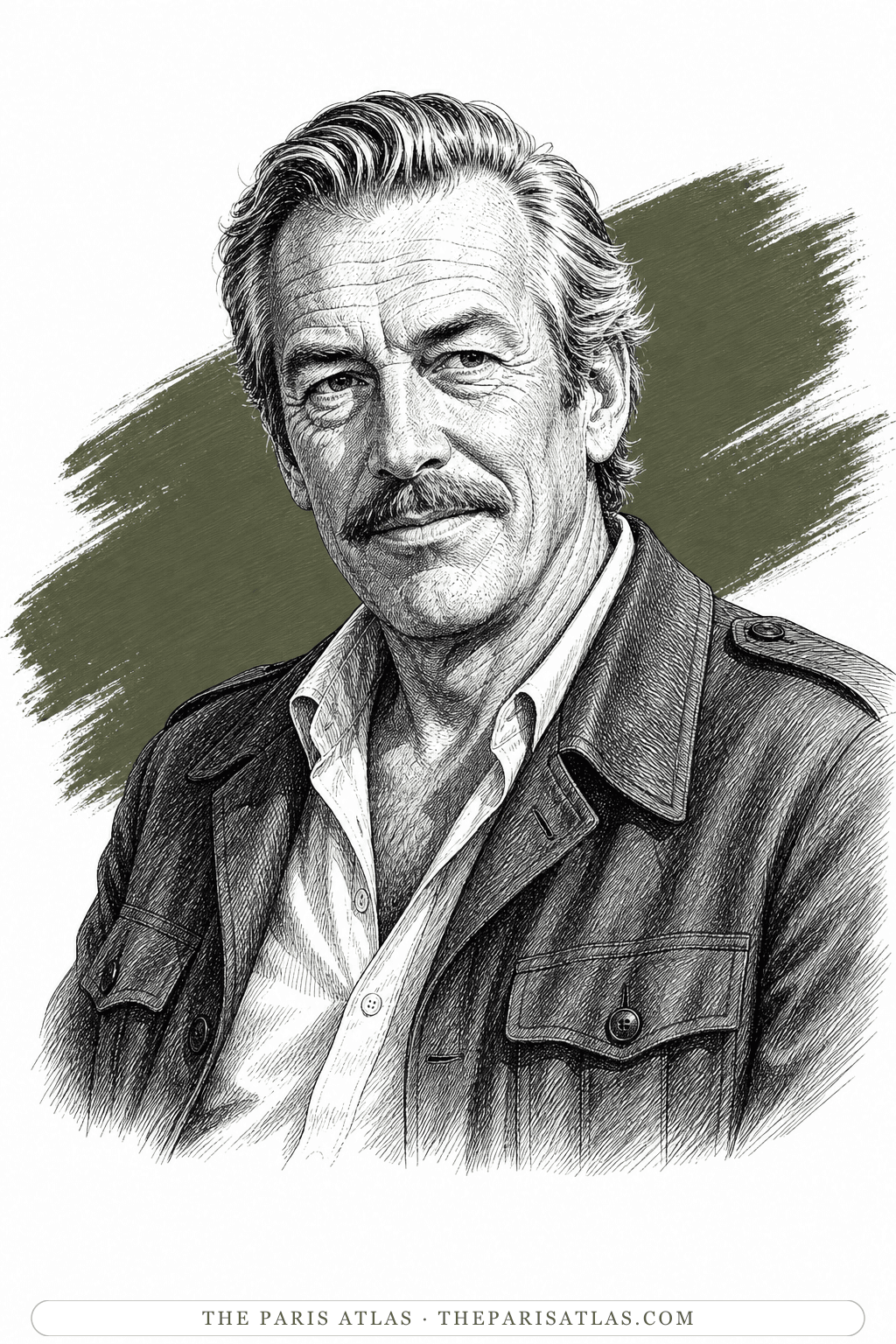
Huston hired Bradbury to write the screenplay for Moby Dick, from Herman Melville's novel, and the two worked on it in Ireland while Huston was living at St Clerans. The film was released in 1956 with Gregory Peck as Ahab.
— John Huston
Who Inspired Ray Bradbury
People whose work inspired Ray Bradbury. They did not necessarily meet or know one another.
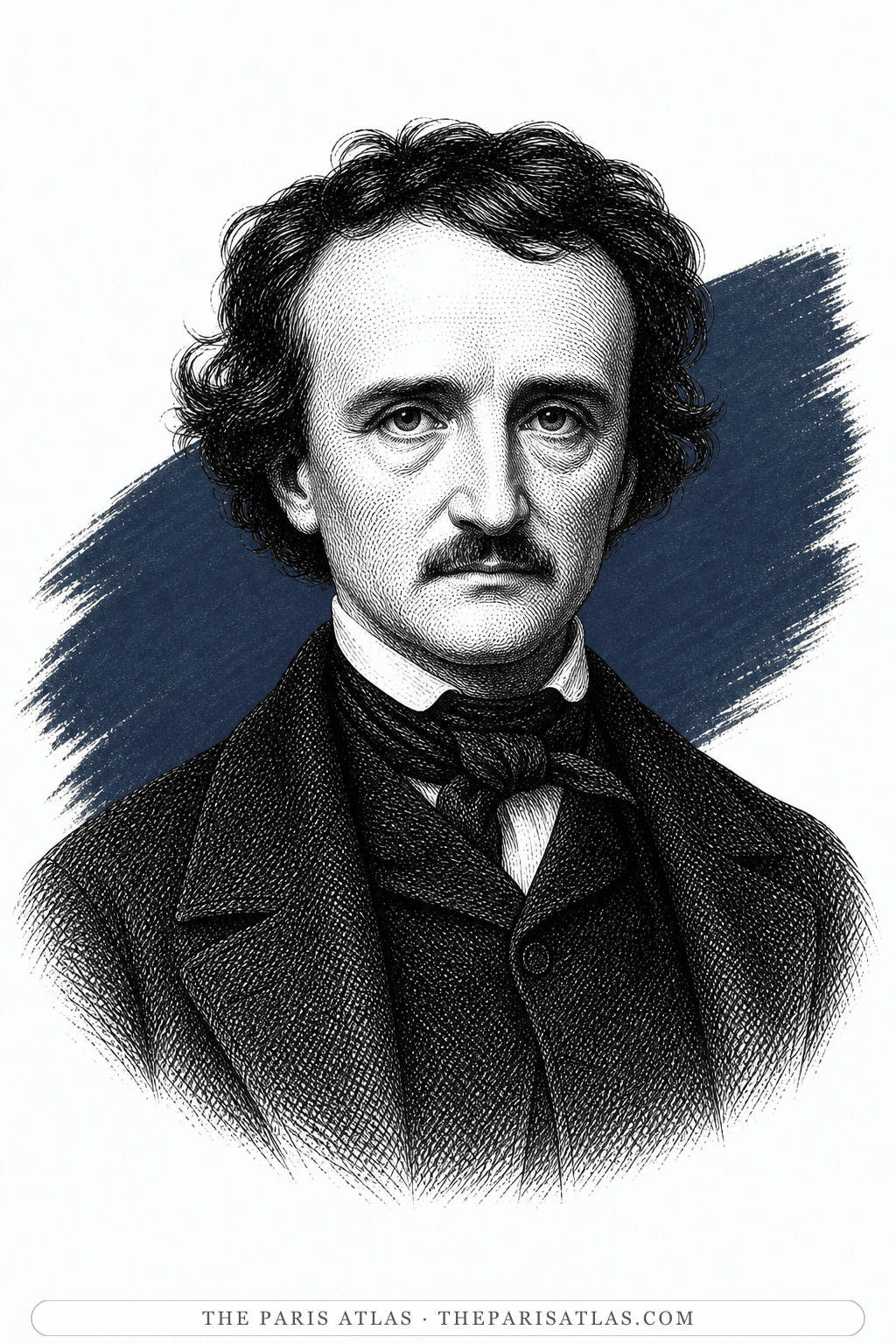
Bradbury read Poe in the Carnegie Library at Waukegan as a boy, began writing horror stories at twelve, and said he tried to imitate Poe until he was about eighteen. What carried over into the mature work is the horror material rather than the sentences: the macabre visitor, the family of the dead, the carnival that means harm.
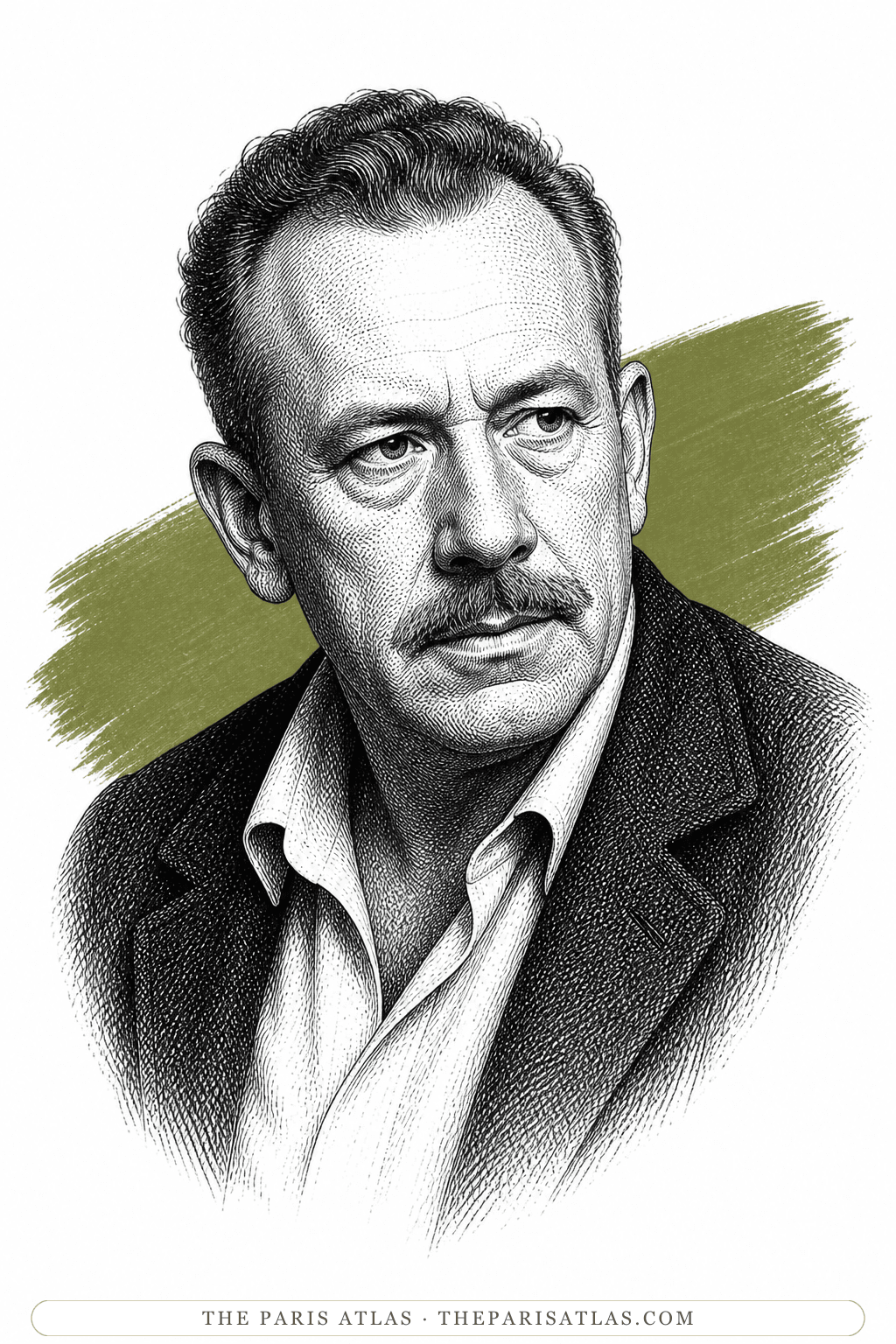
Bradbury named Steinbeck among the writers he learned from, and said what he took was a technique rather than a subject: "how to write objectively and yet insert all of the insights without too much extra comment". It is visible in the flat reporting voice of the Green Town stories, where the strange event is stated and left unexplained.
— Ray Bradbury
Who Ray Bradbury Inspired
People who found inspiration in Ray Bradbury’s work.
When Ray Bradbury died in 2012, Atwood wrote the Guardian's appreciation, tracing what she had absorbed from reading him in the 1950s: the small-town gothic underside of Fahrenheit 451, The Martian Chronicles and Something Wicked This Way Comes, the strain of American fable-making her own speculative fiction works in.
— Margaret Atwood, Margaret Atwood on Ray Bradbury: the tale-teller who tapped into the gothic core of America (2012)
Ray Bradbury's 1962 novel about two boys, one father, and a carnival that comes to a small Illinois town in late October.
4.5
Questions about Ray Bradbury
Who was Ray Bradbury?
Ray Bradbury (1920–2012) was an American writer of fantasy, science fiction, horror and mystery stories, best known for Fahrenheit 451, The Martian Chronicles, The Illustrated Man and Dandelion Wine. He was born in Waukegan, Illinois, moved to Los Angeles at fourteen, and wrote around 600 short stories and more than 27 novels and collections. He also wrote for film and television, including the screenplay of John Huston's Moby Dick.
What is Ray Bradbury's writing style?
Bradbury wrote short, image-heavy sentences with far more simile and metaphor than the pulp magazines around him used, and he credited that to reading poetry every day. His books are usually assembled from short stories rather than written straight through. The Martian Chronicles was built from published stories joined by new bridging passages. Dandelion Wine was cut out of an abandoned novel, and Fahrenheit 451 was an expanded novella. The recurring subject is a safe small town with something wrong in it. He said he learned from John Steinbeck how to write objectively and still get the insight in, and studied Eudora Welty for her ability to give atmosphere, character and motion in one line.
Is Fahrenheit 451 about censorship or about television?
Bradbury argued both, at different times, and never settled it. The novel is generally read as a book about censorship and state book burning, and it is taught that way. Bradbury himself often said it was really about mass media destroying the audience for reading. He told the story of a Beverly Hills couple walking their dog, the wife listening to a pocket radio through an earpiece and noticing nothing around her. In 1994 he gave a third version, saying the book worked better than when he wrote it because political correctness had become "thought control and freedom of speech control". Both accounts came from him, decades apart, and he withdrew neither.
How did Ray Bradbury die?
Ray Bradbury died in Los Angeles on 5 June 2012, aged 91, after a long illness. No more specific cause was announced. He had been in poor health since a stroke in 1999 that left him partly dependent on a wheelchair, and he stopped travelling to science-fiction conventions in 2009, though he kept writing to the end. An essay of his appeared in The New Yorker a week before he died. He is buried at Westwood Village Memorial Park Cemetery in Los Angeles.
Did Ray Bradbury go to college?
No. Bradbury graduated from Los Angeles High School in 1938 and never attended a university. The Depression had left his family with no money for tuition, so he sold newspapers at the corner of South Norton Avenue and Olympic Boulevard and educated himself in the public library, going three days a week for ten years. He said libraries had raised him and that he had graduated from the library at twenty-eight. He later raised money to keep California libraries from closing.
Was Ray Bradbury a science fiction writer?
He said he was not, except once. Bradbury defined science fiction as the art of the possible and argued that only Fahrenheit 451 qualified, because a society that burns books is something that could happen. He called The Martian Chronicles fantasy, on the grounds that it could not happen. Obituaries, prize citations and bookshops have used the science-fiction label anyway, and The New York Times called him the writer most responsible for bringing modern science fiction into the literary mainstream.
What is Green Town, Illinois?
Green Town is Bradbury's fictional version of Waukegan, Illinois, the town he was born in and left at fourteen. It is the setting of Dandelion Wine, Something Wicked This Way Comes and Farewell Summer, and of many short stories. In the books it stands for safety, summer and home, and it is also where the carnivals arrive and the supernatural happens. Ray Bradbury Park was dedicated in the real Waukegan in 1990, and he attended the ribbon-cutting.
Where is Ray Bradbury buried?
At Westwood Village Memorial Park Cemetery in Los Angeles. Bradbury chose the plot himself before he died, and the headstone reads "Author of Fahrenheit 451". His personal library went to the Waukegan Public Library in Illinois, where he had done most of his childhood reading.
Connections and Sources
Ray Bradbury’s connections to people, places, and works, with the sources behind each one.
When Ray Bradbury died in 2012, Atwood wrote the Guardian's appreciation, tracing what she had absorbed from reading him in the 1950s: the small-town gothic underside of Fahrenheit 451, The Martian Chronicles and Something Wicked This Way Comes, the strain of American fable-making her own speculative fiction works in.
— Margaret Atwood, Margaret Atwood on Ray Bradbury: the tale-teller who tapped into the gothic core of America (2012)
Bradbury read Poe in the Carnegie Library at Waukegan as a boy, began writing horror stories at twelve, and said he tried to imitate Poe until he was about eighteen. What carried over into the mature work is the horror material rather than the sentences: the macabre visitor, the family of the dead, the carnival that means harm.
Bradbury named Steinbeck among the writers he learned from, and said what he took was a technique rather than a subject: "how to write objectively and yet insert all of the insights without too much extra comment". It is visible in the flat reporting voice of the Green Town stories, where the strange event is stated and left unexplained.
Huston hired Bradbury to write the screenplay for Moby Dick, from Herman Melville's novel, and the two worked on it in Ireland while Huston was living at St Clerans. The film was released in 1956 with Gregory Peck as Ahab.
— John Huston
References
References
The sources below include biographies, scholarly essays, interviews, and primary materials that informed this page. They reflect both the historical record and ongoing critical conversations about Ray Bradbury and their work.
1↑Margaret Atwood on Ray Bradbury: the tale-teller who tapped into the gothic core of America
Periodical
The Guardian, 2012
Used for
Margaret Atwood's tribute of 8 June 2012, quoted for her account of reading him as a child.
These references anchor the page in the documented record and in the scholarly conversations around Ray Bradbury. Every claim on this page traces back to one or more of the works listed here.




 View source