The Paris AtlasCharting the artists, works, and places worth returning to.
  • Painter
· Flemish · 1577–1640

Peter Paul Rubens

Flemish painter and diplomat based in Antwerp, whose animated bodies and flowing compositions defined one strand of Baroque painting. His twenty-four canvases for Marie de' Medici's Luxembourg Palace in Paris, painted in 1622–25, turned a contested political life into allegory.

Details

Lived
1577–1640
Born
1577
Died
1640
Nationality
Flemish
Roles
Painter

Selected works

Cataloged from the holding institutions' records. Reproductions appear only where the rights are verified.

Paintings

A very wide canvas in two halves. On the left a bearded man in red reaches down from a cloud with an eagle beneath him toward a laurel-crowned man in armor and a red cloak, who is held from behind by an old man raising a sickle. A group of pale figures sits in golden light above them. Below, a woman in white drapery stands with one arm over her head beside a suit of armor hung on a pole, a woman in gold sits on the ground with a palm branch, a serpent coils near a helmet, and a white greyhound stands at the bottom center. On the right a woman in black widow's dress and veil sits on a throne under a dark canopy. A helmeted figure in blue with gold fleurs-de-lis kneels and offers her a globe, a woman beside the throne holds a long rudder, a woman in green flies in above, a helmeted figure with a shield stands behind, and men in ruffs kneel on the steps reaching up

Artwork reproduction

Painting

The Apotheosis of Henri IV and the Proclamation of the Regency

1622–1625 · Oil on canvas

On the left Henri IV, crowned with laurel, is carried up into the sky by two gods while a woman in white grieves below him. On the right Marie de' Medici sits in a widow's black veil and is handed a globe covered in fleurs-de-lis. Peter Paul Rubens put the king's death and the queen's regency of 14 May 1610 into one canvas more than seven meters wide. It was the central painting of the gallery at the Luxembourg Palace and now hangs at the Louvre.

Musée du Louvre, Paris

Peter Paul Rubens, The Apotheosis of Henri IV and the Proclamation of the Regency, 1622–1625. Musée du Louvre, Paris. Image: public domain.

A very wide canvas of a coronation inside a church. Right of center a woman kneels with joined hands in a blue and white gown and an ermine mantle that spreads down the steps behind her, while a bald, bearded man in a gold cope lowers a crown onto her head with a cardinal in a red hat at his shoulder. Bishops in gold mitres stand beside him and two cardinals in red robes stand at the far right beside tall candles. A boy in white with a blue sash stands beside the kneeling woman, seen from behind. Far above, a man in a black hat and white ruff leans on the balustrade of a tribune. Two winged figures fly in at the top center pouring gold coins from a cornucopia. Women in white ruffs and ermine-lined robes fill the left, with rows of spectators and a Gothic window behind them. Two black and white dogs sit on a fleur-de-lis carpet at the bottom right

Artwork reproduction

Painting

The Coronation in Saint-Denis

1622–1625 · Oil on canvas

Marie de' Medici kneels in an ermine-lined mantle sown with gold fleurs-de-lis while a cardinal lowers the crown onto her head, watched by Henri IV from a tribune above. Peter Paul Rubens painted the ceremony of 13 May 1610 between 1622 and 1625 on a canvas more than seven meters wide. It was one of the three paintings on the end wall of the queen's gallery at the Luxembourg Palace and now hangs at the Louvre.

Musée du Louvre, Paris

Peter Paul Rubens, The Coronation in Saint-Denis, 1622–1625. Musée du Louvre, Paris. Image: public domain.

A tall canvas crowded with figures. At the center a woman in a silver-white embroidered gown and tall lace collar steps from a gilded galley onto a gangway, flanked by two women in dark dresses. A helmeted figure in a blue cloak covered in gold fleurs-de-lis reaches toward her from the right. Above, a winged woman flies across a grey sky blowing two trumpets. At the upper left a crowned shield with six balls hangs on the galley's stern under a red awning, and a man in black armor with a white cross stands on the deck. The lower third is water, where three naked women with pearls in their hair pull on ropes beside a raised trident, a grey-haired sea god seen from behind, and a red-faced figure blowing a conch shell

Artwork reproduction

Painting

The Disembarkation at Marseilles

1622–1625 · Oil on canvas

Marie de' Medici steps from a gilded galley onto a gangway at Marseille while a winged figure blows two trumpets overhead and three naked sea nymphs haul on the mooring ropes below. Peter Paul Rubens painted the canvas between 1622 and 1625 as one of twenty-four on the queen's life for her Luxembourg Palace in Paris. The whole cycle now hangs together in Room 801 of the Louvre's Richelieu wing.

Musée du Louvre, Paris

Peter Paul Rubens, The Disembarkation at Marseilles, 1622–1625. Musée du Louvre, Paris. Image: public domain.

A tall canvas set in a dark rocky grotto with a waterfall at the back and a red curtain drawn across the top left. A god in a winged helmet dives head first from the top center with white cloth streaming behind him. At the left a laurel-crowned young man in red drapery plays a bass viol with a bow. Beside him a goddess in a dark plumed helmet and a blue and gold robe guides the hand of a girl in a rose dress who bends over a book. At the right three naked women stand with their arms around each other, the nearest holding a small garland over the girl's head. On the ground lie a lute, a second stringed instrument, a dark oval plaque with a bearded face, a marble head on its side and a palette with brushes

Artwork reproduction

Painting

The Education of the Princess

1622–1625 · Oil on canvas

A girl in a rose dress bends over a book held in the lap of a helmeted goddess, while a laurel-crowned musician plays a bass viol beside them and three naked women look on from the right. Peter Paul Rubens painted the childhood of Marie de' Medici as a lesson given by gods, between 1622 and 1625, for her gallery at the Luxembourg Palace. The Louvre catalogues the canvas as L'Instruction de la reine, and it hangs with the rest of the cycle in the museum's Galerie Médicis.

Musée du Louvre, Paris

Peter Paul Rubens, The Education of the Princess, 1622–1625. Musée du Louvre, Paris. Image: public domain.

A tall canvas. At the right a bald, grey-bearded man in gold-chased armor and a red sash leans on a long staff and looks at a small portrait of a woman in a lace collar, held up in a black frame by a winged youth with flowers in his hair. A red-haired winged child points at the portrait. Behind the man stands a helmeted woman in a blue cloak covered in gold fleurs-de-lis with a hand on his shoulder. Above, on clouds, a bearded man wrapped in red sits beside a woman in gold whose peacock spreads its tail. An eagle hangs in the top left corner and a gilded chariot stands at the right. At the bottom two winged children play with a helmet and a large shield in front of a flat green landscape with distant smoke

Artwork reproduction

Painting

The Presentation of Her Portrait to Henri IV

1622–1625 · Oil on canvas

Henri IV, in gilded armor, leans on a staff and gazes at a small framed portrait of Marie de' Medici that a winged youth holds up for him while a winged child points at the face. Jupiter and Juno watch from a cloud above. Peter Paul Rubens painted the canvas between 1622 and 1625 for the queen's gallery at the Luxembourg Palace, and it hangs with the rest of the cycle at the Louvre.

Musée du Louvre, Paris

Peter Paul Rubens, The Presentation of Her Portrait to Henri IV, 1622–1625. Musée du Louvre, Paris. Image: public domain.

People Peter Paul Rubens Knew

Relationships with other people, with sources for each connection.

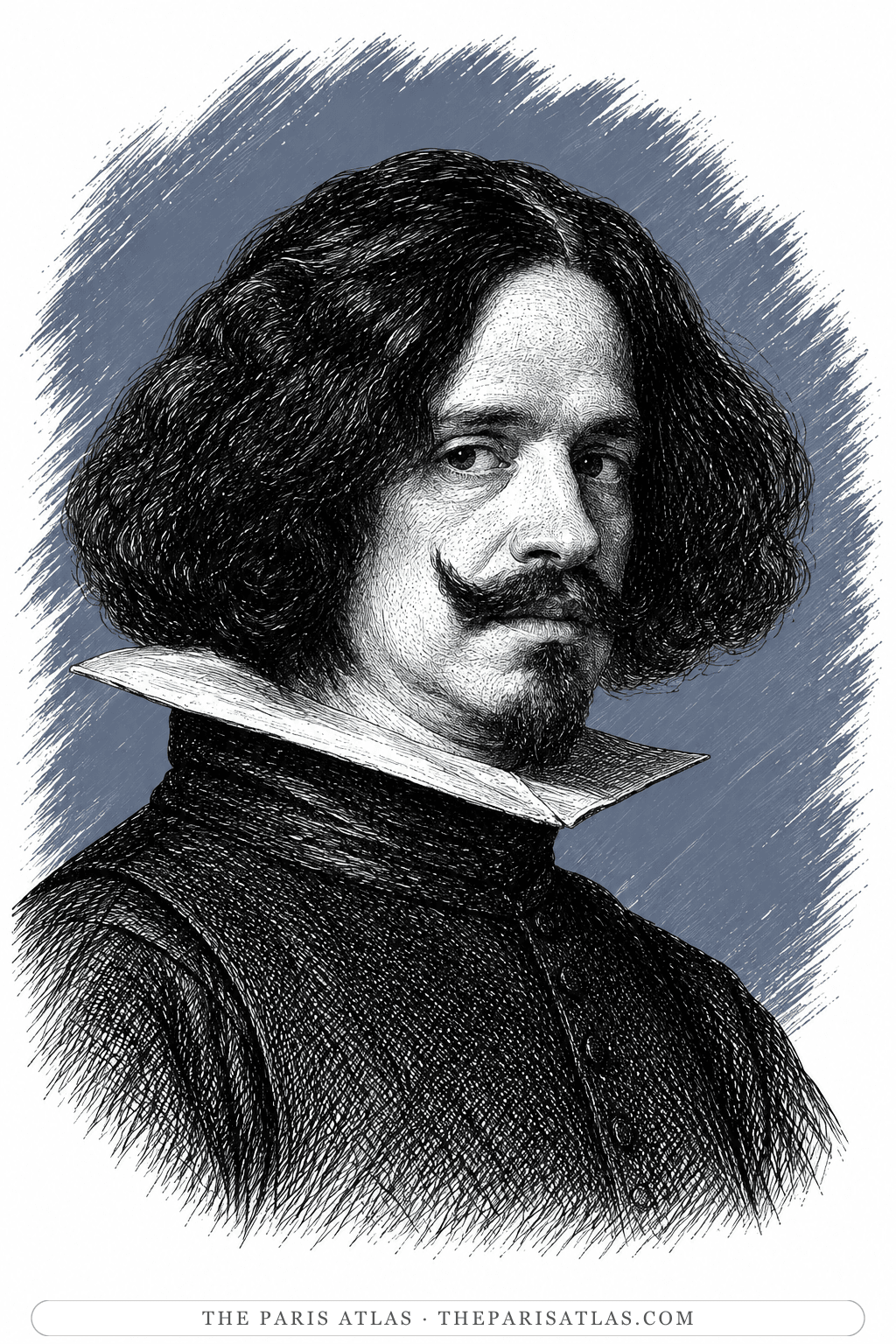
Illustrated portrait of Diego Velázquez

Diego Velázquez

  • Painter

Met · 1628–1629

Peter Paul Rubens reached Madrid at the end of August 1628 on a diplomatic mission and stayed about nine months. Francisco Pacheco, who taught Velázquez and was his father-in-law, wrote in his Arte de la pintura of 1649 that Rubens made friends with few painters in Madrid, praised Velázquez's modesty and talent, and went with him to see the Escorial. Philip IV told Velázquez to show Rubens the royal collections. Rubens left in the spring of 1629.

— Francisco Pacheco, Arte de la pintura, su antigüedad y grandezas (1649); Aureliano de Beruete, Velazquez (1906); Enriqueta Harris, Velázquez, Diego Rodríguez de Silva y (Enciclopedia del Museo del Prado)

Who Inspired Peter Paul Rubens

People whose work inspired Peter Paul Rubens. They did not necessarily meet or know one another.

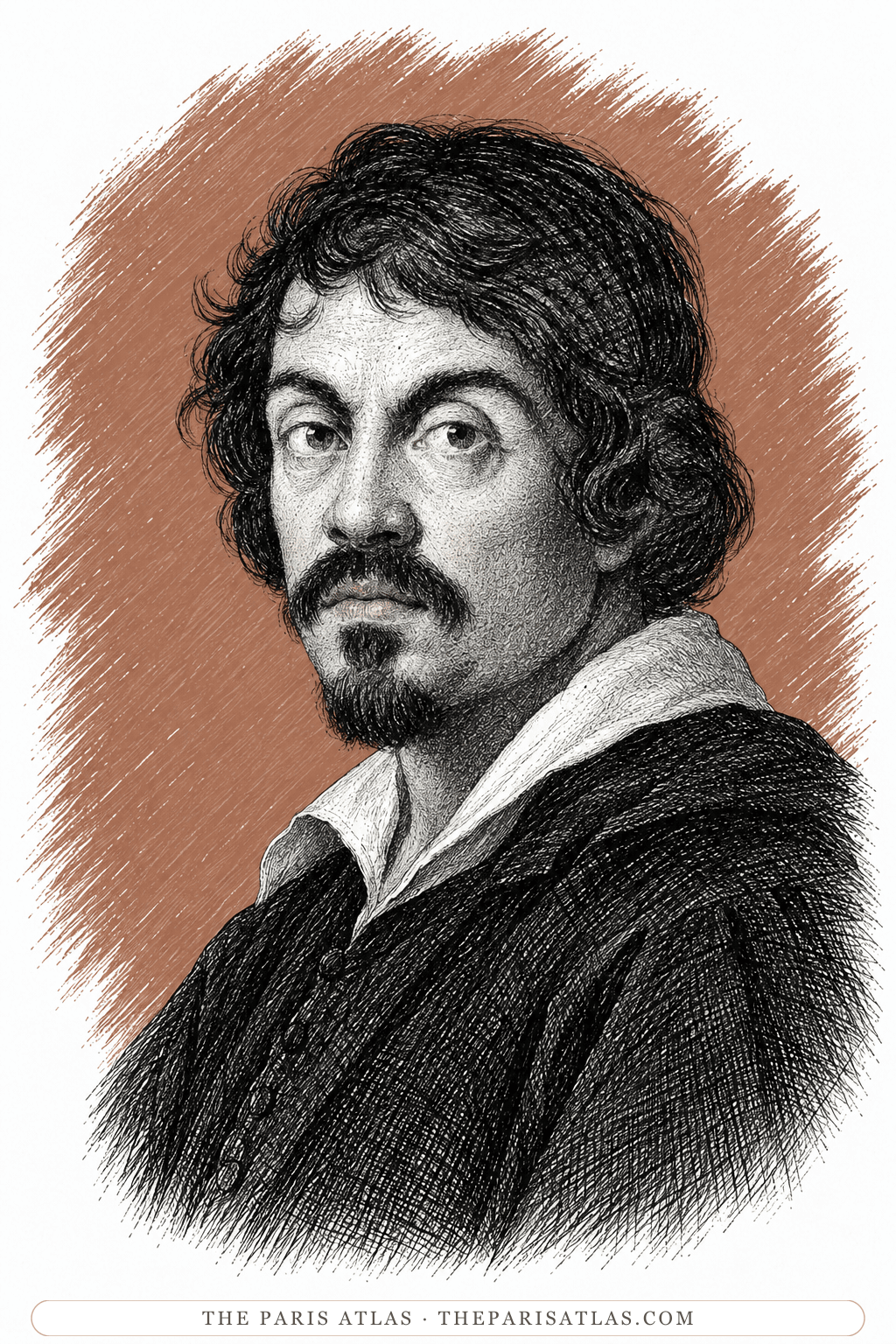
Illustrated portrait of Caravaggio

Caravaggio

Peter Paul Rubens spent eight years working in Italy and went home to Antwerp in 1608. The National Gallery in London says that while he was there he saw Caravaggio's experiments with strongly contrasted light and shade and with deep, rich color, and that he used those methods on his return in Samson and Delilah, painted for the Antwerp mayor Nicolaas II Rockox. Caravaggio and Rubens are not recorded as having met.

— Peter Paul Rubens, Samson and Delilah (NG6461) — collection record; Peter Paul Rubens — artist page

Who Peter Paul Rubens Inspired

People who found inspiration in Peter Paul Rubens’s work.

Illustrated portrait of Rembrandt van Rijn

Rembrandt van Rijn

The Louvre reads Rembrandt's Self-Portrait in a Cap and Gold Chain of 1633 as a claim to stand beside Peter Paul Rubens and Anthony van Dyck. The art historian Eric Jan Sluijter argues that Rubens, with Titian, was the modern painter a Dutch artist of the 1630s was expected to try to equal, and that Rembrandt spent his career competing with Rubens at painting what the period called the passions of the soul.

— Musée du Louvre, Rembrandt, Autoportrait à la toque et à la chaîne d'or, 1633 — collection record (INV 1745); Eric Jan Sluijter, How Rembrandt surpassed the Ancients, Italians and Rubens as the Master of 'the Passions of the Soul' (2014), pp. 63–89

Illustrated portrait of Diego Velázquez

Diego Velázquez

Scholars disagree about what the nine months with Peter Paul Rubens in Madrid did to Velázquez's painting. Enriqueta Harris, writing the Prado's biography, names Titian and Rubens as the two painters who shaped him most, and reads Rubens's example behind his first mythological picture, The Triumph of Bacchus of 1628 and 1629. Aureliano de Beruete argued the opposite in 1906: that Velázquez saw how far his own aims were from Rubens's and changed nothing. Neither position rests on anything Velázquez himself said, because he left almost no writing.

— Enriqueta Harris, Velázquez, Diego Rodríguez de Silva y (Enciclopedia del Museo del Prado); Aureliano de Beruete, Velazquez (1906)

Movements

The artistic and literary currents this life ran through.

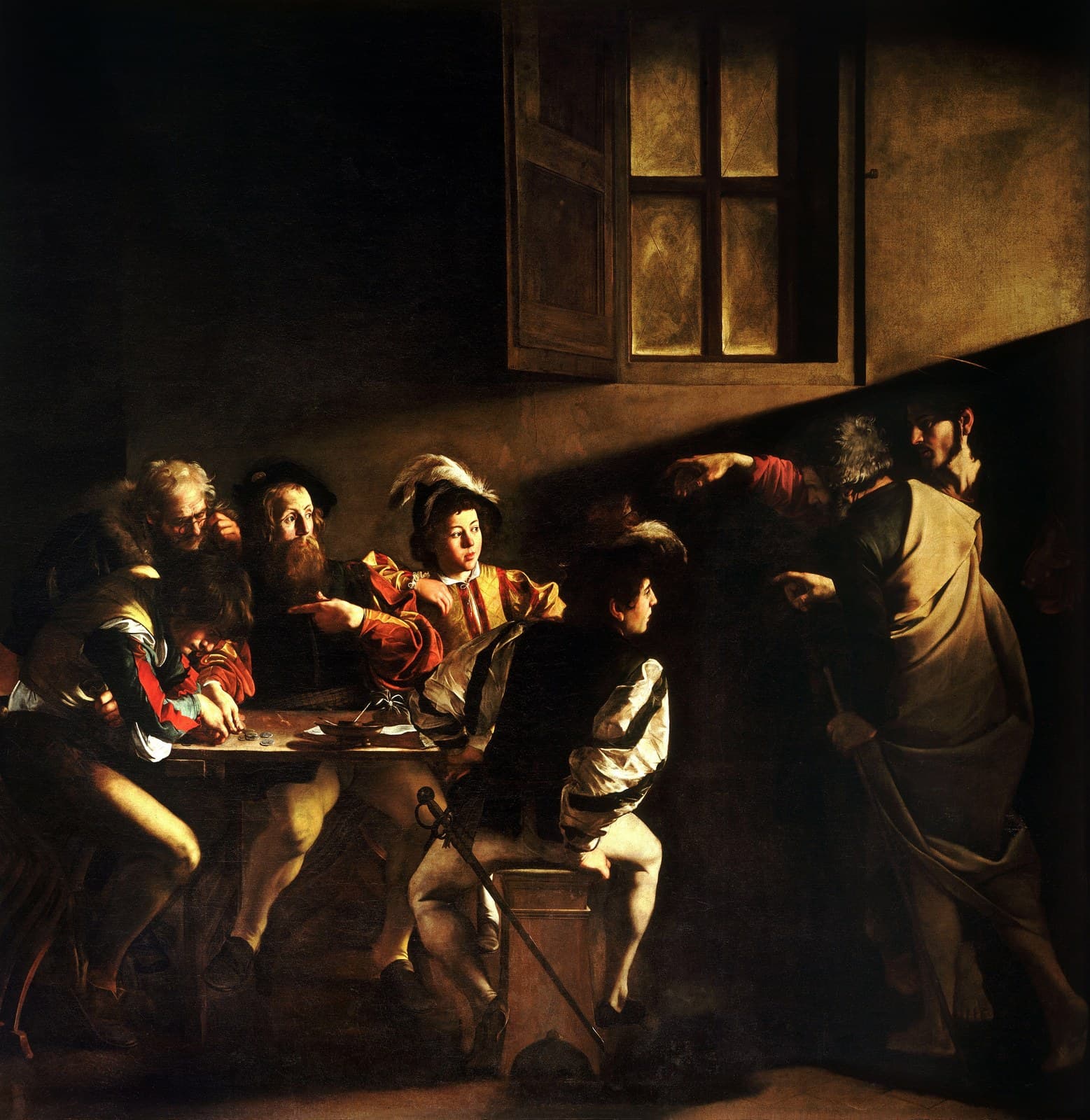
Caravaggio's The Calling of Saint Matthew: men in feathered hats counting coins at a table in a dark room, a shaft of light falling across the back wall, Christ at the right pointing toward them

Art movement and historical period · circa 1600–1750

Baroque Art

Rubens painted the twenty-one narrative canvases and three portraits of the Marie de' Medici cycle in 1622–25 for the queen mother's Luxembourg Palace in Paris, glorifying her without antagonising Louis XIII, with whom she had been in serious conflict. Payment was late and he accepted less than the agreed sum.

— Peter Paul Rubens — artist page; To the Glory of a Queen of France — the Galerie Médicis

Connections and Sources

Peter Paul Rubens’s connections to people, places, and works, with the sources behind each one.

Associated with · 1600–1640

Baroque Art

Rubens painted the twenty-one narrative canvases and three portraits of the Marie de' Medici cycle in 1622–25 for the queen mother's Luxembourg Palace in Paris, glorifying her without antagonising Louis XIII, with whom she had been in serious conflict. Payment was late and he accepted less than the agreed sum.

— Peter Paul Rubens — artist page; To the Glory of a Queen of France — the Galerie Médicis

Influenced · 1633–1669

Rembrandt van Rijn

The Louvre reads Rembrandt's Self-Portrait in a Cap and Gold Chain of 1633 as a claim to stand beside Peter Paul Rubens and Anthony van Dyck. The art historian Eric Jan Sluijter argues that Rubens, with Titian, was the modern painter a Dutch artist of the 1630s was expected to try to equal, and that Rembrandt spent his career competing with Rubens at painting what the period called the passions of the soul.

— Musée du Louvre, Rembrandt, Autoportrait à la toque et à la chaîne d'or, 1633 — collection record (INV 1745); Eric Jan Sluijter, How Rembrandt surpassed the Ancients, Italians and Rubens as the Master of 'the Passions of the Soul' (2014), pp. 63–89

Influenced · 1628–1629

Diego Velázquez

Scholars disagree about what the nine months with Peter Paul Rubens in Madrid did to Velázquez's painting. Enriqueta Harris, writing the Prado's biography, names Titian and Rubens as the two painters who shaped him most, and reads Rubens's example behind his first mythological picture, The Triumph of Bacchus of 1628 and 1629. Aureliano de Beruete argued the opposite in 1906: that Velázquez saw how far his own aims were from Rubens's and changed nothing. Neither position rests on anything Velázquez himself said, because he left almost no writing.

— Enriqueta Harris, Velázquez, Diego Rodríguez de Silva y (Enciclopedia del Museo del Prado); Aureliano de Beruete, Velazquez (1906)

Influenced by · 1600–1608

Caravaggio

Peter Paul Rubens spent eight years working in Italy and went home to Antwerp in 1608. The National Gallery in London says that while he was there he saw Caravaggio's experiments with strongly contrasted light and shade and with deep, rich color, and that he used those methods on his return in Samson and Delilah, painted for the Antwerp mayor Nicolaas II Rockox. Caravaggio and Rubens are not recorded as having met.

— Peter Paul Rubens, Samson and Delilah (NG6461) — collection record; Peter Paul Rubens — artist page

Met · 1628–1629

Diego Velázquez

Peter Paul Rubens reached Madrid at the end of August 1628 on a diplomatic mission and stayed about nine months. Francisco Pacheco, who taught Velázquez and was his father-in-law, wrote in his Arte de la pintura of 1649 that Rubens made friends with few painters in Madrid, praised Velázquez's modesty and talent, and went with him to see the Escorial. Philip IV told Velázquez to show Rubens the royal collections. Rubens left in the spring of 1629.

— Francisco Pacheco, Arte de la pintura, su antigüedad y grandezas (1649); Aureliano de Beruete, Velazquez (1906); Enriqueta Harris, Velázquez, Diego Rodríguez de Silva y (Enciclopedia del Museo del Prado)