

The Price of Salt
by Patricia Highsmith
Two women fall in love while the conventional futures expected of them close in.
- 1952
- Atmospheric
- Melancholy
- intimate
- spare
- voice-driven
The story, briefly
Spoiler-freeTherese Belivet, a young aspiring set designer working in a New York department store, becomes fascinated by Carol Aird, an elegant older woman buying a Christmas gift for her daughter. Their relationship grows under the pressure of Carol’s divorce and custody fight, yet Highsmith allows them a possibility that most queer fiction of the early 1950s denied.
The story, in more detail
Therese Belivet is a young woman working temporarily in a New York department store while trying to begin a career as a theatrical set designer. One day she waits on Carol Aird, an elegant older woman buying a Christmas gift for her daughter. Therese sends Carol a card, and Carol responds.[1]
Their relationship develops while Carol is in the middle of a difficult divorce and custody fight. Therese is unsure what she wants from her boyfriend, Richard, and increasingly certain that what she feels for Carol is unlike anything she has known before.[1]
Patricia Highsmith published the novel under the pseudonym Claire Morgan because she feared being categorized after the success of Strangers on a Train. What made the book historically unusual was not simply that it centered a lesbian relationship. It allowed the possibility that the women might survive it and choose one another.[1]
The full plot
Therese works at Frankenberg’s department store during the Christmas season and feels detached from both the job and her relationship with Richard Semco. At the toy counter she notices Carol Aird, who is shopping for her daughter, Rindy. Therese is immediately fascinated by Carol’s poise, voice, and attention.[1]
Using the address on Carol’s store transaction, Therese sends her a Christmas card. Carol telephones, then invites Therese to lunch and to her suburban home. Their friendship becomes emotionally charged, and Therese’s attachment deepens even when she cannot yet explain it to Richard or to herself.[1]
Carol is separated from her husband, Harge. Their daughter is at the center of a custody dispute, and Harge treats Carol’s past relationship with Abby Gerhard as evidence that she is unfit. The conflict means that Carol’s private life can be examined and used against her whenever Harge wants leverage.[1]
Carol and Therese leave New York on a road trip west. Away from Richard, Harge, and the routines that define them, they become lovers and briefly create a private world in which a shared life seems possible. Therese also begins to imagine an adult identity based on her own work and desires rather than other people’s plans.[1]
The freedom proves temporary. A private investigator hired by Harge follows them and records evidence of their relationship. After they discover the surveillance, Carol returns east to confront the custody case while Therese continues alone, wounded by the separation and unsure whether Carol will ever be free to choose her.[1]
Carol is pressured to accept psychiatric treatment and deny her sexuality in exchange for access to Rindy. She refuses those terms and accepts restricted visits instead. Therese, meanwhile, breaks with Richard, finds professional work, and becomes less willing to wait passively for Carol to decide her future.[1]
How it ends — spoilers ahead
After time apart, Therese meets Carol again in New York. Carol has accepted that she will not have ordinary custody of Rindy and offers Therese a place in the life she is building, including a home they could share. Therese hesitates because she has changed and fears returning to the unequal dependence of their earlier relationship.
Therese goes to a party with people from the theater world, where other relationships and futures appear possible. The evening clarifies rather than erases her feelings. She understands that choosing Carol now would be an adult decision, not simply a continuation of her first infatuation.
Therese leaves the party and goes to find Carol at the Oak Room. Across the crowded restaurant, Carol sees her approaching. The book ends at that moment of mutual recognition, moving toward reunion rather than punishment and leaving the practical details of their life together open.
Themes and analysis
Desire and recognition
Therese’s attraction begins with seeing Carol and feeling, perhaps for the first time, that another life is imaginable. Her intense attention to Carol is not only romantic fascination; it is also recognition of a self she has not yet learned how to describe.
The Christmas card turns a routine sales transaction into a private approach. Therese imagines declaring love, then writes a bland store greeting and signs with her employee number. The contrast lets the reader hear what Carol cannot read. Even the impersonal identity assigned by Frankenberg’s becomes a way to reach her, making Therese’s first initiative both daring and carefully concealed.
Surveillance
Private investigators, lawyers, husbands, and social rules turn intimacy into evidence. The road trip feels free only until Carol and Therese learn that someone has been listening. After that discovery, even ordinary rooms and conversations carry the possibility of observation.
Motherhood and custody
Carol loves Rindy, but the custody process makes her sexuality a weapon that can be used against that bond. Her final agreement is painful because she accepts less access to her daughter rather than promise to deny her own life indefinitely.
Age and experience
Carol is older, wealthier, and more socially experienced, so Therese initially lets her set the terms of their closeness. Their separation matters because Therese returns with stronger professional ambitions and a clearer ability to choose for herself.
Work and identity
Therese’s development as a theater designer parallels her growing independence. The department store is temporary and numbing; creative work gives her a future that does not depend on Richard or even on Carol.
The nontragic ending
The ending does not pretend that prejudice, custody restrictions, or economic differences have disappeared. Its radical gesture is simpler: neither woman must die, be cured, or return to a man. Highsmith lets them move toward a shared future with full knowledge of its cost.
The last scene returns to the pattern of the first meeting: Therese sees Carol across a crowded room, but this time she has gone there deliberately. Carol’s familiar gesture of brushing back her hair reassures her before any words are exchanged. The final gesture is new, however: Carol waves eagerly, and Therese advances. Ending on that movement gives their reunion a future without pretending to narrate or guarantee it.
Writing style
Highsmith writes with cool psychological precision. Even in a love story, she notices awkward pauses, material objects, small changes in expression, and the menace of being watched. The suspense comes from social danger and uncertainty rather than from a conventional crime plot.
The prose is less lush than many romances. Its restraint makes Therese’s obsession feel credible because the reader experiences it through repeated observations instead of grand declarations. Close attention to Therese also shows how incomplete her understanding can be, especially when she idealizes Carol.
Editions and translations
The novel appears under two titles: The Price of Salt and Carol. The original title and Claire Morgan pseudonym belong to its 1952 publication history; Highsmith later republished it under her own name as Carol. Editions that include her afterword add valuable context about the pseudonym, the inspiration for the story, and the letters she received from readers.
Major adaptations
Todd Haynes’s 2015 film Carol, starring Cate Blanchett and Rooney Mara, is the major adaptation. It preserves the central relationship and period pressure while changing point of view and some plot details. The film is an interpretation of the novel, not a substitute for its character details.
Why we recommend it
A love story with the tension of suspense
Highsmith makes a glance, a telephone call, or a car outside a motel feel charged with possibility and danger.
A historically important ending
The women face real losses, but the novel refuses the period’s expectation that queer love must end in death, cure, or surrender.
A convincing growth story
Therese’s movement toward Carol also depends on becoming more independent in her work and decisions.
What this book explores
The people in its pages

Therese Belivet
A young aspiring set designer whose fascination with Carol becomes her first clear experience of romantic love.

Carol Aird
An elegant older woman whose relationship with Therese unfolds during a divorce and custody fight.
Also in the book

Harge Aird
Carol’s estranged husband, who uses surveillance and the custody process to regain control over her choices.

Rindy Aird
Carol and Harge’s young daughter and the person most painfully affected by their custody conflict.

Richard Semco
Therese’s boyfriend, who assumes that affection, travel plans, and time will lead naturally to marriage.

Abby Gerhard
Carol’s close friend and former lover, whose loyalty makes her a practical ally during the crisis.

Dannie McElroy
A young man connected to Therese’s theater work who represents another possible relationship and a more independent social world.
Bring it to book club
- Why does Therese become so fascinated by Carol immediately?
- How does surveillance change the nature of the road trip?
- Is Carol more powerful than Therese, or more vulnerable?
- What does Richard misunderstand about Therese?
- How does motherhood complicate Carol’s choices?
- Why is Abby important to both Carol and Therese?
- How does Highsmith’s suspense style influence the romance?
- What makes the ending historically radical?
Timeline
1952
Coward-McCann publishes The Price of Salt under the name Claire Morgan.
1953
A Bantam paperback edition reaches a much wider readership.
1990
Highsmith republishes the novel under her own name as Carol.
2004
W. W. Norton issues a widely used edition titled The Price of Salt (Carol).
2015
Todd Haynes releases the film Carol, starring Cate Blanchett and Rooney Mara.
Book editions
Hardcover
- Hardcover
- Coward-McCann
- 1952
Paperback
- Paperback
- Bantam Books
- 1953

- Paperback
- W. W. Norton
- 2004
- 9780393325997
Reader reviews
Readers may also like

Giovanni's Room
Similar questions of desire and social pressure lead to a tragic outcome.
Read our take
A Certain Smile
Age difference and emotional asymmetry appear within another atmosphere of 1950s sophistication.
Read our take
The Bell Jar
A young woman questions the adult future other people expect her to accept.
Read our take
A Single Man
Queer intimacy and social invisibility are conveyed through restrained prose.
Read our takeThe Price of Salt: frequently asked questions
Why did Highsmith use the name Claire Morgan?
She feared being professionally categorized as a lesbian novelist after beginning a successful career in psychological suspense.
Why was the ending unusual?
Many mid-century queer novels ended in death, punishment, separation, or heterosexual ‘correction.’ Highsmith allowed the possibility that Carol and Therese could build a future together.
Is Carol the same book?
Yes. Highsmith later republished The Price of Salt under her own name with the title Carol.
Does Carol lose custody?
She accepts major restrictions on access to Rindy rather than deny her sexuality under coercive terms.
Does Therese leave Richard?
Yes. She first withdraws emotionally and then ends the relationship in practical terms because the future he wants is not the one she chooses.
Was the story inspired by real life?
Highsmith drew the first encounter from seeing a woman while working in a department store and used material from several experiences and relationships, but the novel remains fiction.
Is Abby Carol’s former lover?
Yes. She also remains Carol’s trusted friend and an important ally during the custody conflict.
Does the book end with Carol and Therese together?
It ends with Therese crossing a crowded restaurant toward Carol after deciding to accept the possibility of their relationship. Their reunion is clear, while the details of their future remain open.
If you like Patricia Highsmith
Explore authors with a similar voice, perspective, and influence.

Simone de Beauvoir
French writer and philosopher whose novels, memoirs, and social analysis examined freedom, gender, responsibility, aging, and the material conditions that shape a life.
View author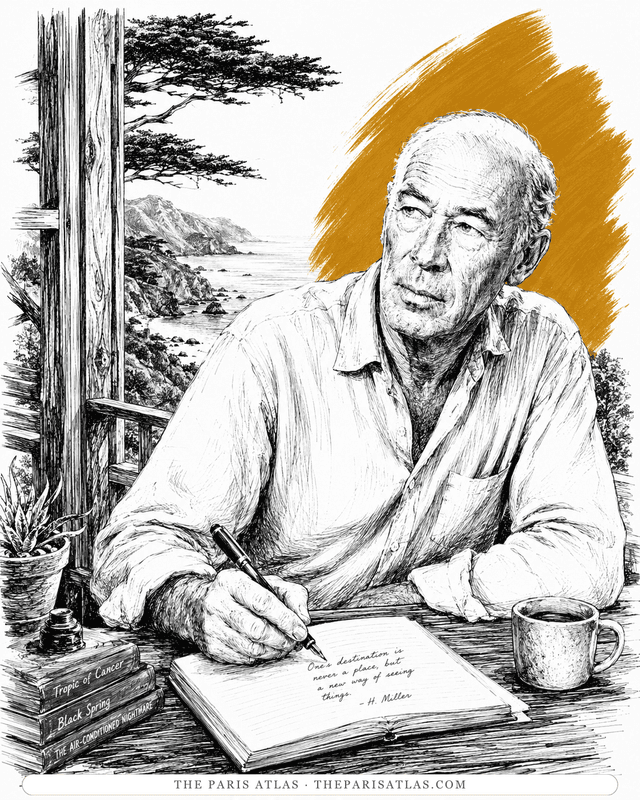
Henry Miller
The Brooklyn dropout who arrived in Paris broke at thirty-eight and wrote the exuberant, banned books that ended American censorship.
View author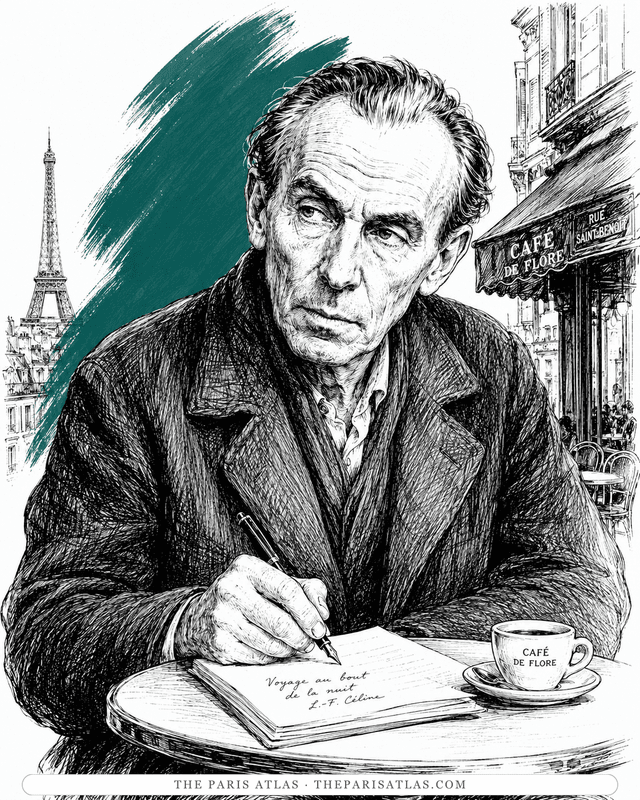
Louis-Ferdinand Céline
The doctor of the Paris slums who wrote the century's blackest, funniest novel — and changed the sound of French prose.
View author
References
References
The sources below include the primary text, editions, scholarship, archival materials, and other records that informed this page. They document The Price of Salt, its publication, and its place in literary history.


2The Price of Salt — Google Books edition record
Official recordGoogle BooksUsed forGoogle Books catalogue used to cross-check the title and edition metadata.
3The Price of Salt — Internet Archive ISBN catalogue
Official recordInternet ArchiveUsed forInternet Archive catalogue used to cross-check the edition and its availability in library holdings.
4The Price of Salt — Library of Congress books catalogue
Official recordLibrary of CongressUsed forLibrary of Congress catalogue used to cross-check the bibliographic record by ISBN.

5Patricia Highsmith
WebsiteLibrary of AmericaUsed forLibrary of America author record used to cross-check Highsmith’s career and the novel’s place in her work.
6The Price of Salt: 1953 Bantam Edition
NovelProject Gutenberg, 1953Used forPrimary text for the greeting-card and final-recognition readings. The transcription identifies the September 1953 Bantam edition; it does not include Highsmith’s later afterword.
i
Why these sources are here
The primary text is the baseline reference for every book page. Additional references document publication history, interpretation, and historical context where that evidence is available.
 Explore more resources