

It Catches My Heart in Its Hands
The first full-length collection, three years later — the step from pamphlet to book.
Read our take
Bukowski's first book: a 200-copy chapbook that took thirty months to appear and did not sell out for years.
Flower, Fist and Bestial Wail, published on 14 October 1960, was Charles Bukowski's first book — a poetry chapbook of 200 copies from E. V. Griffith's Hearse Press. Bukowski was forty. The book took roughly thirty months to appear after it was first planned, mostly because Griffith kept running out of money; Bukowski eventually contributed to the production costs of his own first book. The cover, by the artist Ben Tibbs, shows a fist gripping a flower in front of a wailing mouth, lettered in red. It did not sell out: in late 1962 Griffith still had more than fifty copies on hand. The surviving copies are now among the most sought-after Bukowski items in the rare-book trade.
Nothing about the debut predicted the career. A forty-year-old post-office worker, published here and there in little magazines, waited two and a half years for two hundred copies of a pamphlet he helped pay for — and then watched it not sell. The value of the book is retrospective: it is where the shelf begins, and its title has the early Bukowski's lyric extravagance rather than the flat manner he became famous for. Three years later the Loujon Press edition of It Catches My Heart in Its Hands gave him a real full-length collection, and the chapbook's fate reversed — from remainder to rarity.
The museum in “The Day It Rained at the Los Angeles County Museum” is not insulated from events outside it. Reports of death, weapons and a race result surround the speaker's inspection of the propeller, giving unlike events the same abrupt treatment. His pleasure in the rainy afternoon recalls another apparently unpromising moment in New Orleans that he had resolved to remember. Attention makes such moments worth retaining without making them cheerful. Yet the stranger's ordinary weather question receives a threat to summon the guard. The speaker protects his private associations by refusing conversation, exposing the hostility that can accompany his intensely receptive looking.
“His Wife, the Painter” begins by moving from sketches inside a room to traffic outside it. The sketches belong to the room, but the moving bus is also described through a drawn line. Radio voices add writers' names to this mixture of art and traffic, before a portrait appointment introduces a precise date into the unsettled scene. Later, dialogue and private thoughts alternate with the terse naming of artworks and their locations. The reader must move among these different kinds of statement without a continuous explanation. The poem assembles its portrait of domestic life through interruptions rather than presenting one observer's orderly account.
Everything on the Bukowski shelf descends from these 200 copies — the debut of a poet already twenty years into rejection slips.
Bukowski's career is the standing argument against starting young; this chapbook is its opening exhibit.
The first chapbook allows readers to compare the early poet with the more familiar novelist and public performer.
1958
The chapbook is planned with E. V. Griffith of Hearse Press; delays begin almost immediately.
1960
Published on 14 October in 200 copies — Bukowski's first book, at forty.
1963
It Catches My Heart in Its Hands, the first full-length collection, follows from Loujon Press.
The first full-length collection, three years later — the step from pamphlet to book.
Read our take
The in-print selected volume covering the era; the practical way to read the early poems.
Read our take
Flower, Fist and Bestial Wail — a poetry chapbook of 200 copies, published by E. V. Griffith's Hearse Press on 14 October 1960. Bukowski was forty years old.
The publisher kept running out of money. Roughly thirty months passed between the plan and the printed book, and Bukowski contributed to the production costs himself.
No. In late 1962 the publisher still had more than fifty of the 200 copies. Its rarity today is the reverse of its reception.
The artist Ben Tibbs — a fist gripping a flower in front of a wailing mouth, with the title lettered in red.
The chapbook itself has never been reprinted, and surviving copies trade at rare-book prices. The early poetry is best reached through Burning in Water, Drowning in Flame, the in-print selected volume covering 1955 to 1973.
Explore authors with a similar voice, perspective, and influence.
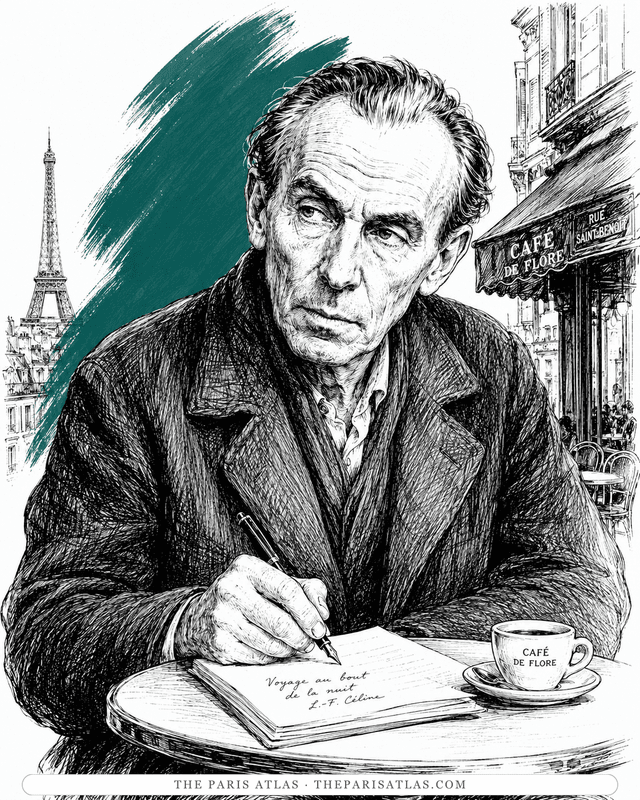
The doctor of the Paris slums who wrote the century's blackest, funniest novel — and changed the sound of French prose.
View author
The Brooklyn dropout who arrived in Paris broke at thirty-eight and wrote the exuberant, banned books that ended American censorship.
View author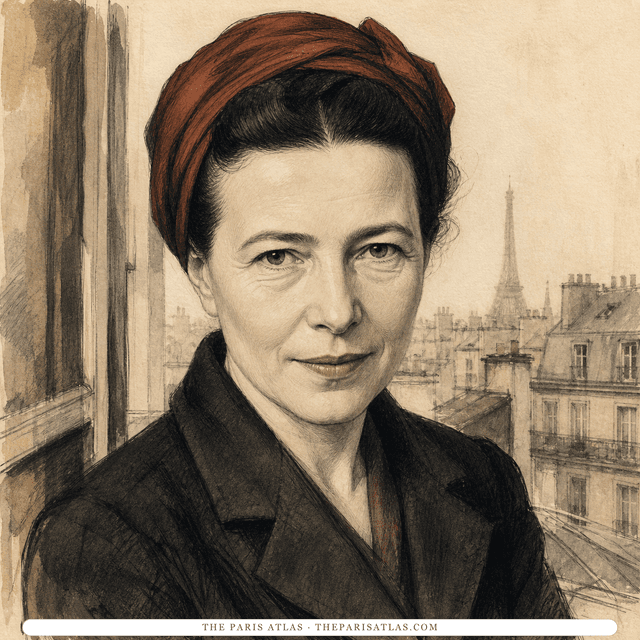
French writer and philosopher whose novels, memoirs, and social analysis examined freedom, gender, responsibility, aging, and the material conditions that shape a life.
View authorThe sources below include the primary text, editions, scholarship, archival materials, and other records that informed this page. They document Flower, Fist and Bestial Wail, its publication, and its place in literary history.


The primary text represented by this page, used for descriptions of the work’s contents and for any quoted passages shown here.

The Hearse Press debut and the little-magazine years in the career narrative.
Publication date, print run, the production delays, and the unsold copies.
Bibliographic details of the Hearse Press chapbook checked against the checklist.
The late start and little-magazine years in the career arc.
Complete 31-line museum poem in a public transcription of the later 1997 Black Sparrow selected poems, pages 25–26. Supports the reading of memory, attention and refusal; not a 1960 facsimile or independently verified visit.
Complete displayed primary poem, from the wall sketches to the closing sleep image. The reading uses the poem itself, not the site's adjacent generated analysis. Transcription has typographical errors and flattened lineation; no original-edition collation or identification of the couple is claimed.
Specialist contents confirm both illustrated poems belong to this collection. Approximate composition dates and the index's exact publication date are not adopted.
The primary text is the baseline reference for every book page. Additional references document publication history, interpretation, and historical context where that evidence is available.
 Explore more resources