
Factotum
The prequel in Chinaski's life: the wandering years of bad jobs before the post office fixed him in place.
Read our take
Charles Bukowski quit the post office in January 1970 and handed his publisher this novel within weeks. It is the job, turned into literature.
Post Office is Charles Bukowski's first novel, published by Black Sparrow Press in 1971, when he was fifty. Its narrator, Henry Chinaski — Bukowski's fictional alter ego — carries mail and then sorts it for the United States Post Office in Los Angeles, and the novel runs on the machinery of the job: supervisors, disciplinary write-ups, time clocks, impossible routes, and the flat refusal of the work to mean anything. Bukowski wrote it in the weeks after John Martin's hundred-dollar-a-month guarantee let him resign from the real post office, and it reads like a man emptying eleven years of accumulated evidence onto the page.
Henry Chinaski, a fictional stand-in for Bukowski himself, drifts into work as a substitute mail carrier because it looks easy and turns out not to be: bad routes, dogs, rain, and supervisors who log every minute. He quits, gambles at the racetrack, and comes back years later as a night-shift sorting clerk, where the novel settles into the grind the title promises.
Around the job, the life: drinking, the racetrack, the women Chinaski lives with and loses — among them a version of Jane Cooney Baker, the most important relationship of Bukowski's early life, whose death lands in the book with the flat devastation the style otherwise holds back. The novel ends where Bukowski's own postal years ended, with the resignation that made the book possible.
Henry Chinaski takes a job as a substitute mail carrier in Los Angeles because a friend tells him it is easy work. It is not. He is given the routes nobody wants, in rain and heat, with dogs and with supervisors who record every late minute, and he does it hungover almost every day.
He quits, lives for a while on racetrack winnings, and eventually returns to the post office as a night-shift mail sorter — a job that consists of standing at a case and throwing letters into slots for hours, measured against a quota. Eleven years pass this way. Around the job are the rooming houses, the drinking, and the women he lives with and loses.
Chinaski finally quits, sits down with a bottle, and starts writing a novel — the one the reader has just finished. Bukowski wrote it the same way: after resigning from the real post office in January 1970, he produced the book in about three weeks.
The Christmas round looks attractive because Chinaski can set his own pace. Finishing brings another block of deliveries rather than a lasting reward, so his leisurely movement is already a response to how the work is organized. Yet the opening sentence identifies this apparent discovery as an error. The older narrative voice knows what the eager recruit does not. That gap lets the next chapter overturn his expectations: the easy rhythm gives way to waiting, unfamiliar routes and deadlines imposed without enough time to meet them.
Thirty pages of complaint produce no visible examination of the evidence. Instead, the official attacks Chinaski's manner of speaking and substitutes Jonstone's long service for an answer about his conduct. The report becomes something to wave, not something to consider. Repeated declarations of the supervisor's worth make the dialogue circular, exposing an appeals process that protects its own hierarchy. Chinaski ends the exchange by echoing the official's judgment, but his unpaid absence the next day keeps the ending from becoming a cost-free victory over that hierarchy.
First novel, defining subject, and the fastest read of the six — most readers should start here.
Nothing in American fiction takes clock-punching drudgery more literally: the novel's engine is the job itself, not an escape from it.
Rules, routes, and disciplinary notices make the workplace’s power concrete rather than leaving it as a general complaint about employment.
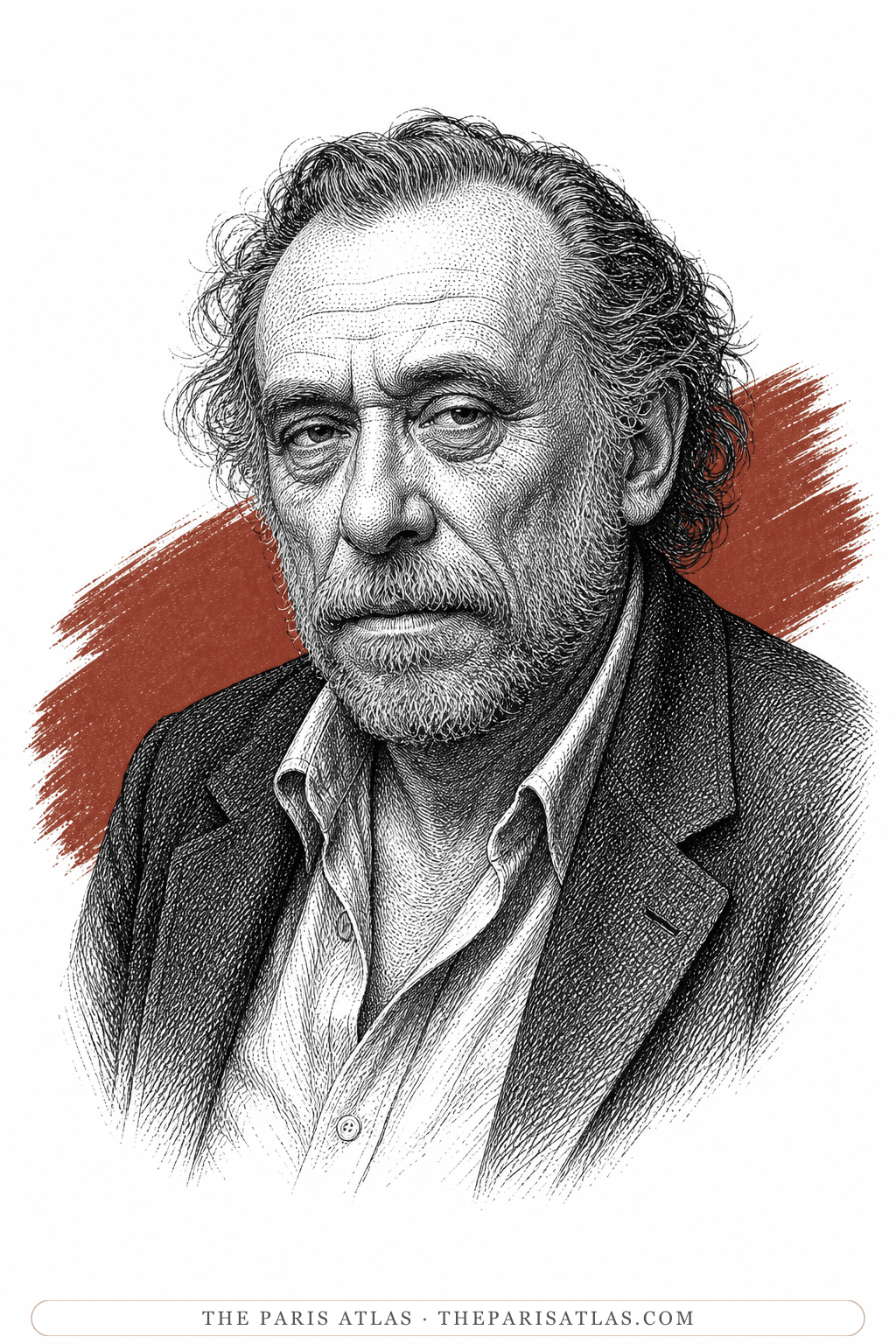
The narrator, and Bukowski's fictional alter ego across five novels. He carries mail, sorts it, drinks, plays the horses, and records the job with a flatness that is the book's whole method.

The woman Chinaski lives with through the early part of the book, and the closest thing in it to a love. Bukowski drew her from Jane Cooney Baker, the older woman he loved through the 1940s and 1950s, who died in 1962.

The wealthy woman Chinaski marries and follows out of state. Bukowski drew her from Barbara Frye, the Texas magazine editor he was married to for about two years in the 1950s.

Chinaski's supervisor, and the book's standing antagonist — the human form of the disciplinary machinery, handing out write-ups and impossible routes.
1952
Charles Bukowski begins working for the United States Post Office in Los Angeles as a substitute mail carrier.
1958
Returns to the post office as a sorting clerk at the Terminal Annex, the job the novel's second half grinds through.
1970
Resigns in January after John Martin's $100-a-month offer, and writes the novel in the weeks that follow.
1971
Black Sparrow Press publishes Post Office.

The prequel in Chinaski's life: the wandering years of bad jobs before the post office fixed him in place.
Read our take
The sequel in circumstance: what happened to Chinaski after the writing finally paid.
Read our take
Charles Bukowski's first novel follows Henry Chinaski, his fictional alter ego, through more than a decade as a mail carrier and then a sorting clerk for the United States Post Office in Los Angeles — the supervisors, the time clocks, the drinking and the racetrack around the job, and the resignation that ends it.
Closely, but it is fiction. Bukowski worked for the Los Angeles post office for over a decade, and the novel draws directly on those years, but Chinaski is an exaggerated, rearranged version of his author, and the book should not be read as literal autobiography.
In roughly a month. He resigned from the post office in January 1970, after the publisher John Martin guaranteed him $100 a month to write full time, and Martin received the manuscript within weeks.
Yes — it is the usual recommendation. It is short, fast, funny, and introduces Henry Chinaski, the narrator who carries most of the novels.
Black Sparrow Press published it in 1971, when Bukowski was fifty. Ecco has kept it in print since the Black Sparrow list was sold in 2002.
About three weeks. John Martin's guarantee of a hundred dollars a month let him resign from the post office in January 1970, and he delivered the finished novel to Black Sparrow shortly afterward.
Bukowski's fictional alter ego, first used in a 1965 prose pamphlet and then in five novels. He shares Bukowski's jobs, addresses and habits, but he is a character rather than a strict self-portrait.
Explore authors with a similar voice, perspective, and influence.
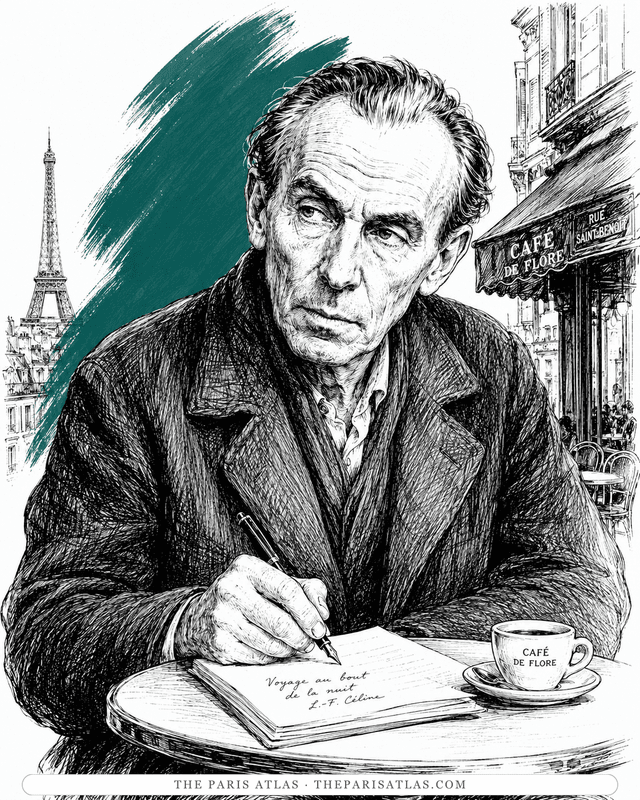
The doctor of the Paris slums who wrote the century's blackest, funniest novel — and changed the sound of French prose.
View author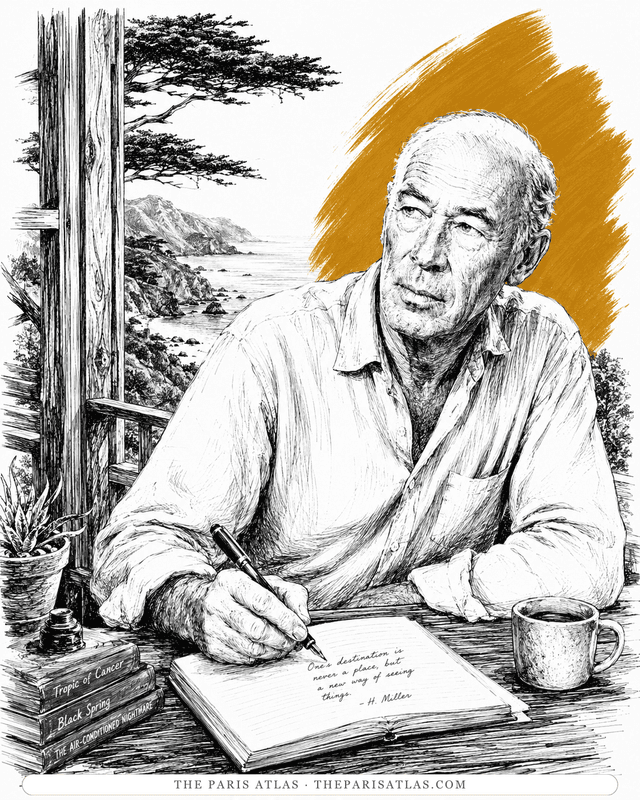
The Brooklyn dropout who arrived in Paris broke at thirty-eight and wrote the exuberant, banned books that ended American censorship.
View author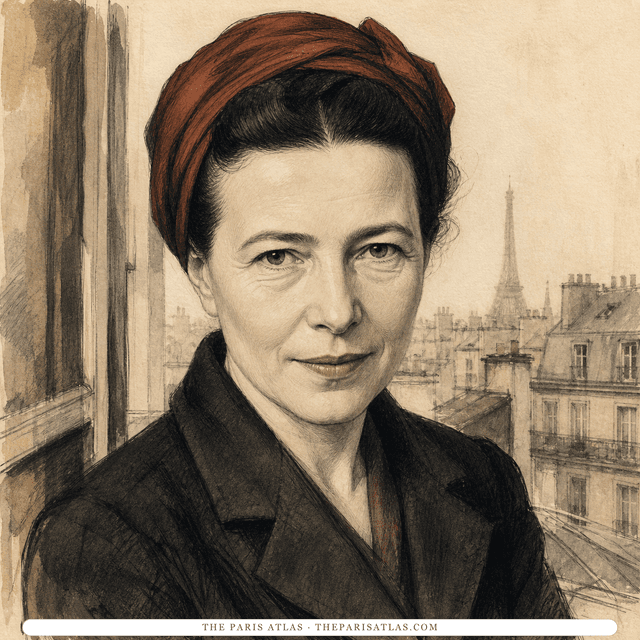
French writer and philosopher whose novels, memoirs, and social analysis examined freedom, gender, responsibility, aging, and the material conditions that shape a life.
View authorThe sources below include the primary text, editions, scholarship, archival materials, and other records that informed this page. They document Post Office, its publication, and its place in literary history.


Biographical and bibliographic backbone: the career arc, the Black Sparrow relationship, and the book's place in it.
Publication dates, publishers, and chronology checked against the bukowski.net timeline.
Bibliographic details cross-checked against the Verdant Press checklist.

Official record used to verify names, dates, institutional details, or other factual information on this page.
Primary-text evidence from the permission-marked public excerpt; locators follow its displayed chapter labels.
The primary text is the baseline reference for every book page. Additional references document publication history, interpretation, and historical context where that evidence is available.
 Explore more resources