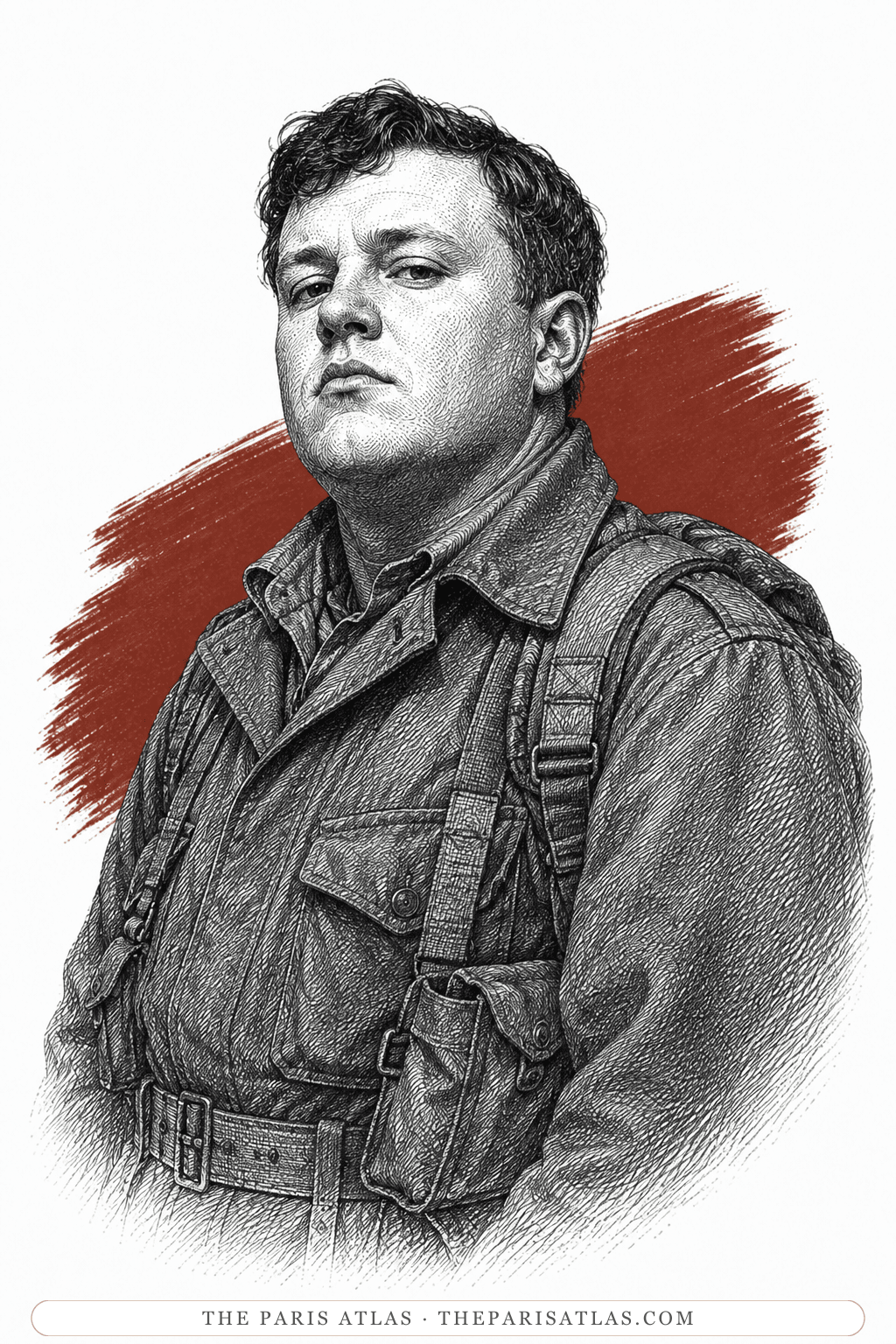
Roland Weary
A young soldier whose heroic fantasies turn Billy into the target of his anger.
To see himself as a heroic warrior and make Billy responsible when reality contradicts that identity.
The book

At a glance
- United States
- Fellow soldier
- Heroic war stories
Who they are in the book
Spoiler-freeWeary is overloaded with equipment and imagines himself as part of a noble band of fighters. Billy’s helplessness threatens that story, so Weary recasts him as the cause of every failure.
His self-dramatizing version of war contrasts with the novel’s emphasis on frightened, exhausted children.
How Roland Weary Is Portrayed
- Stocky young soldierHis build contrasts with Billy’s thinness.
- Overloaded uniformExcess equipment reflects his fantasy of preparedness.
- Self-important expressionHe expects history to recognize him.
- Tense jawHumiliation quickly becomes rage.
- Close engraved bustNo weapons dominate the portrait.
- Burnt umber accentA distinct earth tone suits his heaviness.
Weary dies after capture and tells Paul Lazzaro that Billy caused his death. That accusation leads to Lazzaro’s promise of revenge.
If you like Slaughterhouse-Five


If you like Kurt Vonnegut
Explore authors with a similar voice, perspective, and influence.
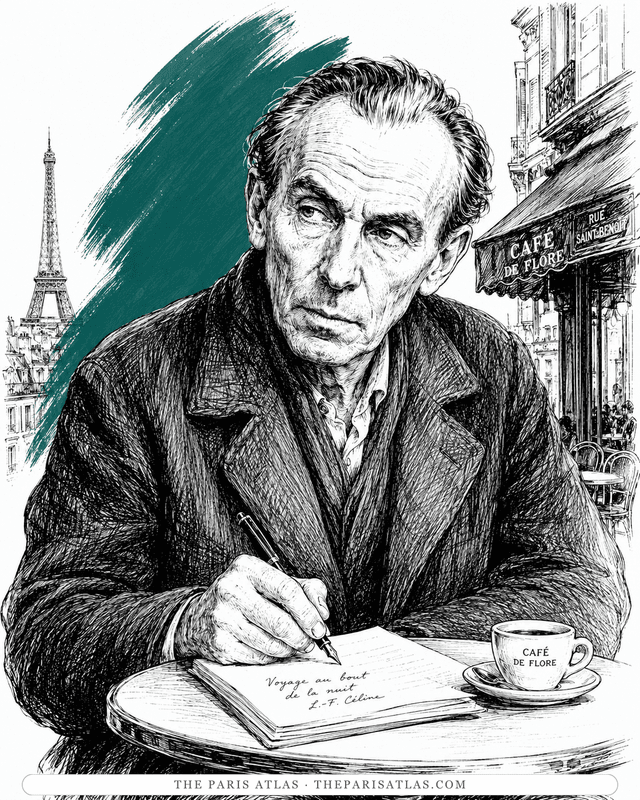
Louis-Ferdinand Céline
The doctor of the Paris slums who wrote the century's blackest, funniest novel — and changed the sound of French prose.
View author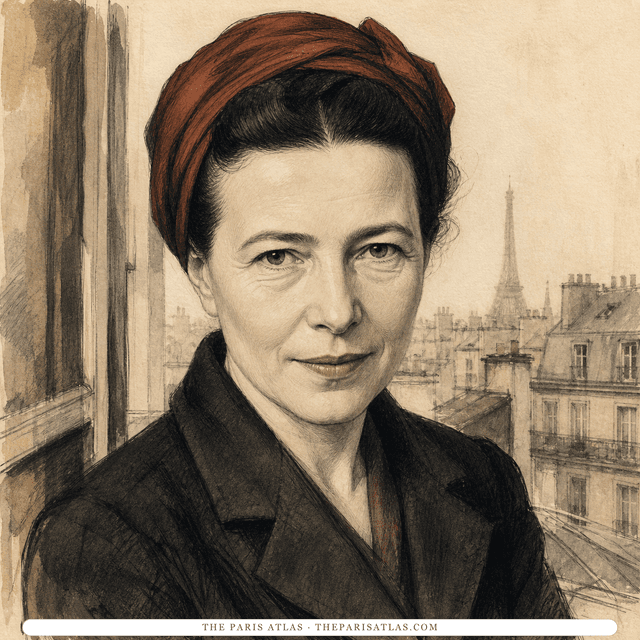
Simone de Beauvoir
French writer and philosopher whose novels, memoirs, and social analysis examined freedom, gender, responsibility, aging, and the material conditions that shape a life.
View author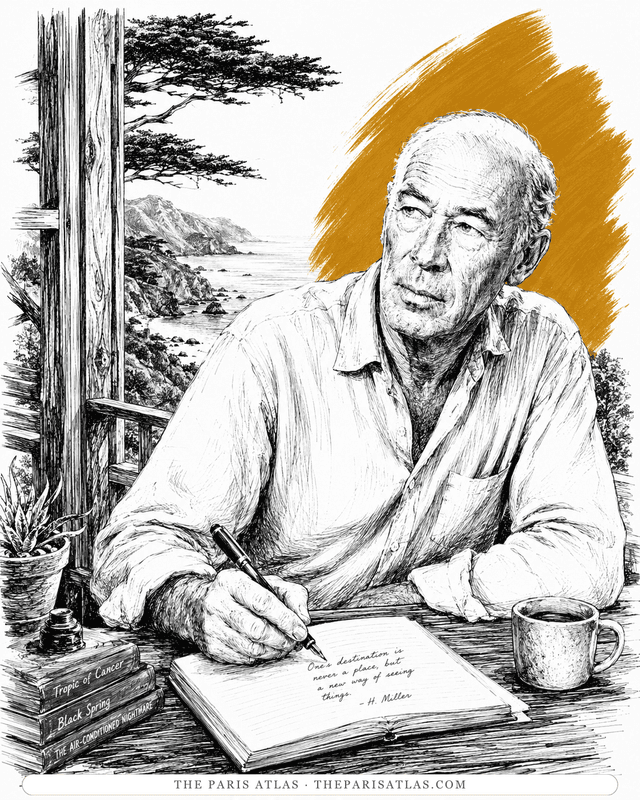
Henry Miller
The Brooklyn dropout who arrived in Paris broke at thirty-eight and wrote the exuberant, banned books that ended American censorship.
View author