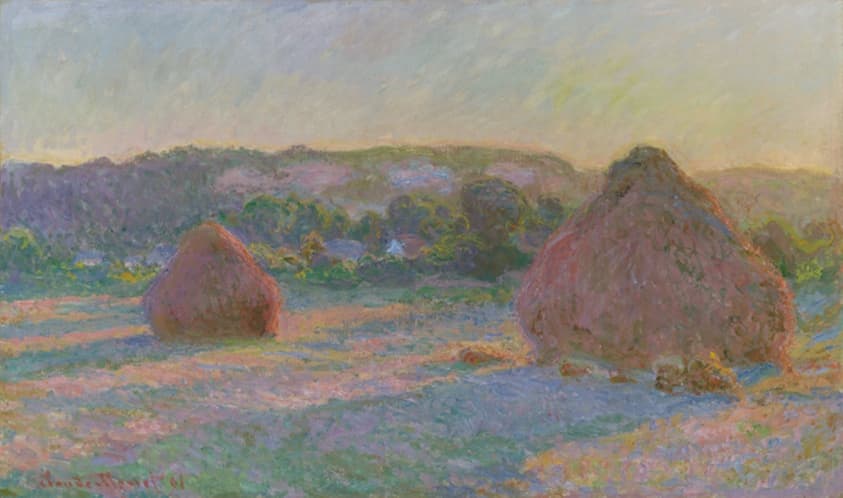
Stacks of Wheat (End of Summer)
by Claude Monet
One of the wheat stacks Monet painted in the field outside his own farmhouse at Giverny across 1890 and 1891 — the series whose Paris exhibition in May 1891 turned him from a difficult painter into a successful one.
- 1890–91
- Oil on canvas
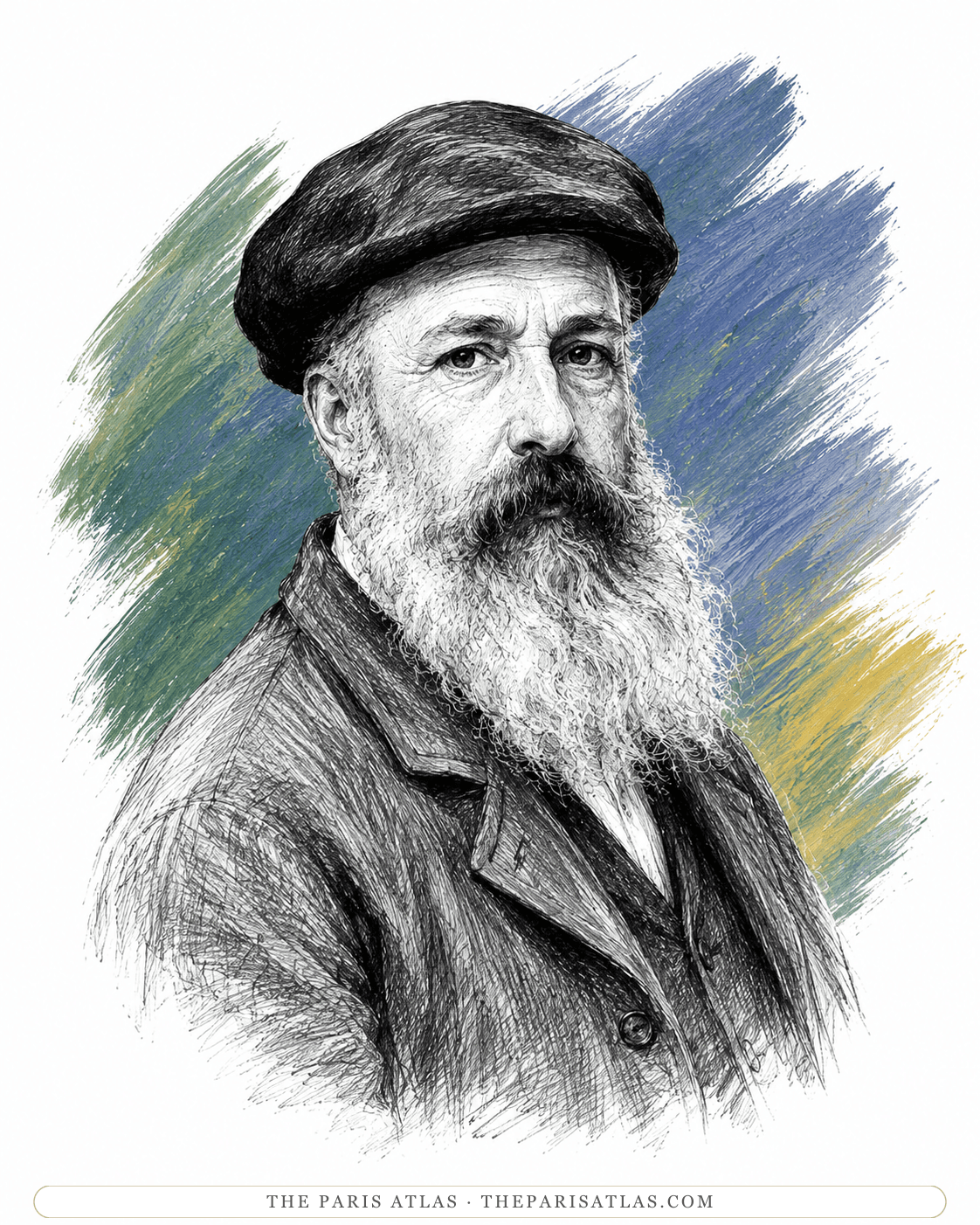
About Claude Monet
Two stacks, late summer
Two conical stacks stand in a cut field, the larger one close to the viewer, the smaller set back and to the left. Behind them the ground rises to a line of trees and a distant village, and above that the sky. The canvas is wide and low, a little over a metre across and only sixty centimetres high, which pushes everything into a horizontal band.
In this canvas, as in nearly all the autumn views in the series, the pointed tops of the stacks break through the horizon line and stand against the sky. In most of the winter pictures — which make up the core of the group — the stacks sit lower, banded around by hill and field, as though bedded down. The stacks themselves were substantial structures, fifteen to twenty feet high, standing in the fields just outside Monet's farmhouse.
Several easels at once
Monet worked on the series through 1890 and 1891 both outdoors and indoors. In the field he painted at several easels simultaneously, moving between canvases as the light changed so that each one recorded a consistent set of conditions. In the studio he then adjusted them against one another, tuning the group as a group rather than finishing each picture on its own terms.
For Monet the stack was not a rural motif so much as a symbol of sustenance and survival — grain kept through the winter, in the fields of the place he had settled for good.
Fifteen canvases in one small room
In May 1891 Monet hung fifteen of the stacks side by side in a single small room at the Galerie Durand-Ruel in Paris. Nothing quite like it had been done: not a selection of an artist's recent work, but one subject, repeated, with the differences between the canvases as the whole content of the show.
It was an immediate critical and commercial success, and it changed Monet's position. He followed it with series on the poplars, the facade of Rouen Cathedral, and eventually his own water garden. The Art Institute of Chicago now holds the largest single group of the wheat stacks in the world.
Sold, resold, exchanged
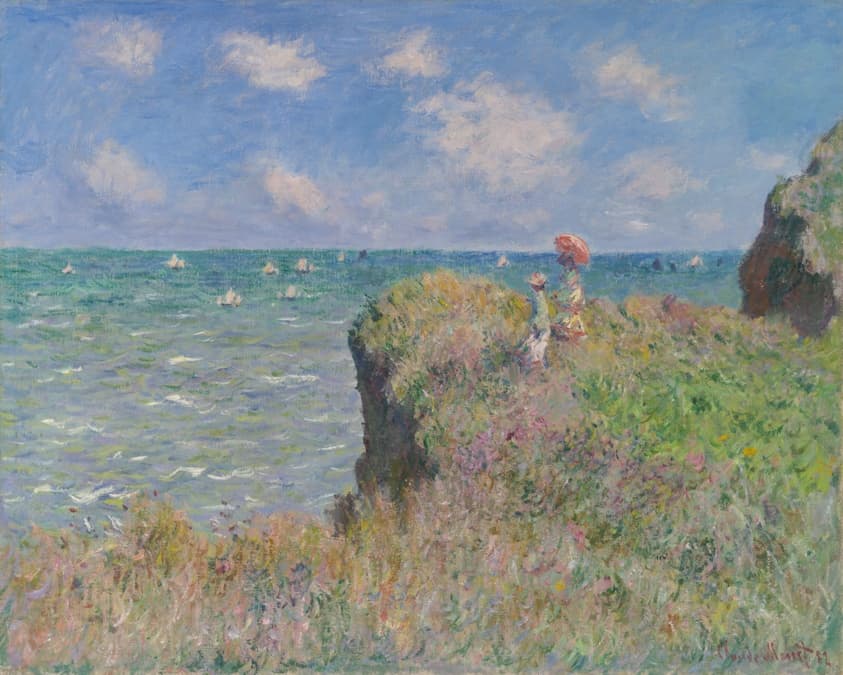
Durand-Ruel bought this canvas from Monet in Paris on 9 May 1891 for 3,000 francs and sold it on 26 June to Charles Fairchild of Boston for 5,000. Fairchild returned it that August, exchanging it for another Monet — a Pourville cliff picture of 1882. It came to the Art Institute of Chicago in 1985 as the gift of Arthur M. Wood, Sr., in memory of Pauline Palmer Wood.
Close reading
Reading the work, detail by detail
The stack is simple enough to remain constant and broad enough to receive every change in weather. Close up, the motif is less a farm object than a testing surface for light.
_-_1985.1103_-_Art_Institute_of_Chicago.jpg&w=3840&q=75)
1.The stack holds warm and cool light at once
The sunlit straw is not merely yellow. Orange and cream sit beside lilac and blue, so shadow stays colored rather than turning brown. The stack's volume is built from temperature changes across its rough surface.
2.The shadow is the boldest shape
A broad violet-blue wedge leaves the stack and runs toward the viewer. It locks the rounded mass to the ground while also carrying the complementary contrast that makes the surrounding orange field glow.
3.The farm is pushed to the edge
Trees and buildings are compressed into a thin, cool strip. By giving so little space to the recognizable landscape, Monet makes the stack and the atmosphere around it occupy almost the entire experience of the picture.
4.A smaller stack makes the field recede
The smaller stack repeats the peaked shape of the large stack farther right. Its warm face and cooler shaded side remain distinct, even at this reduced size. Repeating the same basic form at two scales gives the field depth without a road or fence leading into it.
5.The rounded crest joins straw to sky
The stack's crest rounds over above sloping sides of pink, violet, and ochre. Short marks loosen the silhouette where straw meets the pale sky. The overall mound remains clear even though its edge is rough and its surface is divided into many small touches of color.
6.Color bands run across the field
Pink and pale green bands cross the ground between cooler blue-violet passages. The strokes run broadly sideways, unlike the sloping sides of the stacks. That change in direction helps the ground read as a level surface under the rounded masses.
Timeline
1890
Monet begins the wheat stack series in the fields beside his farmhouse at Giverny, working at several easels at once.
1891
Durand-Ruel buys this canvas on 9 May for 3,000 francs; fifteen of the series are hung together at the Galerie Durand-Ruel in Paris that month.
1891
Sold to Charles Fairchild of Boston in June for 5,000 francs and exchanged back in August for a Pourville canvas.
1985
Given to the Art Institute of Chicago by Arthur M. Wood, Sr., in memory of Pauline Palmer Wood.
Where to see it
Art Institute of Chicago
111 South Michigan Avenue, Chicago, IL 60603, United States
Displays and loans can change. Check whether this work is on view before making a special trip.
Plan your visit on the museum’s official website (opens in a new tab)Frequently asked questions
Are they haystacks?
No — they are stacks of wheat, grain stored in the field after harvest. The English title 'haystacks' is long-established but inaccurate; the Art Institute of Chicago catalogues the series as Stacks of Wheat.
How many wheat stack paintings did Monet make?
Around twenty-five are generally counted from the 1890–91 campaign. Fifteen of them were shown together at Durand-Ruel in Paris in May 1891.
Why was the 1891 exhibition important?
It was the first time Monet showed a single motif repeated across many canvases as the entire point of an exhibition. It succeeded both critically and financially, and set the pattern for the poplars, Rouen Cathedral and the water lilies.
Where can I see the most of them?
The Art Institute of Chicago holds the largest group of Monet's wheat stacks anywhere.
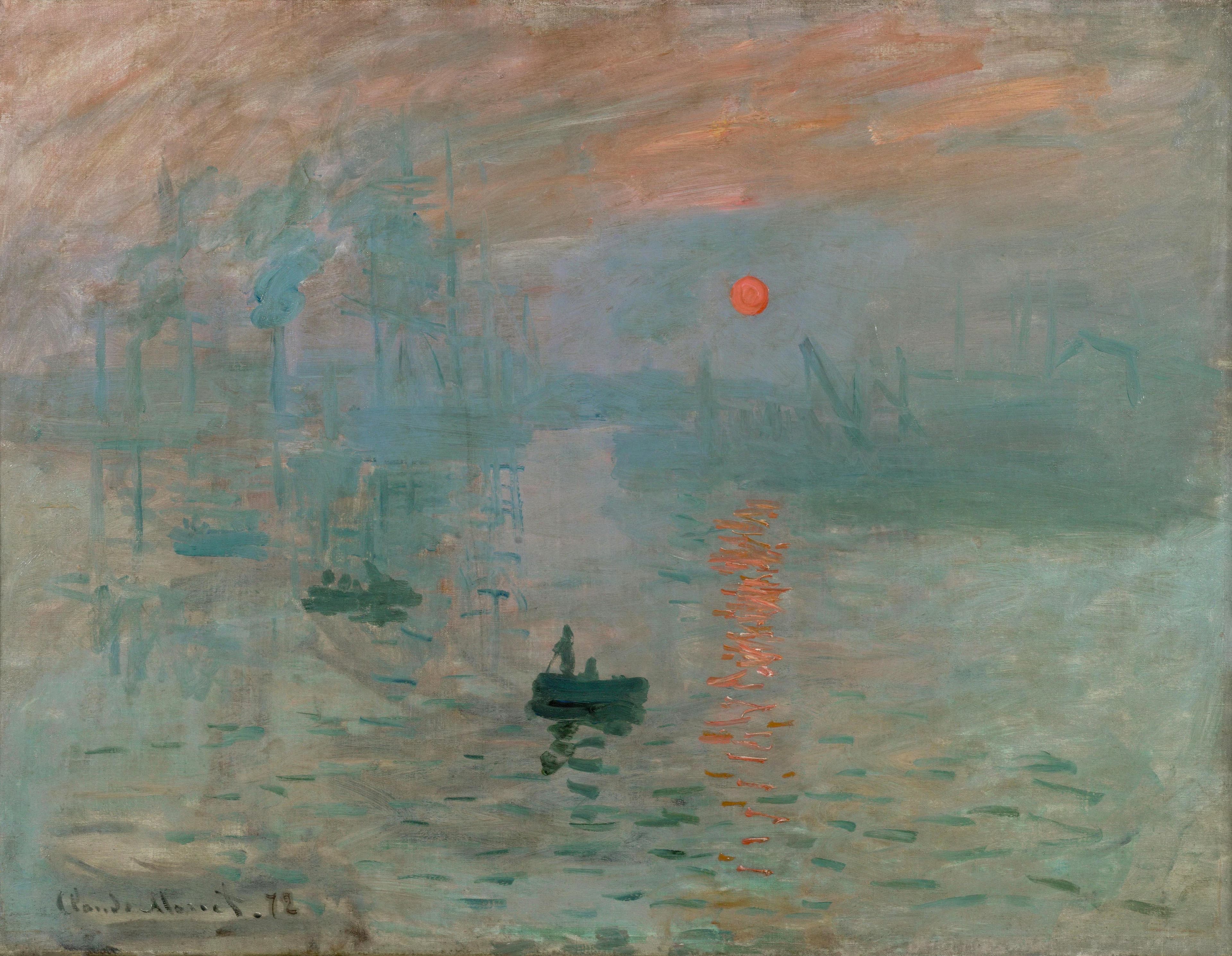
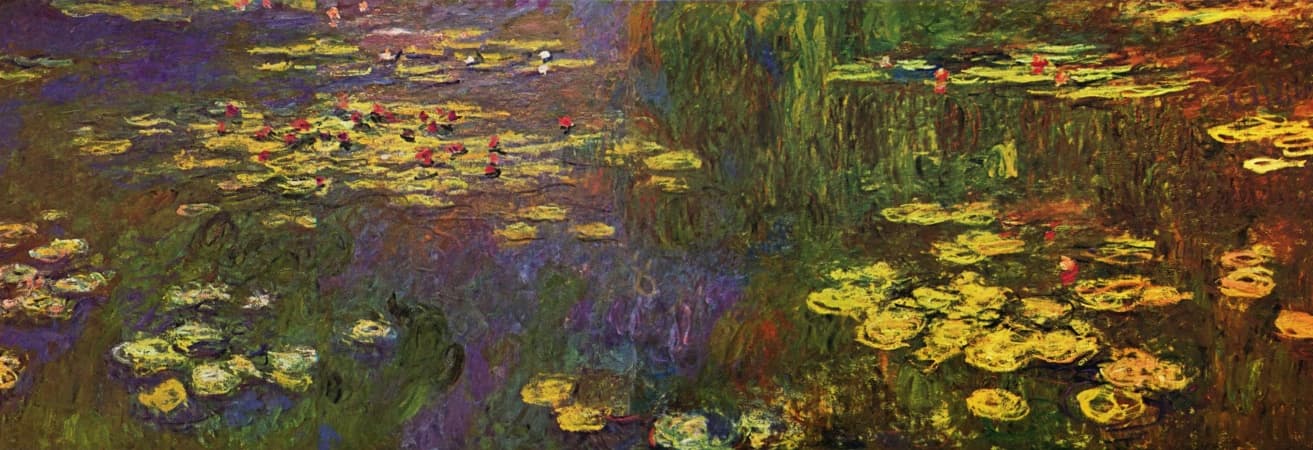
More by Claude Monet

If you like Claude Monet
Explore painters from the same movements and circles.
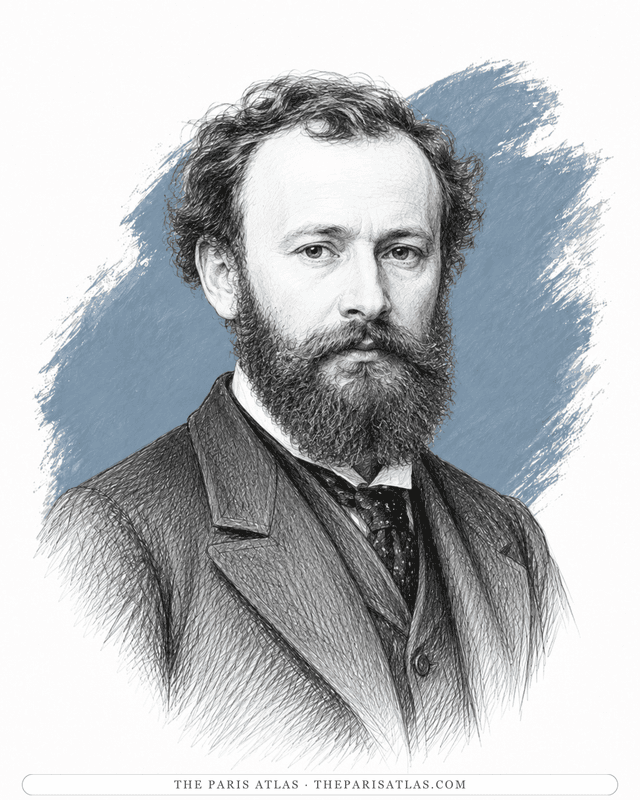
Édouard Manet
The admired elder of the independents — he painted beside Monet, befriended Morisot, and refused to show in all eight of the group's exhibitions.
View artist
Tarsila do Amaral
Brazilian painter who spent the 1920s moving between São Paulo and Paris, studied Cubism under André Lhote, Albert Gleizes and Fernand Léger, and used what she learned to paint Brazilian towns, railways, plants and bodies. Her 1928 painting Abaporu prompted the manifesto that gave the Anthropophagic movement its name.
View artist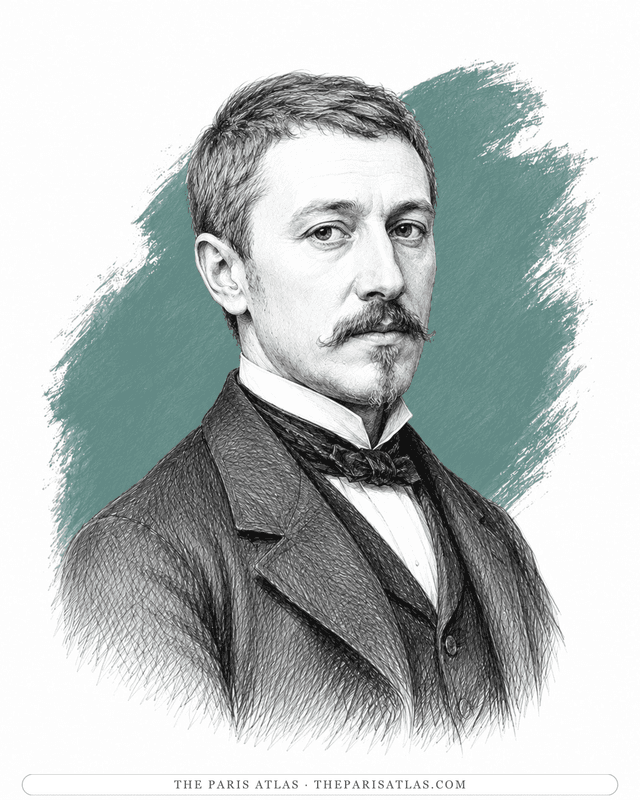
Gustave Caillebotte
Painter of Haussmann's geometry and the group's organizer-financier; his bequest of Impressionist paintings forced the French state to take the movement in.
View artist
References
The sources below include collection records, catalogues, scholarly research, and primary materials that informed this page. They document Stacks of Wheat (End of Summer), its making, and its place in cultural history.


1Stacks of Wheat (End of Summer) — Art Institute of Chicago
WebsiteArt Institute of ChicagoUsed forWeb source consulted for documented facts and historical context presented on the Stacks of Wheat (End of Summer) page.
2Claude Monet (1840–1926) — The Metropolitan Museum of Art
WebsiteThe Metropolitan Museum of Art, 2004Used forWeb source consulted for documented facts and historical context presented on the Stacks of Wheat (End of Summer) page.
3Timeline — Maison et jardins de Claude Monet, Giverny
WebsiteFondation Claude MonetUsed forThe Fondation Claude Monet chronology situates the 1890–91 grainstack campaign within Monet's Giverny years.
4Claude Monet — Musée Marmottan Monet
WebsiteMusée Marmottan MonetUsed forThe Musée Marmottan Monet collection provides independent institutional context for Monet's mature serial method.
These references provide the documented foundation for this work's history and interpretation. Claim-level citations remain attached to the specific claims they support.
 Explore more resources