
The Diary of a Drug Fiend
Another Crowley fiction about altered consciousness and spiritual crisis.
Read our take
Crowley’s short, hallucinatory tale of psychic connection, suffering, altered consciousness, and psychological horror.
A woman discovers that she can experience another person’s thoughts and suffering, and the psychic connection becomes grotesque, hallucinatory, and frightening.
A woman’s psychic access to another person’s consciousness draws her into suffering that becomes increasingly difficult to separate from her own.
Magdalen’s warning about Gladys crosses a boundary that the closed laboratory door should enforce. Yet the students immediately offer rival explanations, and Blair’s subsequent experiments produce observations without a stable theory. The distinction matters to the tale’s horror: recording something precisely does not guarantee that one understands it. Crowley gives the extraordinary events the vocabulary of scientific investigation while making explanation repeatedly fail. The laboratory supplies a language of authority, not a secure refuge from uncertainty.
The lakeside experiment is a failure, not a display of successful mind-reading. Magdalen cannot identify Arthur’s movements with her eyes closed, and repeated tests do not restore her powers. Their love nevertheless survives and deepens through ordinary human sympathy. This brief separation of affection from extraordinary knowledge gives the scene its importance. The couple can be intimate without possessing complete access to one another. Within a story built around invasive perception, their happiness offers a different measure of what it means to know someone.
The story concentrates altered consciousness and psychic suffering into psychological horror.
The psychic connection makes another person’s consciousness impossible to keep at a safe distance.
The story locates fear in shared perception and suffering rather than relying only on an external threat.
March 1913
The story appears in The Equinox, volume I, number 9.
1929
Mandrake Press includes the story in The Stratagem and Other Stories.
1990
Temple Press reissues the collection, keeping Magdalen Blair’s story alongside the two companion tales.
Another Crowley fiction about altered consciousness and spiritual crisis.
Read our take

A Gothic novel that turns Crowley’s occult reputation into supernatural menace.
Read our takeNo. It is fiction presented through a woman’s extraordinary experience. Its title should not be read as a guarantee of documentary testimony.
A woman becomes able to experience another person’s thoughts and suffering. The connection develops into an increasingly frightening loss of separation.
No. The connection becomes grotesque and distressing. Intimacy is presented as a source of horror rather than reassurance.
No. Telepathy is a fictional premise here. The tale’s imagined experiences are not scientific evidence.
Expect psychological suffering, bodily horror, and hallucinatory experience. The story is suited to readers interested in disturbing speculative fiction rather than gentle supernatural mystery.
Explore authors with a similar voice, perspective, and influence.
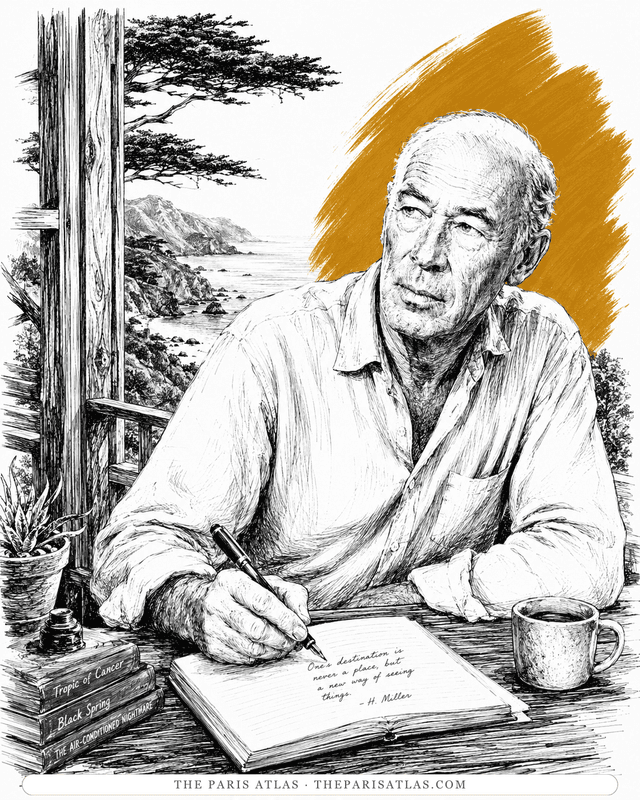
The Brooklyn dropout who arrived in Paris broke at thirty-eight and wrote the exuberant, banned books that ended American censorship.
View author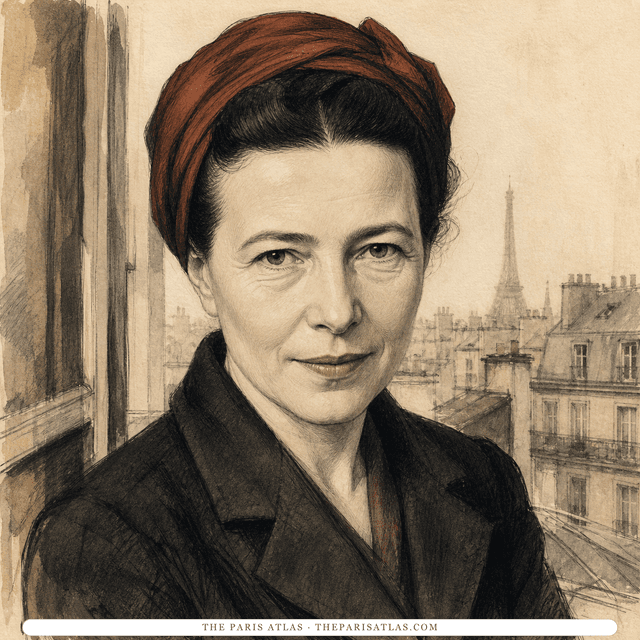
French writer and philosopher whose novels, memoirs, and social analysis examined freedom, gender, responsibility, aging, and the material conditions that shape a life.
View author
American novelist and composer whose expatriate fiction explores dislocation, unstable intimacy, fatalism, and North Africa.
View authorThe sources below include the primary text, editions, scholarship, archival materials, and other records that informed this page. They document The Testament of Magdalen Blair, its publication, and its place in literary history.


The primary text represented by this page, used for descriptions of the work’s contents and for any quoted passages shown here.
Web source consulted for documented facts and historical context presented on the The Testament of Magdalen Blair page.

Official record used to verify names, dates, institutional details, or other factual information on this page.
Archival evidence used to document the historical record connected to The Testament of Magdalen Blair.
Biographical evidence used to verify chronology, relationships, and historical context connected to The Testament of Magdalen Blair.
Web source consulted for documented facts and historical context presented on the The Testament of Magdalen Blair page.
Contemporary reporting or criticism used to document the historical reception and context of The Testament of Magdalen Blair.
The primary text is the baseline reference for every book page. Additional references document publication history, interpretation, and historical context where that evidence is available.
 Explore more resources