

The Magician
by W. Somerset Maugham
A rational surgeon confronts an occultist who turns fascination, coercion, and forbidden experiment into Gothic terror.
- 1908
- Atmospheric
- Hallucinatory
- spare
- dark
- plot-driven
The story, briefly
Spoiler-freeIn bohemian Paris, a young artist abandons her surgeon fiancé for the charismatic Oliver Haddo, whose theatrical claims of magic lead to isolation, death, and a grotesque experiment in artificial life.
The story, in more detail
Arthur Burdon is a rational English surgeon engaged to Margaret Dauncey, a young artist studying in Paris. Their future appears settled until they meet Oliver Haddo, an enormous, repellent, and charismatic occultist who enjoys making civilized people doubt their own judgment.
Margaret initially dislikes Haddo, then becomes fascinated by him. Under circumstances Arthur cannot fully explain, she breaks their engagement and marries Haddo. Arthur and his friends suspect manipulation, but Maugham keeps psychological coercion and supernatural influence in tension long enough for uncertainty to matter.
Haddo was inspired partly by the occultist Aleister Crowley, whom Maugham knew in Paris. That connection makes the novel a strange bridge between Edwardian realism, Gothic horror, occult satire, and personal literary caricature.
The full plot
Arthur visits Paris, where Margaret is studying art. Their circle includes Margaret’s observant friend Susie Boyd and Dr. Porhoët, an older scholar whose interest in occult history makes him less dismissive than Arthur when unusual claims arise.
The group meets Oliver Haddo, a physically imposing and theatrical man who says he possesses magical powers. Haddo inspires disgust, curiosity, and fascination. Porhoët recognizes genuine occult traditions behind some of his references, making it difficult to dismiss everything he says as fraud.
After a confrontation and several uncanny encounters, Margaret’s feelings change. She becomes increasingly drawn to Haddo despite her previous love for Arthur. Arthur understands the change as manipulation or hypnosis, yet he cannot prove where influence ends and Margaret’s own desire begins.
Margaret abruptly leaves Arthur and marries Haddo. Arthur is devastated, while reports about her married life suggest that Haddo has isolated and frightened her. When Margaret later dies under mysterious circumstances, Arthur becomes determined to discover what Haddo has done.
Arthur and Porhoët investigate Haddo’s English estate. They uncover a laboratory and evidence of grotesque experiments connected to alchemy and the creation of artificial life. The respectable Paris story has now become a direct confrontation with Gothic horror.
How it ends — spoilers ahead
Arthur confronts the results of Haddo’s occult experiment. The laboratory contains monstrous, homunculus-like beings, confirming that Haddo’s claims were not merely performance or psychological trickery.
A violent final struggle kills Haddo and destroys the artificial creatures. Fire consumes the laboratory and becomes part of the destruction of the estate.
Arthur survives, but Margaret cannot be restored. By confirming enough of the supernatural to defeat a purely rational explanation, the ending leaves Arthur with knowledge rather than consolation.
Themes and analysis
Rationalism versus occultism
Arthur trusts medicine, evidence, and ordinary cause and effect. Haddo’s influence and laboratory force him to confront events that his training cannot explain, while Porhoët shows that serious inquiry does not always mean immediate disbelief.
The opening complicates Arthur’s practical self-image before Haddo speaks. He admires a French surgeon’s dazzling skill while noticing something theatrical in the performance; his own operations give him an exhilarated sense of power. When he thinks of Margaret, the narrator compares his expression to a mystic’s. These details make the opposition between rational surgeon and magician less secure than Arthur supposes. Wonder, certainty and pleasure in mastery already belong to his ordinary life, even though he scorns occult study.
Charisma and coercion
Haddo dominates attention before he demonstrates any supernatural power. He provokes, humiliates, and destabilizes people until they begin questioning their own responses, making social control part of the novel’s horror.
Desire and manipulation
Margaret’s change from rejection to fascination makes agency the story’s most uncomfortable question. Hypnosis, coercion, sexual attraction, and curiosity overlap, so neither Arthur nor the reader can reduce her choice to one simple cause.
Science and forbidden creation
Haddo’s attempt to manufacture life turns ceremonial magic into a distorted version of scientific ambition. His laboratory mocks the belief that knowledge is automatically moral or that technical success justifies what has been created.
The final scene puts two kinds of light in competition. Susie welcomes the dawn, but Arthur watches the burning house behind them. When she asks what he has done, he turns her toward the sunrise instead of answering. The movement offers a hopeful future while directing attention away from the destruction that makes it possible. Even the fire is compared to a divine furnace: the imagery of creation survives the destruction of Haddo’s laboratory. The ending closes the adventure without fully explaining Arthur’s actions.
Parisian bohemia
The early Paris setting brings artists, doctors, expatriates, and occult enthusiasts into the same rooms. That mixed social world makes Haddo’s claims plausible conversation before they become physical danger.
Crowley as literary target
Maugham drew Oliver Haddo partly from Aleister Crowley, whom he had known in Paris, and Crowley publicly attacked the result. The connection adds biographical interest, but Haddo remains a constructed Gothic villain rather than a reliable portrait or biography.
Writing style
Maugham uses clear, conventional prose rather than imitating mystical language. That restraint makes the occult material more disturbing because it enters a social world that initially feels recognizable and stable.
The novel works through contrast. Clean rooms, rational professionals, art students, and ordinary conversation stand beside hypnotic influence and increasingly grotesque supernatural claims. The language stays controlled even as the story becomes Gothic.
Editions and translations
Maugham wrote the novel in English. Modern Penguin editions are especially useful because their editorial material places this unusual Gothic novel within Maugham’s wider work and explains the Crowley connection.
Major adaptations
Rex Ingram directed the 1926 silent film The Magician. The film gives special visual force to the story’s horror and occult spectacle, but silent cinema necessarily handles the novel’s uncertainty, conversation, and interior motives differently.
A useful comparison
Bram Stoker’s Dracula is another story about rational professionals confronting a power that seems impossible within their ordinary understanding of the world. It appears here in prose because The Paris Atlas does not yet have a full Dracula record for a structured related-book link.
Why we recommend it
A rational world coming apart
Maugham lets recognizable Parisian social life give way gradually to coercion, ritual, and genuine supernatural horror.
A villain built from charisma
Haddo’s most unsettling power begins with his ability to make other people doubt their judgment.
Crowley behind the fiction
The literary quarrel behind Oliver Haddo adds historical interest without reducing the character to a literal portrait.
What this book explores
The people in its pages
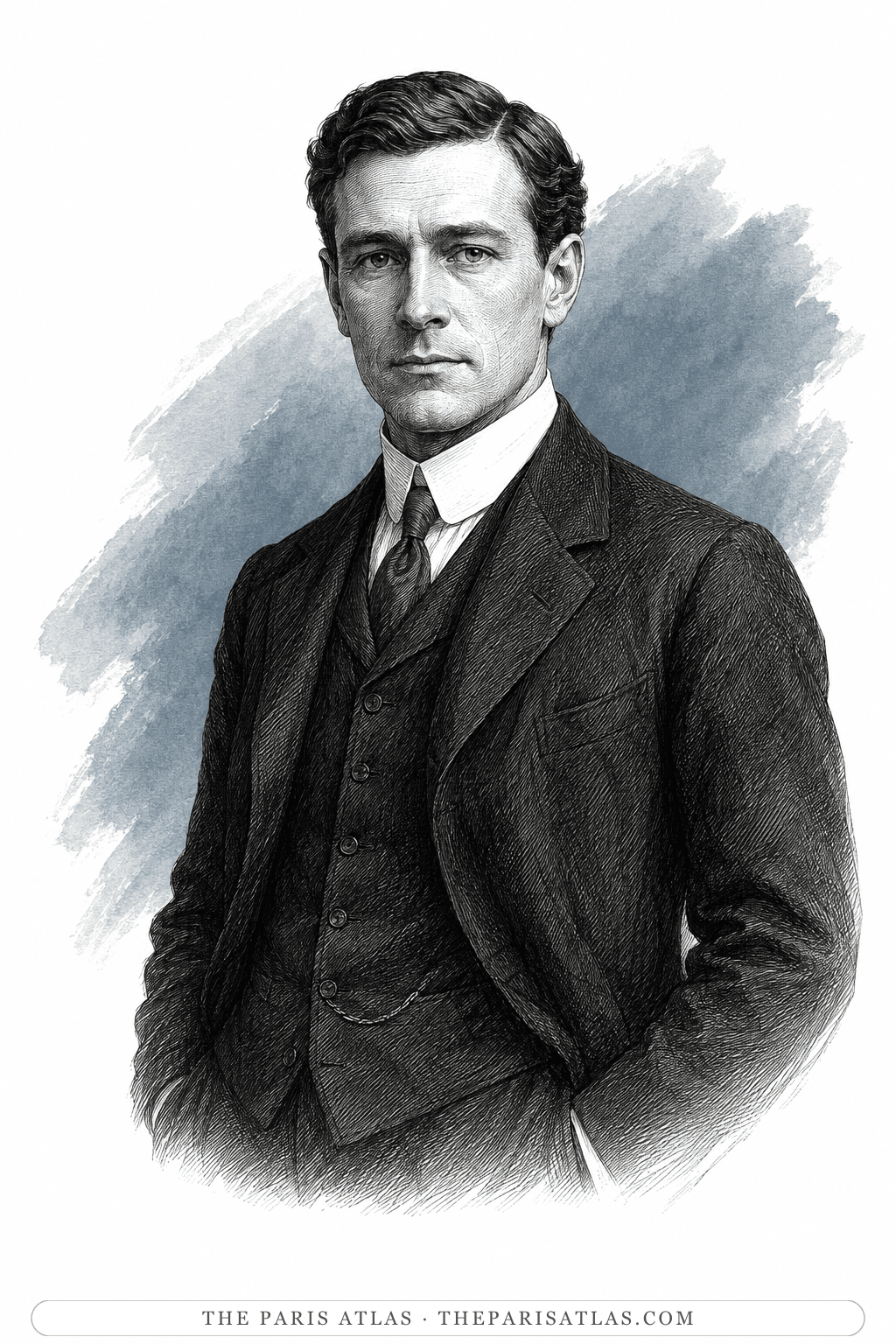
Arthur Burdon
A rational English surgeon whose effort to rescue Margaret forces him to confront evidence his training cannot explain.
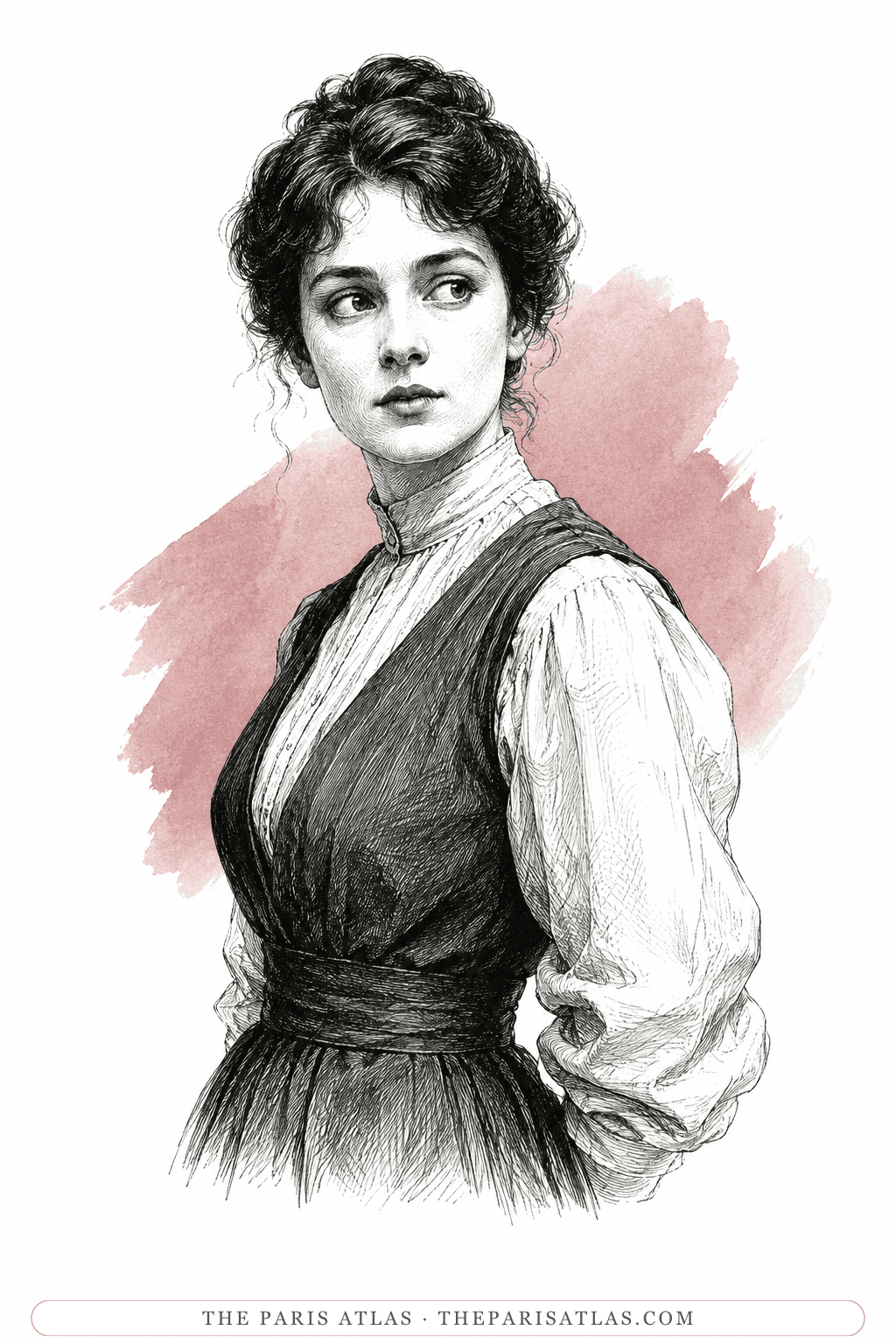
Margaret Dauncey
A young artist whose unexplained fascination with Haddo makes desire, agency, and coercion impossible to separate neatly.
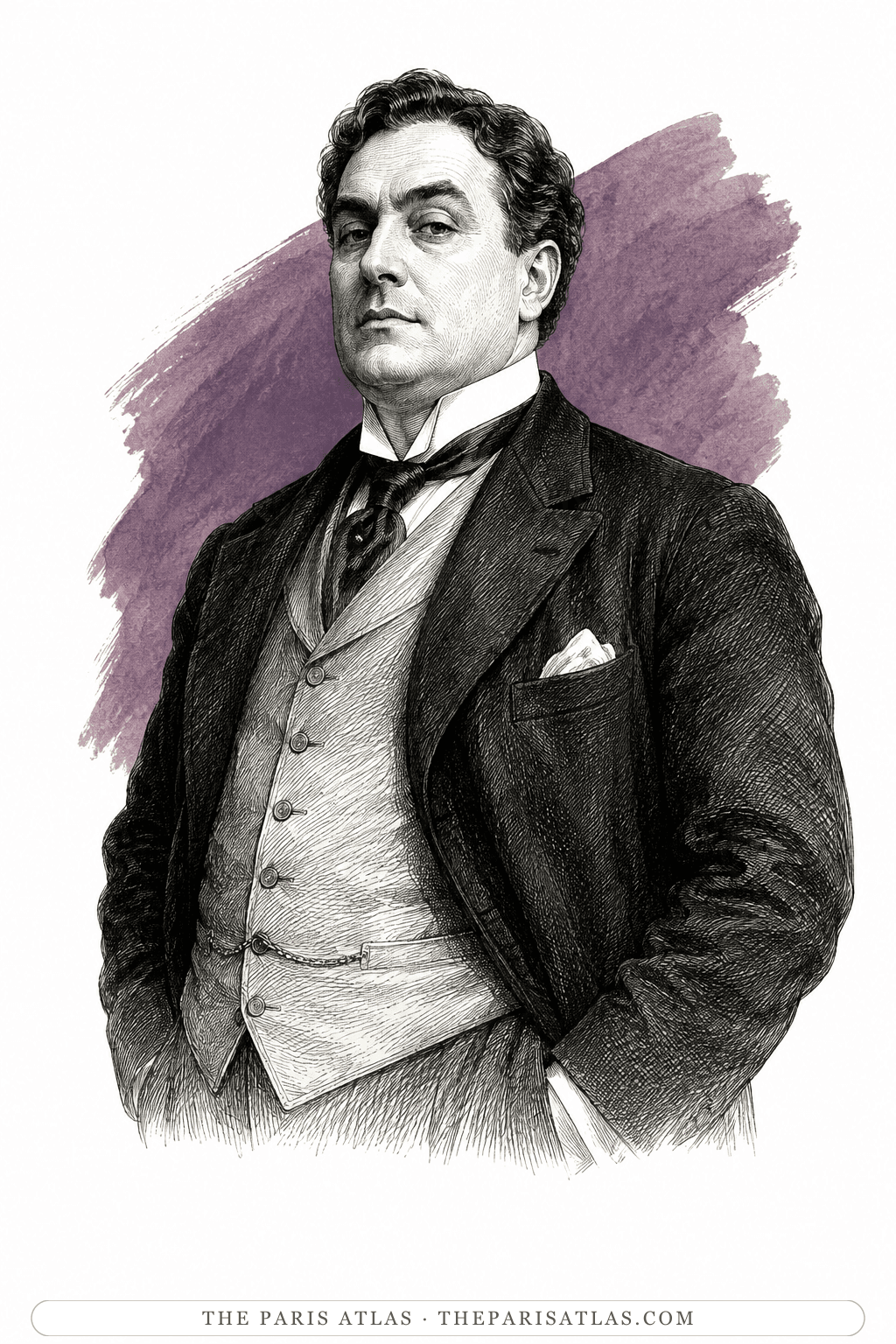
Oliver Haddo
The physically imposing occultist whose theatrical provocations lead to coercion, death, and an experiment in artificial life.
Also in the book
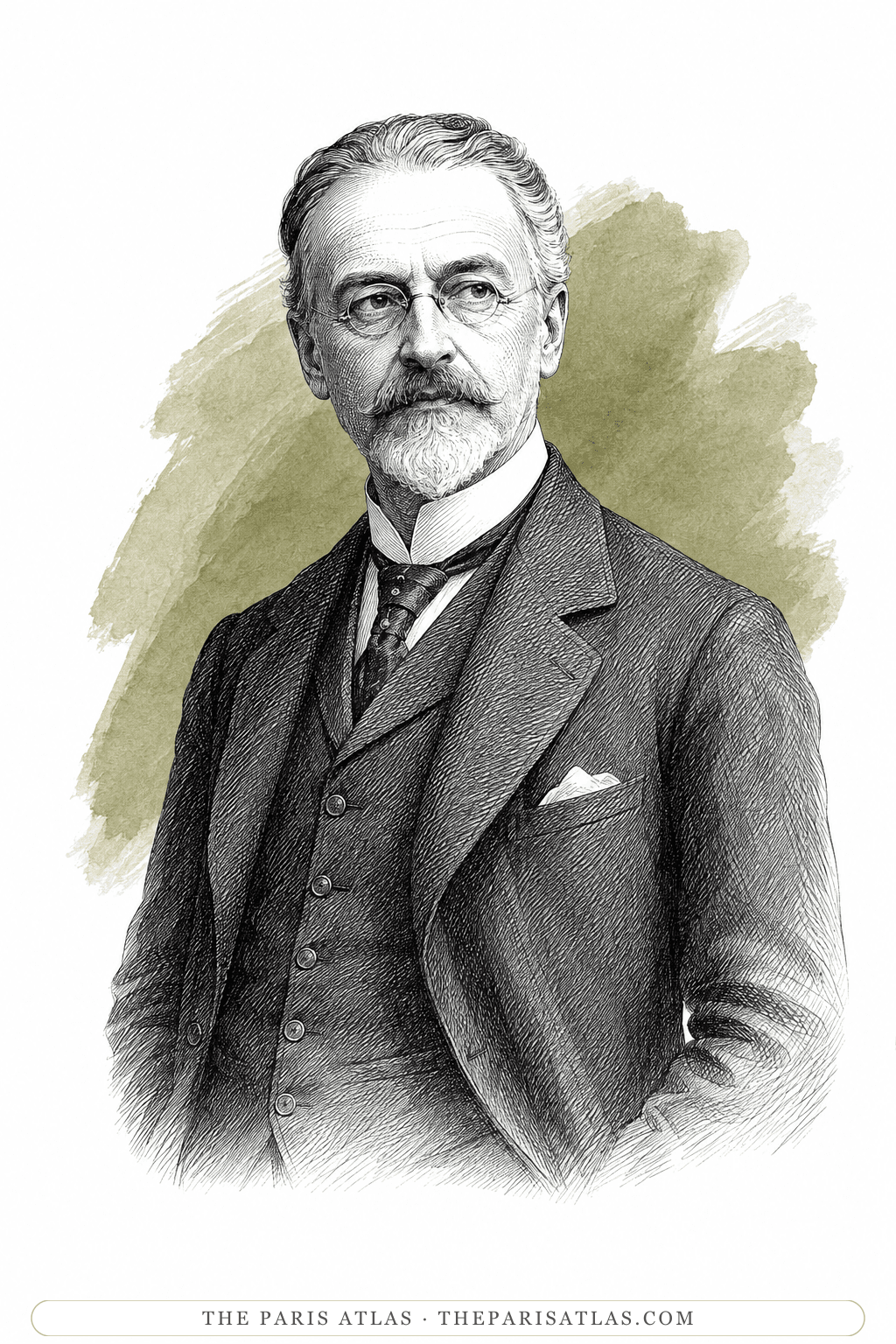
Dr. Porhoët
An older scholar whose serious knowledge of occult traditions helps Arthur investigate claims that medicine alone cannot settle.
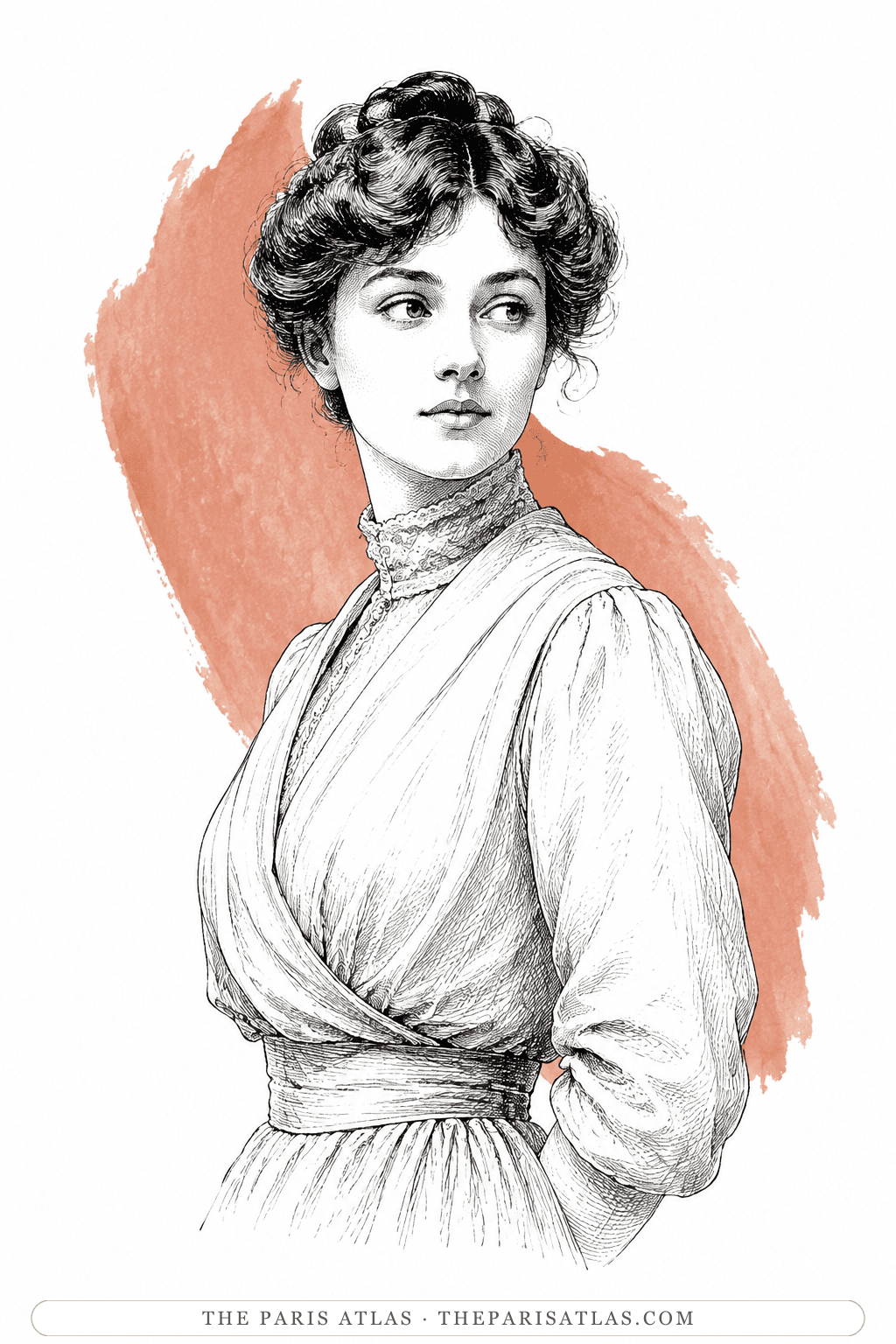
Susie Boyd
Margaret’s observant friend, whose social intelligence keeps the emotional cost of Margaret’s transformation in view.
Bring it to book club
- Is Haddo frightening because he possesses power or because people believe he might?
- How much agency does Margaret retain?
- Why does Maugham make Arthur a surgeon?
- Does Dr. Porhoët weaken or strengthen a rational explanation of events?
- How does Paris make the occult plot believable?
- What changes once the supernatural is effectively confirmed?
- How much should knowing about Aleister Crowley affect the reading?
- Is Haddo satire, horror, or both?
Timeline
1908
The novel is first published by William Heinemann.
1900s
Aleister Crowley publicly attacks the novel and Maugham after recognizing himself in Haddo.
1926
Rex Ingram directs the silent film adaptation The Magician.
2007
Penguin Classics publishes a modern edition with an introduction by Robert Calder.
Book editions
Hardcover
- Hardcover
- William Heinemann
- 1908
Paperback
- Paperback
- Penguin Classics
- 2007

- Ebook
- Vintage Digital
- 2009
- 9781407019871
Reader reviews
Readers may also like

The Diary of a Drug Fiend
Crowley’s fiction connects drugs, sex, occult practice, and spiritual searching.
Read our take

The Picture of Dorian Gray
Elegant prose joins decadence, influence, and moral corruption.
Read our take
Story of the Eye
A far more extreme work of transgression, linked by an interest in taboo and destabilized judgment.
Read our takeThe Magician: frequently asked questions
Was Oliver Haddo based on Aleister Crowley?
Yes, substantially, although Haddo remains a fictional character rather than a literal biography of Crowley.
Did Crowley respond to the novel?
Yes. Crowley publicly attacked Maugham and the novel and accused him of borrowing occult material.
Is the magic real in the novel?
The ending strongly suggests that Haddo’s experiments have genuine supernatural or preternatural force.
Does Margaret love Haddo?
The novel deliberately complicates that question by combining hypnosis, coercion, fascination, and sexual attraction.
Is this typical Somerset Maugham?
Not entirely. It is more Gothic and supernatural than the realistic fiction for which Maugham became best known.
Where is The Magician set?
Much of the early novel takes place in fin-de-siècle Paris before the action moves to Haddo’s English estate.
Does Margaret survive?
No. She dies under mysterious circumstances before Arthur investigates Haddo’s estate.
Is the novel anti-occult?
It is skeptical and satirical toward occultism, but within the fiction it ultimately allows supernatural events to be real.
If you like W. Somerset Maugham
Explore authors with a similar voice, perspective, and influence.
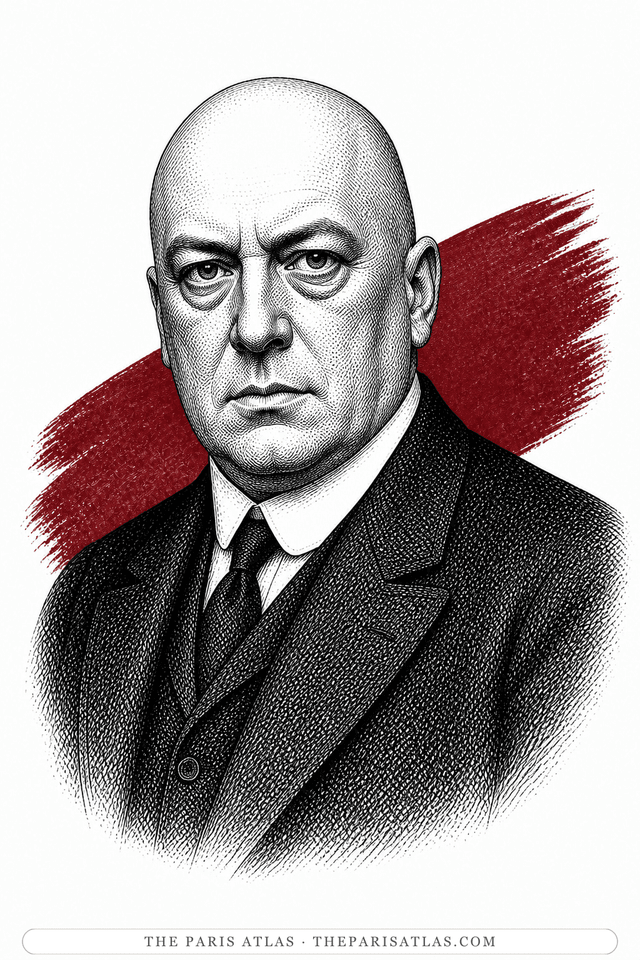
Aleister Crowley
English occultist, writer, mountaineer and founder of Thelema whose long relationship with Paris connected ritual magic to the city’s Belle Époque and interwar artistic worlds.
View author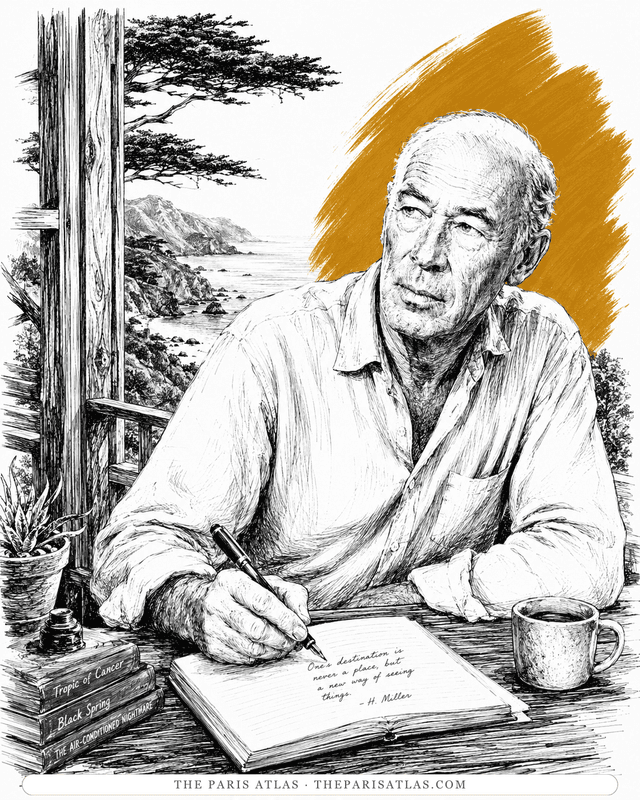
Henry Miller
The Brooklyn dropout who arrived in Paris broke at thirty-eight and wrote the exuberant, banned books that ended American censorship.
View author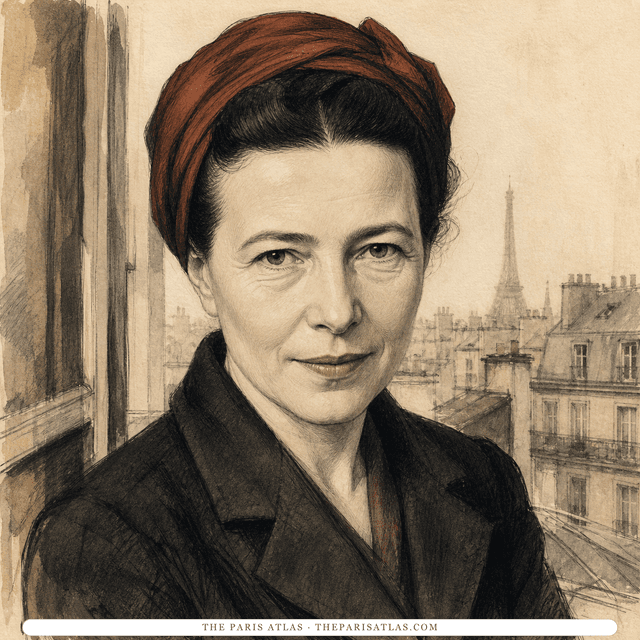
Simone de Beauvoir
French writer and philosopher whose novels, memoirs, and social analysis examined freedom, gender, responsibility, aging, and the material conditions that shape a life.
View author
References
References
The sources below include the primary text, editions, scholarship, archival materials, and other records that informed this page. They document The Magician, its publication, and its place in literary history.

1The Magician
NovelW. Somerset Maugham, 1908Used forThe primary text represented by this page, used for descriptions of the work’s contents and for any quoted passages shown here.

2The Magician
Official recordPenguin Books UKUsed forPublisher record for the modern edition, central setup, Paris setting, and publication framing.
3The Magician
NovelProject Gutenberg, 1908Used forPrimary full text used to verify plot, characters, ending, and style.
4The Magician — 1909 edition record
Official recordOpen Library, Internet ArchiveUsed forLibrary record for publication and edition evidence.
5Aleister Crowley in Paris: Sex, Art, and Magick in the City of Light
BiographyTobias Churton (Inner Traditions)Used forBiographical evidence for Crowley’s Paris connection and relationship to Haddo.
i
Why these sources are here
The primary text is the baseline reference for every book page. Additional references document publication history, interpretation, and historical context where that evidence is available.
 Explore more resources