The Paris AtlasCharting the artists, works, and places worth returning to.

Art movement · Paris · circa 1886–1905

Post-Impressionism

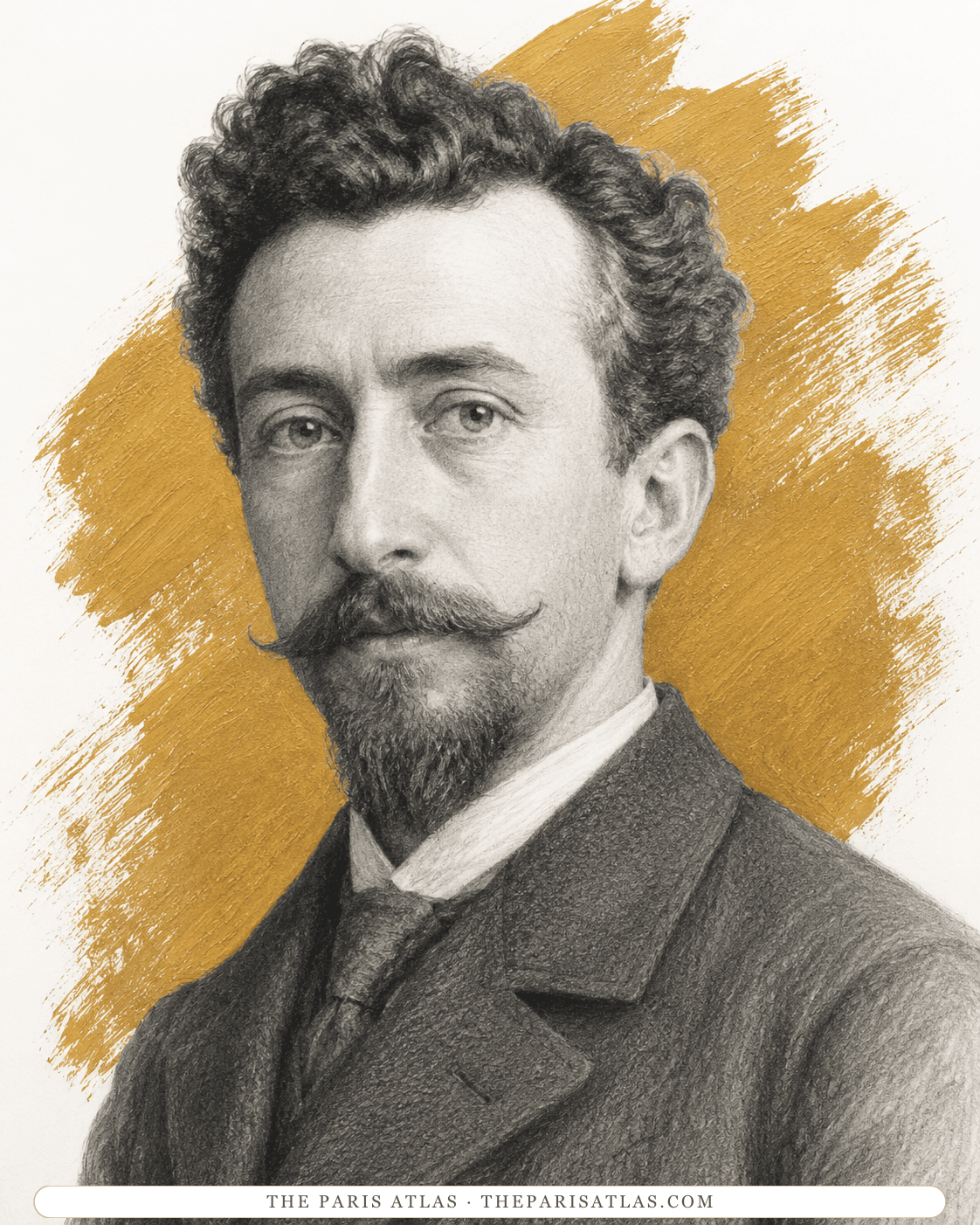
Cézanne gave painted objects weight and structure. Seurat organized color systematically, Gauguin created symbolic worlds, and Van Gogh used color and brushwork to express feeling. Their different experiments reshaped painting after Impressionism.

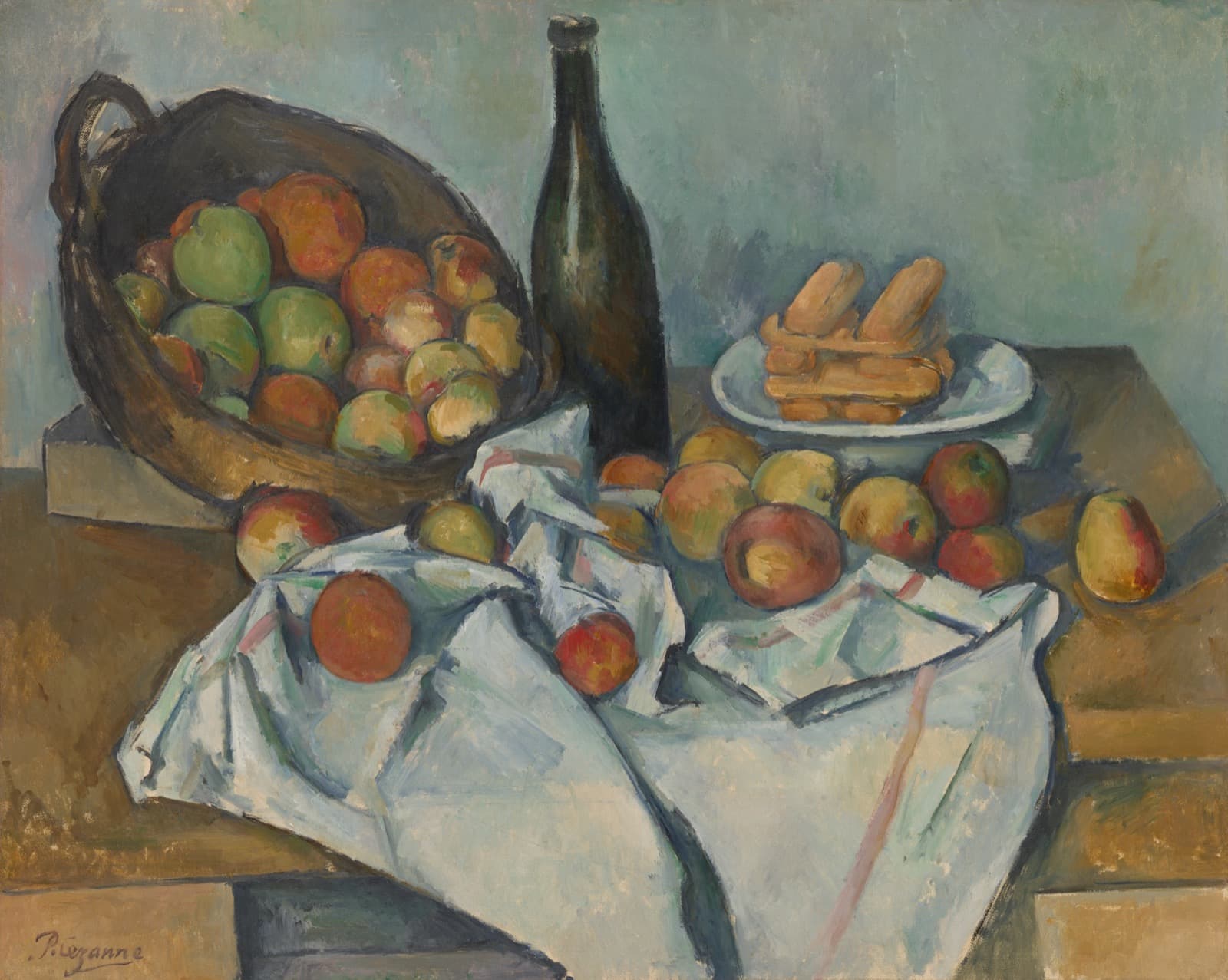
A still life on a table. A wicker basket tips up on a wooden block at the left, spilling red and green apples. A dark green wine bottle stands behind it, leaning slightly. At the right a white plate holds a stack of pale finger biscuits. A rumpled white cloth runs across the table with more apples on it, and the edge of the table on the left does not line up with the edge on the right.
Artwork reproductionPaul Cézanne, The Basket of Apples, about 1893. Art Institute of Chicago, Helen Birch Bartlett Memorial Collection; public domain.

Overview

Post-Impressionism describes the different approaches to painting that developed from Impressionism in the late nineteenth century, chiefly in France. The artists retained an interest in modern life, landscape, and color while exploring new ways to organize a picture and express ideas. Paul Cézanne used color to give objects weight and structure. Georges Seurat built pictures from separate touches of color, while Paul Gauguin used simplified forms and invented settings to suggest spiritual meanings. Vincent van Gogh intensified his subjects through color and brushwork. These approaches helped shape much of twentieth-century art. [1][2]

Post-Impressionism is a retrospective label. The artists did not found a society, agree on a manifesto, or exhibit together under that name. Some knew and influenced one another; others disagreed sharply. Their shared concern was to explore what painting could communicate beyond the appearance of its subjects. Many of those subjects lay outside Paris: a mountain in Provence, a Breton religious vision, an Arles bedroom, or an imagined Polynesian paradise. In the capital, the painters encountered new ideas, formed relationships, found materials and dealers, and brought their work before a public. [3][2]

What the term means, and when the movement began

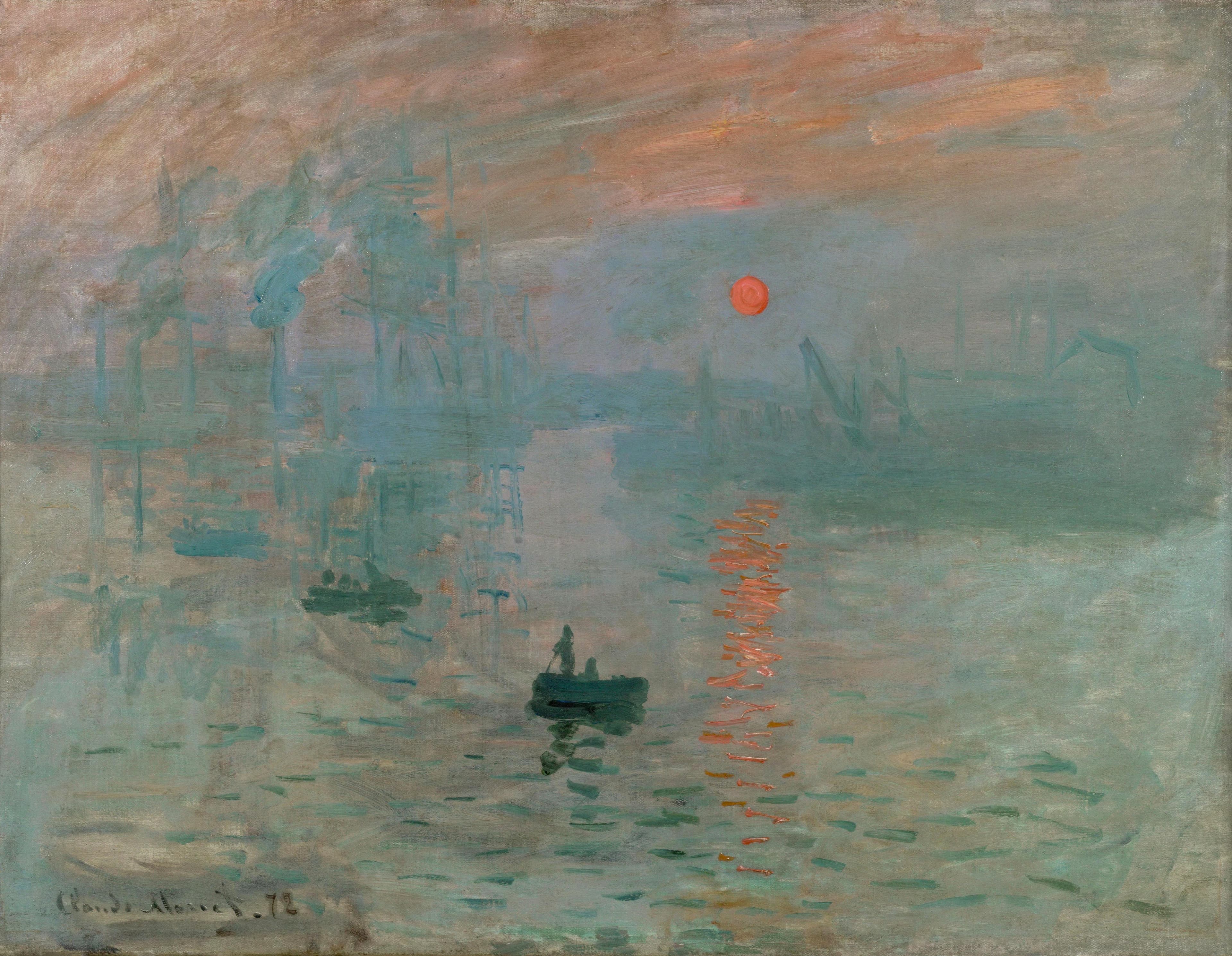
Post-Impressionism is usually associated with the period from the mid-1880s into the opening years of the twentieth century. The year 1886 is a useful starting point because it marked the eighth and final Impressionist group exhibition in Paris, where Seurat’s A Sunday on La Grande Jatte announced a conspicuously different approach to modern painting. It is not an exact boundary. Cézanne’s experiments had begun much earlier, and artists associated with Post-Impressionism continued developing their work well beyond the nineteenth century. The familiar dates are a framework for understanding overlapping developments, not the opening and closing dates of an organization. [4][5]

The British painter and critic Roger Fry established the label through the exhibition Manet and the Post-Impressionists, held in London in 1910. By grouping different artists in relation to Impressionism, he offered the British public a way of understanding work that challenged established expectations of finish, naturalistic color, and coherent pictorial space. The title also positioned Manet as a major predecessor rather than claiming that everyone represented belonged to an identical school. [3]

By Roger Fry’s 1910 exhibition, all four of the painters most commonly associated with Post-Impressionism were dead. Van Gogh died in 1890, Seurat in 1891, Gauguin in 1903, and Cézanne in 1906. None could respond to the category Fry made influential. Their grouping reflects how later critics understood the paintings, rather than a shared identity the artists chose for themselves. [6][7][8][9][10]

The relationship with Impressionism

Post-Impressionism developed through Impressionism as much as against it. The earlier movement had made contemporary subjects, outdoor painting, broken brushwork, and the changing effects of light central to ambitious art. It also demonstrated that artists could organize exhibitions outside the official Salon. The next generation inherited both an expanded range of subjects and an example of artistic independence. An ordinary table, a suburban riverbank, or a café could be the subject of a serious painting without needing to disguise itself as an episode from classical history. [1][4]

The distinction between Impressionism and Post-Impressionism is clearest as a difference of emphasis. Where Impressionist painting often foregrounded the appearance of a particular place under particular conditions, Post-Impressionist artists increasingly made the construction of the picture itself conspicuous. Color could be selected for its emotional force rather than local accuracy; outlines could flatten a figure; repeated marks could impose a calculated rhythm; and perspective could be adjusted to strengthen a composition. Observation remained important, but it no longer had to provide the only justification for every pictorial decision. [1][11][12][13]

The careers of individual painters make any clean separation impossible. Cézanne participated in the first Impressionist exhibition in 1874, while Camille Pissarro, one of Impressionism’s central figures, later experimented with Seurat’s divided-color method. Pissarro’s involvement is especially revealing: the new painting was not simply a younger generation dismissing its elders. It developed through exchanges, disagreements, and changes of direction within an already interconnected artistic world. [10][14]

Paul Cézanne: the structure of seeing

Cézanne’s importance lies in his determination to make painting answer both to the world in front of him and to the organization of the canvas. Encouraged by Pissarro, he moved away from the heavy, dark handling of his early work toward a lighter palette and sustained study outdoors. Yet he did not simply adopt an Impressionist technique. In landscapes, portraits, still lifes, and bathers, he sought an arrangement of color that would make forms feel substantial without returning to a polished academic finish. [10]

Cézanne’s ambition is often summarized as remaking Poussin from nature. He sought to combine the ordered compositions of the seventeenth-century painter Nicolas Poussin with his own direct study of the world. The resulting pictures are neither straightforward transcriptions nor freely invented abstractions. Patches of color build into a cheek, a hillside, or an apple, while the brushwork remains visible as paint. The viewer is asked to recognize objects and, simultaneously, to notice the process by which they have been assembled. [4][10]

Cézanne repeatedly painted Mont Sainte-Victoire, near his native Aix-en-Provence, to explore relationships among color, depth, and form. In Mont Sainte-Victoire and the Viaduct of the Arc River Valley of 1882–85, a foreground tree interrupts the prospect of fields, railway arches, and the distant mountain. The tree does not simply obstruct a picturesque view: its branches help organize relationships between the nearer forms and the mountain’s slopes. A landscape he had known since childhood became a setting in which to test how observation could be transformed into a durable pictorial order. [15]

The unstable world of The Basket of Apples

Cézanne’s The Basket of Apples, painted around 1893, turns a domestic arrangement into a problem of balance and perception. The bottle leans, the basket releases a tumbling group of apples, and the tabletop does not align consistently across the white cloth. On the right, stacked langues de chat biscuits seem to occupy their own small, precarious architecture. These discrepancies disturb the expectation that every object should fit comfortably into a single, geometrically consistent space. [11][12]

Cézanne holds The Basket of Apples together through the arrangement of its objects, despite their inconsistent perspectives. The cloth organizes the lower half, the bottle interrupts it vertically, and the fruit carries the eye between them. Cézanne’s achievement depends on these relationships, not simply on the novelty of introducing inconsistent viewpoints. [11][12]

In his figure paintings, Cézanne used the arrangement of bodies and objects to give quiet scenes a sense of weight and stability. In the Card Players series, the customary possibilities for anecdote—cheating, drinking, argument, a dramatic win—give way to the concentration of bodies and the measured arrangement of objects. The version in the Musée d’Orsay reduces the encounter to two absorbed men and a bottle between them. The players’ rounded backs and bent arms frame the upright bottle, giving this ordinary encounter a balanced, stable composition. [16]

What Cézanne meant by geometry

In a letter to Émile Bernard dated 15 April 1904, Cézanne advised treating nature through “the cylinder, the sphere, the cone.” The phrase later became famous as a precursor to Cubism, but the rest of the letter matters. He continued to discuss perspective, the placing of planes, and the blue tones needed to suggest air and depth. This was not a simple instruction to replace nature with geometric diagrams. It was advice about making observed relationships coherent in paint. [17]

In his letter of 15 April 1904, Cézanne urged Émile Bernard to turn away from Gauguin and Van Gogh. The artists whom later histories place beside one another were not necessarily allies in their understanding of painting. Cézanne’s example became enormously productive for Picasso, Braque, and many later painters, but its influence arose through reinterpretation, not through his having drawn up a program for them. [17][18]

Georges Seurat and Paul Signac: color, calculation, and modern life

Seurat’s Bathers at Asnières of 1884 shows men and boys beside the Seine, with bridges and industrial structures in the distance. Their stillness gives this modern scene an almost monumental character. Seurat prepared the large canvas through drawings and oil studies rather than treating it as an instantaneous outdoor impression. Rejected by the official Salon, it appeared instead in an independent exhibition. [19]

Seurat used broad strokes in Bathers at Asnières and later revised some areas of the canvas. The early painting records stages in his development of a method based on separate touches of color. Comparing it with La Grande Jatte shows how his approach changed as he moved toward the small dots for which he became known. [19]

Neo-Impressionism, Divisionism, and Pointillism

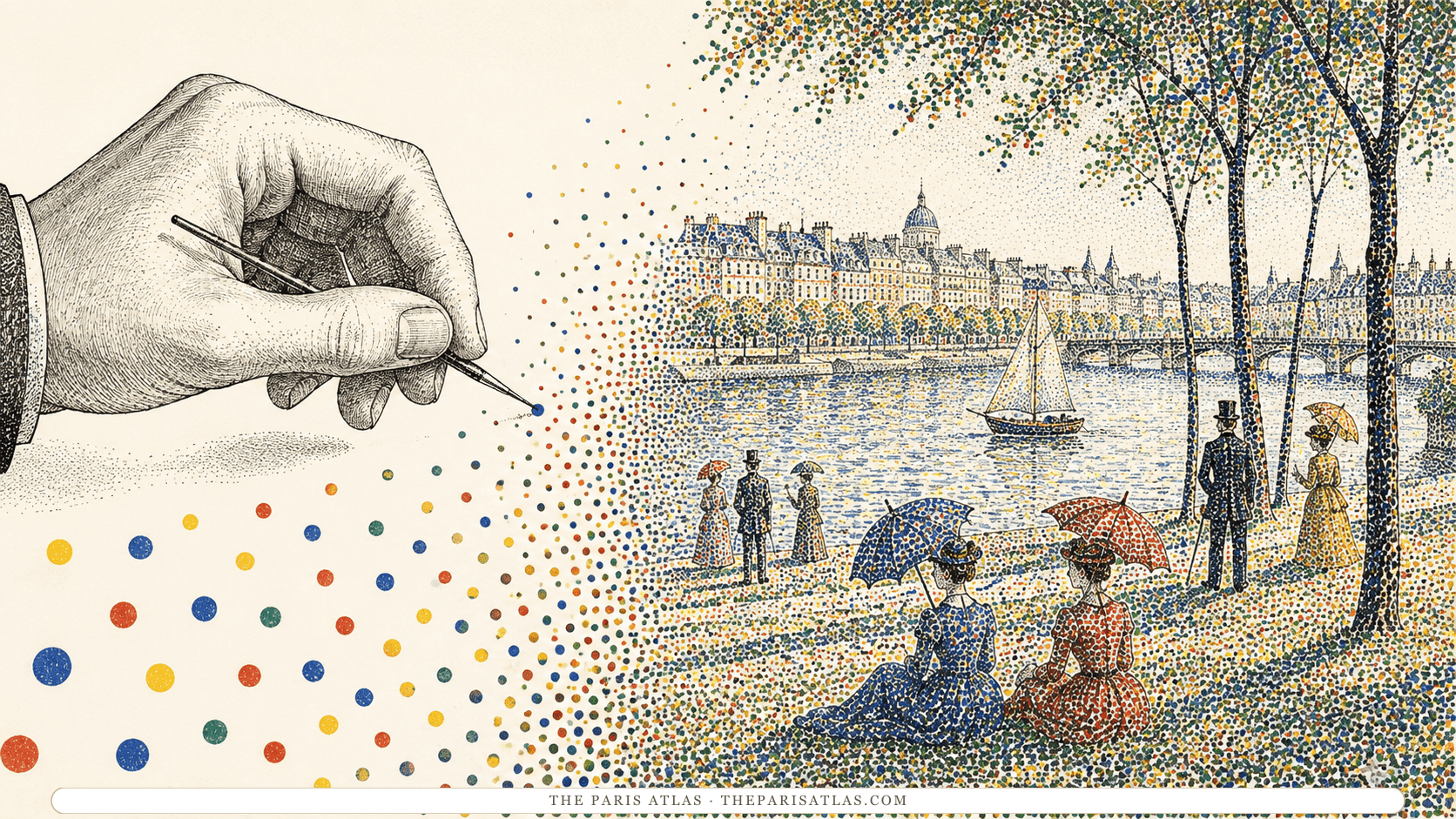
Seurat and his associates drew on writings about color and perception by figures including Michel-Eugène Chevreul and Ogden Rood. They believed that placing distinct touches of color beside one another could produce more luminous effects than mixing the same pigments together on the palette. Their aim was not simply to make pictures out of dots, but to organize the interaction of colors across an entire surface. [14][20]

The critic Félix Fénéon introduced the term Neo-Impressionism in 1886 for the new approach associated with Seurat and his circle. Divisionism refers to separating colors into discrete touches, while Pointillism describes the use of small dots. A divided-color painting need not consist entirely of round points. The optical claims were the artists’ working theories, not a guarantee that every patch of pigment would merge into a perfectly predictable color at every viewing distance. [14][20]

A Sunday on La Grande Jatte

Seurat worked on A Sunday on La Grande Jatte between 1884 and 1886, bringing an elaborate composition of leisure-seekers to the final Impressionist exhibition. Women with parasols, men in different forms of dress, children, animals, trees, and boats occupy a riverside setting whose apparent casualness is contradicted by the picture’s organization. Repeated verticals, rounded parasols, and broad bands of light and shade hold the crowd in place. [5]

In Seurat’s La Grande Jatte, the shimmering paint surface contrasts with figures that seem almost motionless. At close range, color separates into countless touches; from farther away, figures acquire firmness and an oddly ceremonial stillness. The painting invites social readings, but it does not supply an uncomplicated narrative about what each person thinks or represents. Its modernity lies partly in that combination of extraordinary visibility and limited access to the people depicted. [5]

Seurat also painted popular entertainment. In The Circus, left unfinished at his death in 1891, the energetic curves of performers contrast with the more rigid ranks of spectators. The picture shows that his method could organize movement as well as stillness: line and color are used to differentiate the animated spectacle from the people watching it. [7][8]

After Seurat’s death in 1891, Paul Signac became a leading advocate of Neo-Impressionism. His own work developed toward larger, more open touches, especially in luminous coastal subjects. Through painting, writing, and personal contact, he helped carry divided color into a new generation; his influence was particularly consequential for the young Henri Matisse. [14][21]

Paul Gauguin: invented color and the meaning of images

Gauguin rejected the assumption that a painting’s colors and forms should be justified principally by what the eye could verify. In Brittany, especially through his exchanges with Émile Bernard, he developed simplified shapes, strong contours, and broad areas of color that subordinated naturalistic modeling to the character of the whole image. These experiments became associated with Synthetism: a synthesis of the visible subject, the artist’s response, and the requirements of pictorial design. They also intersected with Symbolism, which gave renewed importance to imagination, spiritual experience, and meanings that could not be reduced to literal description. [13][22]

A biblical struggle in a red field

In Gauguin’s Vision of the Sermon (Jacob Wrestling with the Angel) of 1888, Breton women in white headdresses occupy the foreground while the biblical struggle appears beyond them. A sharply diagonal tree separates and connects the two zones. The brilliant red ground is not a plausible field viewed under unusual light; it helps establish a space in which an inward vision has become visible. The picture represents both the women and the scene called up by their religious attention. In a letter to Van Gogh written around 26 September 1888, Gauguin explained that the landscape and the wrestling figures existed in the imagination of the people praying after the sermon. [23]

Gauguin reported in his September 1888 letter to Van Gogh that the church at Pont-Aven had refused Vision of the Sermon. Émile Bernard’s account, published in 1904, names the nearby church at Névez instead. Bernard recalled that the priest objected to the large bonnets and peasants’ backs, which overshadowed the distant biblical struggle. The accounts differ over the location, but both describe the rejection of Gauguin’s proposed gift. In Bernard’s telling, the arrangement that made the painting distinctive also made it unsuitable for the church. [13][23]

Gauguin’s experiments were not confined to oil painting. He worked in prints and carved objects, and his portraits could transform a sitter into a symbolic or invented identity. This broader practice matters because the flattened forms of his canvases were part of a wider interest in the relationship between images, surfaces, and objects—not merely a new way of painting landscapes. [24]

Tahiti: observation, invention, and a colonial setting

Gauguin first traveled to Tahiti in 1891. The place he encountered was not an untouched world outside modern history: it had been profoundly changed by colonial administration, missionary activity, and contact with Europe. His paintings drew on local people and experiences, but they also constructed a world of his own. Objects and signs borrowed from different cultures could appear together as though they belonged to one coherent religious environment. [25]

Gauguin’s The Ancestors of Tehamana, painted in 1893, portrays his young Tahitian partner Teha’amana within an invented symbolic setting. Her dress belongs to the missionary-influenced society in which she lived, while the signs behind her draw on sources extending beyond Tahiti, including Rapa Nui. The combination is not a neutral record of a local interior. Gauguin used such references to suggest ancestry and mystery to viewers in Europe, even where his understanding of their original meanings was incomplete. His relationships with the people he painted, and his position as a visiting French artist in a colonial society, are therefore part of the works’ history rather than information that can be separated from them. [25]

In Arearea of 1892, now in the Musée d’Orsay, seated women and a red dog occupy the foreground while a more enigmatic ritual unfolds farther back. The unusual animal color and invented religious setting exemplify the distance between a Gauguin painting and a documentary account of Tahitian life. Observed details become ingredients in a deliberately composed world. [9]

Where Do We Come From? What Are We? Where Are We Going?

Gauguin painted Where Do We Come From? What Are We? Where Are We Going? in 1897–98. Its title frames questions about human existence, while the image leaves their answers open. Read broadly from right to left, its figures suggest infancy, adulthood, and old age, while the central fruit-picker and the blue idol resist a single explanatory key. Its rough support and simulated damaged corners help give the work the character of an ancient wall painting rather than a conventional framed scene. [26]

Gauguin made Where Do We Come From? amid personal and financial distress, seeking to bring the stages of human life into one large composition. The dealer Ambroise Vollard exhibited it in Paris in 1898. Gauguin’s work in Tahiti still depended on connections with dealers, exhibitions, and collectors in Europe. [26]

Vincent van Gogh: color and brushwork as an expressive language

Van Gogh’s mature style developed with extraordinary speed, but it was not the product of isolation from other art. When he arrived in Paris in 1886, his earlier Dutch paintings had generally favored dark earth colors and weighty treatments of rural life. Exposure to Impressionist painting, divided color, and Japanese prints changed his palette and his handling. He tried out different kinds of marks and contrasts before arriving at the more forceful language associated with his later work. [27]

In Paris from 1886 to 1888, Vincent van Gogh formed friendships with other painters around Fernand Cormon’s studio and in Montmartre. His acquaintances included Émile Bernard, Louis Anquetin, and Henri de Toulouse-Lautrec. Lautrec’s 1887 pastel portrait of him records something of this shared milieu. These contacts complicate the familiar legend of a genius entirely cut off from his contemporaries: Van Gogh’s art was intensely individual, but its development depended on looking, discussing, borrowing, and testing. [28]

Arles and the hoped-for artists’ community

Van Gogh moved to Arles in 1888, where he hoped to establish a community of artists. The Yellow House was not simply a private refuge; it was intended as a place where work, conversation, and shared ambitions could reinforce one another. Gauguin joined Van Gogh that autumn with support from Vincent’s brother Theo, an art dealer. Their period together produced important paintings but also exposed differences in temperament and artistic method. Their collaboration ended after Van Gogh cut off his ear during a mental health crisis on 23 December 1888. Gauguin returned to Paris with Theo soon afterward. [29][30]

Van Gogh used his Arles Sunflowers paintings to decorate Gauguin’s room in the Yellow House, and he associated the flowers with gratitude. Their restricted range is part of their achievement: variations of yellow, ocher, green, and related tones distinguish fresh blooms, seed heads, vase, and background without relying on a broad, contrasting spectrum. The subject is recognizable immediately, but the paintings also explore how much variety a seemingly narrow palette can sustain. [31]

Van Gogh’s visible brushwork is often described as spontaneous, yet a painting’s energetic appearance should not be confused with an absence of planning. Repeated strokes can follow the growth of a plant, reinforce a contour, or set one area into rhythmic opposition with another. The work’s emotional intensity arises through these pictorial decisions as well as through the artist’s response to the subject. [27][31]

In a letter to his brother Theo dated 8 September 1888, Van Gogh explained how he chose colors to express emotion. Describing The Night Café, he set the room’s reds against the green billiard table and explained that he wanted these clashes to convey destructive human passions. He had worked through three nights, sleeping during the day. Elsewhere in the letter, he explicitly distinguished color that imitated appearances from color chosen to suggest emotion. The café’s oppressive atmosphere was not an accidental consequence of an unruly technique; it was the effect he was trying to achieve. [32]

The construction of The Starry Night

Painted at Saint-Rémy in June 1889, The Starry Night is one of the clearest examples of Van Gogh’s combination of observation and invention. The view from the asylum provided a starting point, but the finished painting is not a straightforward copy of what lay outside one window. The village was assembled from other knowledge and imagery, the cypress was given unusual prominence, and the sky was transformed into sweeping, interconnected movements. New York’s Museum of Modern Art (MoMA) notes that the painting was made in daytime sessions rather than simply recorded in a single nocturnal burst. [33]

In The Starry Night, Van Gogh heightened the contrast between a small settlement and an immense sky through his arrangement of buildings, trees, and sweeping curves. Van Gogh’s illness belongs to his biography, but it does not, by itself, explain the painting. Its emotional force also comes from decisions about scale, rhythm, and the relation of one form to another. [33]

Van Gogh died in July 1890 after a final period of painting at Auvers-sur-Oise. Although his mature career lasted only a few years, his surviving pictures and letters record a sustained process of study and revision. He examined what he had made, sought responses from other artists, and tested how color and form could express his experience of a subject. [6][28]

Japanese prints and the expansion of pictorial possibilities

Japanese art strongly influenced the painters associated with Post-Impressionism. The growing circulation of Japanese woodblock prints in Europe offered striking alternatives to conventions of centered composition, continuous modeling, and carefully graduated depth. Artists studied asymmetrical arrangements, cropped figures, strong silhouettes, patterned surfaces, and areas of relatively flat color. These were not discoveries made by a single Post-Impressionist: they formed part of the wider nineteenth-century enthusiasm known as Japonisme. [34]

European painters learned compositional methods from Japanese prints as well as depicting recognizable Japanese objects. A painter could learn from the way a branch divided a scene, the way a figure was cut by an edge, or the way an empty area gave force to an adjacent form. Such lessons helped artists reconsider the organization of a European street, portrait, or landscape. In Van Gogh’s Père Tanguy, Japanese prints appear within the picture itself, turning the background into a visible record of this exchange. [34][35]

Beyond the four central painters

The Nabis: from a small landscape to a new idea of decoration

In October 1888, Paul Sérusier painted a small landscape at Pont-Aven under Gauguin’s guidance. When he returned to Paris and showed it to fellow students at the Académie Julian, its simplified, intensely colored forms became evidence that painting could do more than reproduce the local appearance of a scene. The work came to be called The Talisman. The students’ interest in The Talisman helped form the Nabi circle in 1888, a year before the Café Volpini exhibition. [36]

The Nabis included Pierre Bonnard, Édouard Vuillard, Maurice Denis, Paul Sérusier, and others. Their name came from the Hebrew word for prophets. They were connected by shared experiments rather than a completely uniform manner. Denis gave their thinking an influential formulation when he emphasized that a painting is, before it represents a subject, a flat surface arranged with colors. This did not require abandoning recognizable people and places. It required taking the organization of the surface seriously in its own right. [37]

For the Nabis, decoration was not necessarily a lesser activity than easel painting. Screens, wall panels, posters, textiles, theater designs, and illustrations offered different settings in which color and line could work. Their pictures often question where a figure ends and its surroundings begin: a patterned dress, wallpaper, and furniture may compete on almost equal terms. [37]

Domestic subjects allowed Nabi painters to explore tensions within family life and intimate relationships. Bonnard and Vuillard painted rooms inhabited by relatives and friends, while Félix Vallotton could make an apparently ordinary interior feel guarded or uncomfortable. The intimate setting does not always imply uncomplicated affection. Close looking can reveal competing presences, blocked spaces, and the tensions of people sharing a life. Post-Impressionism’s concern with subjective experience could be expressed in a dining room as effectively as beneath Van Gogh’s turbulent sky. [38]

Toulouse-Lautrec and the public life of Paris

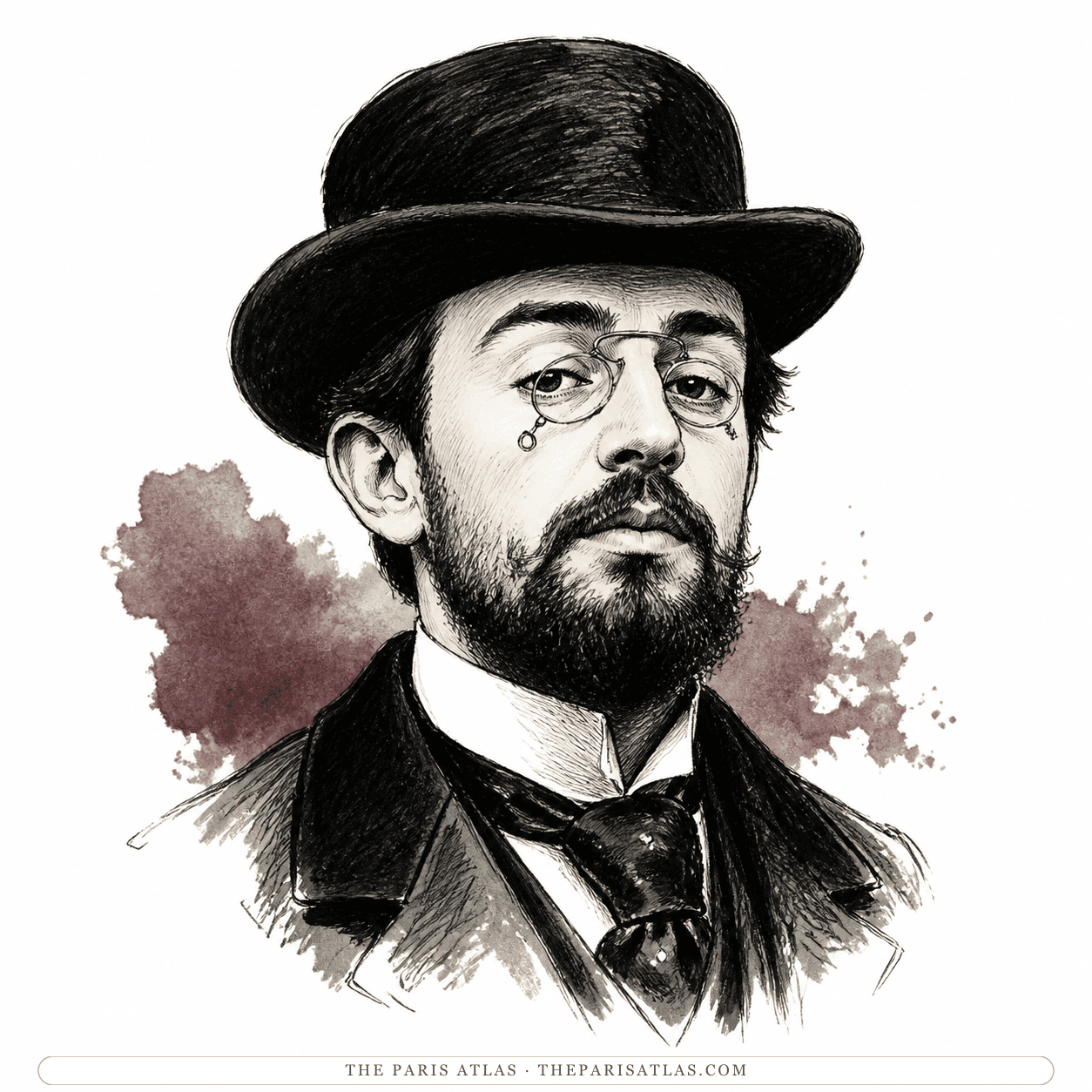
Henri de Toulouse-Lautrec painted and printed images of Parisian nightlife. He is often associated with Post-Impressionism, and his work also helped shape modern illustration, lithography, and entertainment posters. His subjects included performers, audiences, dancers, and women working in brothels. He developed a concise language of silhouettes, abrupt cropping, oblique viewpoints, and expressive contours that could carry across paintings and printed images. [39]

Toulouse-Lautrec’s posters made performers such as Jane Avril and La Goulue recognizable through their movements and outlines as well as their faces. In the Elles series of 1896, however, he turned to quieter routines within brothel interiors. The same artist who helped manufacture the public image of Parisian nightlife could also attend to its less theatrical, more ordinary moments. [39]

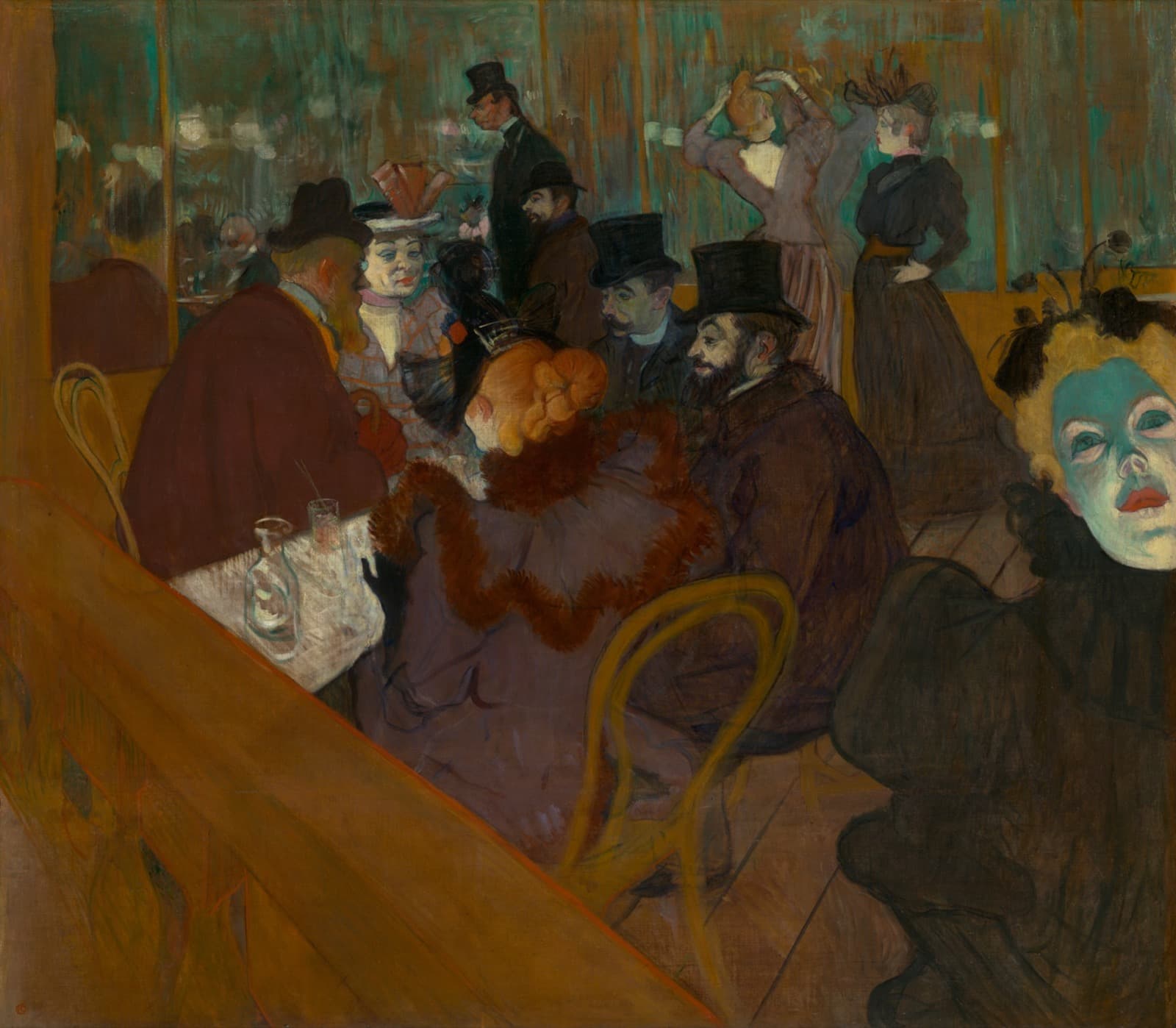
In At the Moulin Rouge, painted between 1892 and 1895, Toulouse-Lautrec depicted the nightclub’s patrons and performers in sharp artificial light, with some figures cut off by the edges of the canvas. The greenish face of the performer May Milton enters at the right edge with startling force. The Art Institute of Chicago records that this portion was once cut from the canvas and later reattached, by 1914. The identity of the person responsible and the precise reason are uncertain; making the picture easier to sell is one possibility, not an established fact. [40][41]

Redon and Rousseau: dreams, invention, and other forms of modernity

Odilon Redon’s art connects the wider field of Post-Impressionism with Symbolism. He depicted dreams and imagined beings, leaving their meanings open to interpretation. His work exemplifies a concern shared by many artists of the period: how to give visible form to experiences that could not be observed directly. [22]

Henri Rousseau’s imagined jungles provide a different challenge to conventional naturalism. He had not traveled to the tropical settings his paintings appeared to depict. The National Gallery’s account of Surprised! explains how he drew on plants and animals available through Parisian collections, illustrations, and observation. In the 1891 painting, a tiger appears amid dense foliage and streaking rain, in an environment assembled through invention rather than eyewitness travel. The plants Rousseau could study in Paris, including at the Jardin des Plantes, helped him construct these distant settings. [42]

Post-Impressionism and Paris

Paris brought the artists associated with Post-Impressionism into contact with studios, shops, exhibitions, cafés, critics, collectors, and dealers. Montmartre offered friendships and subjects; the Seine and its industrial outskirts supplied modern landscapes; the Académie Julian connected the future Nabis; and the commercial streets around the grands boulevards brought unconventional work into contact with buyers. The movement’s geography therefore includes both the places represented in paintings and the places where paintings became possible to make, exchange, and encounter. [28][19][36][43]

Independent exhibitions: no jury, no prizes

The Société des Artistes Indépendants emerged in 1884, with Albert Dubois-Pillet, Redon, Seurat, and Signac among its founding figures. Its principle was expressed in the motto Ni jury, ni récompense: no jury, no prizes. Abolishing an admission jury did not guarantee critical success, but it removed a major mechanism through which official taste controlled access to exhibition space. [44]

The Société des Artistes Indépendants took shape through several organizational steps in 1884. A winter exhibition followed in December near the Palais de l’Industrie, where Paul Signac exhibited Le Pont d’Austerlitz. The independent exhibiting initiatives of 1884 also provided a route for Seurat’s rejected Bathers at Asnières. These initiatives established an alternative exhibition system in which rejection by the official Salon no longer excluded an artist from public view. [44][19]

The exhibition at Café Volpini

During the Exposition Universelle of 1889, Gauguin and his associates mounted a separate exhibition at the Café des Arts, usually known as Café Volpini, on the Champ-de-Mars. They called themselves the Impressionist and Synthetist Group, a name that retained a connection to an already recognizable artistic movement while asserting a new direction. [45]

The 1889 Café Volpini exhibitors included Gauguin, Émile Bernard, Émile Schuffenecker, Charles Laval, Louis Anquetin, Léon Fauché, Louis Roy, and Georges Daniel de Monfreid. The additional name Ludovic Némo concealed Bernard, who used a pseudonym inspired by Jules Verne. The makeshift venue is part of the exhibition’s significance: an ambitious alternative to official art was being presented in the commercial surroundings of a café during a vast international fair. [45]

Visitors to the Café Volpini exhibition could ask to see prints by Gauguin and Bernard. Gauguin’s suite consisted of ten zincographs and a cover, printed by Edward Ancourt on strongly colored yellow paper. The British Museum records an advertised price of twenty francs for the album. These were not merely reproductions of famous canvases but an attempt to develop a distinctive printed art while making the artist better known. The exhibition achieved little commercial success, yet it became a landmark in the public presentation of Synthetism. [46][45]

For Paul Sérusier and the emerging Nabis, the 1889 Café Volpini exhibition reinforced ideas already set in motion by Sérusier’s work with Gauguin in 1888. [47]

Père Tanguy: materials, credit, and a place to meet

Julien-François Tanguy, affectionately known as Père Tanguy, ran a paint-supplies shop on the rue Clauzel. He accepted paintings in exchange for materials and displayed artists’ work in a setting that also functioned as a meeting place. He also accepted pictures on consignment, helping artists look for buyers. His support operated at a practical level: credit and supplies could determine whether a painter continued working, long before a critic or collector recognized the finished pictures. [35][48]

Van Gogh painted three portraits of the Paris paint supplier Père Tanguy. The 1887 version in the Musée Rodin presents Tanguy frontally, his hands folded and his figure surrounded by Japanese prints. A supplier whose work might otherwise remain invisible in art history becomes the central subject of an ambitious experiment in color and pictorial space. [35]

The sculptor Auguste Rodin eventually acquired Van Gogh’s Père Tanguy. The Musée Rodin’s accounts connect the portrait’s history with Tanguy’s death in 1894 and the writer Octave Mirbeau’s efforts on behalf of Tanguy’s widow. The exact date and circumstances of Rodin’s acquisition remain uncertain. These connections show how friendships and efforts to support artists and their families also influenced the movement of paintings between collections. [48][35]

Theo van Gogh and the professional art trade

Theo van Gogh supported his brother Vincent financially and promoted experimental painters through his work as an art dealer. As the manager of a branch of Boussod, Valadon et Cie, the successor to Goupil, he worked inside an established commercial firm while cautiously creating opportunities for more experimental artists. During the second half of 1887, he increased the visibility of avant-garde painting there; Gauguin became one of the artists who benefited. The gallery may also have been where Gauguin first met the Van Gogh brothers. [43]

By the end of 1887, Gauguin could describe the Goupil house, where Theo van Gogh worked, to his wife as a center for the Impressionists. Such a remark records a shift in the artist’s prospects, not universal acceptance of the new painting. Theo’s position mattered because it brought work from informal circles into a gallery with an existing clientele and commercial standing. [43]

Cafés and restaurants also offered artists places to exhibit. In 1887, Vincent van Gogh arranged a display of Japanese prints at Agostina Segatori’s Café du Tambourin. He also participated in the broader practice of exhibiting modern paintings in eating and drinking establishments. These efforts were not reliably profitable, but they put pictures into circulation when conventional exhibition and sales channels remained limited. [49]

Ambroise Vollard and the making of reputations

Ambroise Vollard became a major dealer in experimental painting, alongside Père Tanguy, Theo van Gogh, and dealers such as Le Barc de Boutteville. He opened a shop at 37 rue Laffitte in September 1893, later moving to larger premises at number 39, which he inaugurated in 1895 with a Van Gogh exhibition. [50]

In November 1895, Vollard gave Cézanne his first solo exhibition. Working through the painter’s son, he obtained approximately 150 works, probably displayed in rotation rather than all at once. Cézanne was fifty-six. He was not unknown to fellow artists, but the exhibition substantially widened access to his work and strengthened his reputation. For viewers outside the painter’s immediate circle, it offered an unusually sustained encounter with work that had previously been difficult to see. [50]

Jo van Gogh-Bonger and the work of recognition

Jo van Gogh-Bonger, Theo van Gogh’s widow, played a central role in establishing Vincent van Gogh’s posthumous reputation. Following Vincent’s death in 1890 and Theo’s in 1891, she assumed responsibility for much of Vincent’s artistic legacy. She pursued exhibitions, loans, sales, and publication rather than simply storing the pictures until the world changed its mind. [51]

Jo van Gogh-Bonger’s 1905 Van Gogh exhibition at the Stedelijk Museum in Amsterdam brought together 484 works, according to the Van Gogh Museum’s account of Hans Luijten’s archival research. In 1914 she published Vincent’s letters to Theo. These activities made both the paintings and the artist’s thinking available to a widening public. The history of recognition is therefore not only a story about critics belatedly discovering genius; it also involves the practical decisions of someone who preserved, selected, placed, and explained the work. [51]

From Post-Impressionism to twentieth-century art

Post-Impressionism’s influence was not a single line leading toward one inevitable destination. Different artists extracted different possibilities from it. Around 1905, the Fauves, including Henri Matisse and André Derain, intensified the use of color freed from local description. The precedents of Van Gogh, Gauguin, and divided-color painting helped make it possible to construct a landscape or figure through contrasts that were conspicuously chosen rather than passively observed. [21]

Cézanne became especially important to the emergence of Cubism. The 1907 retrospective of his work gave a new generation a major opportunity to study paintings in which solid forms and unstable space coexist. Pablo Picasso and Georges Braque developed these problems in directions Cézanne had not prescribed, making the organization of objects and viewpoints increasingly explicit. Cézanne’s influence depended on how these younger artists adapted his work to their own aims. [52][18]

The expressive and symbolic possibilities associated with Van Gogh and Gauguin also fed into the broader development of modern art beyond France. Meanwhile, the Nabis demonstrated how painting could remain figurative while placing pattern, memory, and the surface itself at the center of attention. These developments contributed to the conditions in which abstraction became possible, but the paintings that made them possible were often deeply attached to recognizable places, people, and objects. [2][38]

The category Post-Impressionism encompasses several distinct ambitions for painting. A work might investigate perception, organize color relationships, construct a symbolic world, or give shape to an intensely personal experience. Its subject no longer supplied a complete explanation of its purpose. [2][18]

Eight major works

These paintings offer a practical introduction to the variety within Post-Impressionism. Dates and collections identify the specific works discussed, rather than every version of a recurring subject.

WorkArtist and dateCollectionWhy it matters
Bathers at AsnièresGeorges Seurat, 1884National Gallery, LondonA carefully constructed, monumental treatment of modern riverside life. [19]
A Sunday on La Grande JatteGeorges Seurat, 1884–86Art Institute of ChicagoDivided color and a formally ordered crowd transform an Impressionist leisure subject. [5]
Vision of the Sermon (Jacob Wrestling with the Angel)Paul Gauguin, 1888National Galleries of Scotland, EdinburghFlat red space gives visible form to a religious vision. [13]
The TalismanPaul Sérusier, 1888Musée d’Orsay, ParisA small landscape becomes a touchstone for the future Nabis. [36]
The Starry NightVincent van Gogh, June 1889Museum of Modern Art, New YorkObservation and invention combine in an intensely organized nocturnal landscape. [33]
At the Moulin RougeHenri de Toulouse-Lautrec, 1892–95Art Institute of ChicagoArtificial light, cropping, and social observation reshape the modern interior. [40][41]
The Basket of ApplesPaul Cézanne, about 1893Art Institute of ChicagoSpatial discrepancies become part of a coherent still-life composition. [11][12]
Where Do We Come From? What Are We? Where Are We Going?Paul Gauguin, 1897–98Museum of Fine Arts, BostonMonumental symbolic painting makes human existence its subject without supplying a simple answer. [26]

Where to see Post-Impressionism in Paris

The Musée d’Orsay holds Post-Impressionist paintings that allow visitors to compare different approaches within one Paris collection. Cézanne’s The Card Players, Seurat’s The Circus, Gauguin’s Arearea, and Sérusier’s The Talisman allow visitors to move between concentrated figure painting, divided color, invented symbolism, and the origins of the Nabis. Seeing these works together also makes clear why the category cannot be recognized through one brushstroke or one kind of subject. [16][7][8][9][36]

For Van Gogh, Orsay’s Starry Night over the Rhône of 1888 must be distinguished from The Starry Night of 1889, which belongs to MoMA in New York. The Paris painting shows the river at Arles, stars above the town, reflections of artificial light on the water, and figures in the foreground. It offers a different relationship between the inhabited city and the night sky. Orsay also holds an 1889 version of The Bedroom at Arles, another opportunity to examine how color and spatial adjustments carry the character of an interior. [53][54]

The Musée Rodin owns Van Gogh’s Père Tanguy, a portrait of the Paris paint supplier. Its presence in a sculptor’s collection is a reminder that artists were also important audiences and collectors for one another. The painting links Van Gogh’s Parisian transformation to the modest commercial world of the paint shop and to the international circulation of Japanese prints. Individual works may be on loan, undergoing conservation, or temporarily off display. Check the museums’ current information before visiting for a particular painting. [35][48]
Major Works of Post-Impressionism

Paintings and objects from the movement, each with the collection that holds it today. Pictures appear where the rights allow.

A crowded nightclub interior seen at a steep angle. Five people sit around a table in the middle distance, three of the men in top hats. A woman with red hair and a brown feather boa has her back to the viewer. At the right edge a woman's face is lit from below in harsh green. In the background two women stand before a mirror, one arranging her hair. A pale wooden balustrade cuts diagonally across the lower left corner.

Artwork reproduction

Painting · Post-Impressionism in Montmartre

At the Moulin Rouge

Henri de Toulouse-Lautrec · 1892–95 · Oil on canvas

Collection: Art Institute of Chicago

Henri de Toulouse-Lautrec painted the customers and performers of the Moulin Rouge as a group portrait of people he knew by name, including himself. It is at the Art Institute of Chicago.

Henri de Toulouse-Lautrec, At the Moulin Rouge, 1892–95. Art Institute of Chicago. Image: public domain.

Post-Impressionism connections

Timeline

  1. 1874

    Cézanne participates in the first Impressionist exhibition in Paris. [10]

  2. 1884

    Seurat paints Bathers at Asnières. Independent exhibiting initiatives develop, and the Société des Artistes Indépendants is formed. [19][44]

  3. 1886

    The final Impressionist group exhibition includes La Grande Jatte. Van Gogh arrives in Paris. [14][27]

  4. 1887

    Theo expands his presentation of avant-garde artists. Vincent organizes a Japanese-print exhibition at Café du Tambourin and paints the Musée Rodin version of Père Tanguy. [43][49][35]

  5. 1888

    Gauguin paints Vision of the Sermon. Sérusier paints The Talisman. Van Gogh moves to Arles, where Gauguin joins him for an unsuccessful experiment in shared living and working. [13][36][29]

  6. 1889

    Gauguin’s circle exhibits at Café Volpini during the Exposition Universelle. Van Gogh paints The Starry Night at Saint-Rémy. [45][33]

  7. 1890

    Van Gogh dies after his final period at Auvers-sur-Oise. [6]

  8. 1891

    Seurat dies, leaving The Circus unfinished. Gauguin makes his first journey to Tahiti. [7][8][25]

  9. 1892–95

    Toulouse-Lautrec works on At the Moulin Rouge. [40][41]

  10. 1893

    Vollard opens his first rue Laffitte shop. Cézanne’s The Basket of Apples dates from around this year. [50][11][12]

  11. 1895

    Vollard presents Cézanne’s first solo exhibition in November. [50]

  12. 1897–98

    Gauguin paints Where Do We Come From? What Are We? Where Are We Going?, subsequently exhibited in Paris. [26]

  13. 1905

    Fauvism emerges prominently; Jo van Gogh-Bonger organizes a major Van Gogh retrospective in Amsterdam. [21][51]

  14. 1906–07

    Cézanne dies in 1906; the following year’s retrospective becomes important to the generation developing Cubism. [10][52]

  15. 1910

    Roger Fry’s London exhibition Manet and the Post-Impressionists establishes the retrospective label. [3]

  16. 1914

    Jo van Gogh-Bonger publishes Vincent’s letters to Theo. [51]

Post-Impressionism: frequently asked questions

What is Post-Impressionism?

Post-Impressionism is an umbrella term for artistic developments that grew out of Impressionism, principally in France from the mid-1880s into the early twentieth century. It is associated especially with Paul Cézanne, Paul Gauguin, Georges Seurat, and Vincent van Gogh, who developed different approaches to structure, color, imagination, and expression. They did not form one society or share a single style; the name was applied retrospectively. [1][3][4]

What is the difference between Impressionism and Post-Impressionism?

Impressionist painters often emphasized the appearance of modern life and landscape under changing conditions of light. Post-Impressionist artists built on those discoveries while pursuing different priorities. Cézanne explored structure and pictorial space, while Seurat organized separate touches of color systematically. Gauguin used simplified forms and invented color to suggest symbolic meanings. Van Gogh made color and brushwork express his response to a subject. The distinction is one of emphasis, with considerable overlap between artists and approaches. [1][4][14]

Who were the Post-Impressionist painters?

Paul Cézanne, Paul Gauguin, Georges Seurat, and Vincent van Gogh are the four painters most commonly placed at the center of Post-Impressionism. Paul Signac is closely associated with its Neo-Impressionist strand, and Henri de Toulouse-Lautrec is frequently included in broader accounts. Discussions also extend to the Nabis and artists whose work overlaps with Symbolism, so the term does not have a universally fixed membership. [1][2][14][37][39]

Is Pointillism the same as Post-Impressionism?

Pointillism is a technique within the broader category of Post-Impressionism. It describes the small dots associated especially with Georges Seurat, as in A Sunday on La Grande Jatte. Other Post-Impressionist painters used quite different methods, including Gauguin’s broad, flat areas of color and Van Gogh’s directional brushstrokes. [20][4]

Did the Post-Impressionists work together?

Several Post-Impressionist painters worked together, although they never formed one permanent group. Gauguin and Van Gogh shared the Yellow House in Arles in late 1888. Gauguin also worked closely with Émile Bernard in Brittany and guided Paul Sérusier when he painted The Talisman. Personal contact did not imply agreement: Cézanne later urged Bernard to turn away from Gauguin and Van Gogh’s example. [29][36][17]

Why is The Basket of Apples important?

Cézanne’s The Basket of Apples, painted around 1893, shows how a still life can remain coherent even when its objects do not share a single, consistent perspective. The tabletop fails to align across the cloth, the bottle leans, and the stacked biscuits seem precariously balanced. These spatial tensions make the arrangement of color and form central to the painting’s effect. Cézanne’s investigations of space later became important to Picasso and Braque as they developed Cubism. [11][12][18][52]

Who coined the term Post-Impressionism?

The British painter and critic Roger Fry established the name Post-Impressionism through his 1910 London exhibition Manet and the Post-Impressionists. It was a retrospective classification: Cézanne, Gauguin, Seurat, and Van Gogh were all dead by then, and none had worked as a member of a group bearing that name. [3][6][7][8][9][10]

Where can I see Post-Impressionist paintings in Paris?

The Musée d’Orsay in Paris holds major Post-Impressionist paintings by Cézanne, Seurat, Gauguin, and Van Gogh. Examples include Cézanne’s The Card Players, Seurat’s The Circus, Gauguin’s Arearea, and Van Gogh’s Starry Night over the Rhône. The Musée Rodin owns Van Gogh’s portrait of Père Tanguy, the Paris paint supplier who accepted pictures in exchange for materials and helped artists find buyers. Individual works may be on loan or temporarily off display, so check the museums’ current information before visiting for a particular painting. [16][7][8][9][53][35]

Is Van Gogh’s The Starry Night in Paris?

Van Gogh’s The Starry Night, painted at Saint-Rémy in June 1889, belongs to the Museum of Modern Art in New York. The Musée d’Orsay in Paris holds Starry Night over the Rhône, painted in Arles in 1888. The Paris painting shows stars and city lights reflected in the river; the New York painting has the swirling sky, cypress, and imagined village. [33][53]

References

References

The sources below include histories, manifestos, scholarly research, and primary materials that informed this page. They document Post-Impressionism, its development, and the artists and works associated with it.

  1. 1abcdefPost-Impressionism

    Website
    The Metropolitan Museum of Art
    Used for

    Post-Impressionism: definition and principal artists

    View source
  2. 2abcdePost-Impressionism in the wider history of modern art

    Website
    The National Gallery, London — “After Impressionism: Inventing Modern Art”
    Used for

    Post-Impressionism in the wider history of modern art

    View source
  3. 3abcdeThe name Post-Impressionism

    Website
    The National Gallery, London — “Post-Impressionist”
    Used for

    The name Post-Impressionism

    View source
  4. 4abcdefPost-Impressionism (art term)

    Website
    Tate
    Used for

    Dating Post-Impressionism and distinguishing its directions

    View source
  5. 5abcdA Sunday on La Grande Jatte — 1884 (Georges Seurat) — Art Institute of Chicago

    Website
    Art Institute of Chicago
    Used for

    A Sunday on La Grande Jatte — Georges Seurat

    View source
  6. 6abcdVan Gogh’s last weeks

    Website
    Van Gogh Museum — “The Last Days of Vincent van Gogh”
    Used for

    Van Gogh’s last weeks

    View source
  7. 7abcdefThe Circus — Georges Seurat

    Website
    Musée d’Orsay — “Le Cirque”
    Used for

    The Circus — Georges Seurat

    View source
  8. 8abcdefThe Circus — Georges Seurat

    Website
    Musée d’Orsay — “Le Cirque”
    Used for

    The Circus — Georges Seurat

    View source
  9. 9abcdeArearea — Paul Gauguin, collection page

    Website
    Musée d'Orsay
    Used for

    Arearea — Paul Gauguin

    View source
  10. 10abcdefgPaul Cézanne (1839–1906)

    Website
    The Metropolitan Museum of Art
    Used for

    Paul Cézanne: formation, painting methods, and influence

    View source
  11. 11abcdefThe Basket of Apples — Paul Cézanne

    Website
    Art Institute of Chicago — collection text on Google Arts & Culture
    Used for

    The Basket of Apples — Paul Cézanne

    View source
  12. 12abcdefPaul Cezanne, The Basket of Apples, c. 1893 (1926.252)

    Website
    Art Institute of Chicago
    Used for

    The Basket of Apples — Paul Cézanne

    View source
  13. 13abcdePaul Gauguin, Vision of the Sermon (Jacob Wrestling with the Angel), 1888

    Website
    National Galleries of Scotland
    Used for

    Vision of the Sermon — Paul Gauguin

    View source
  14. 14abcdefgGeorges Seurat (1859–1891) and Neo-Impressionism

    Website
    The Metropolitan Museum of Art
    Used for

    Seurat, Signac, and Neo-Impressionism

    View source
  15. 15↑Mont Sainte-Victoire and the Viaduct of the Arc River Valley — Paul Cézanne

    Website
    The Metropolitan Museum of Art — collection record and Asher Miller’s commentary
    Used for

    Mont Sainte-Victoire and the Viaduct of the Arc River Valley — Paul Cézanne

    View source
  16. 16abcThe Card Players — Paul Cézanne

    Website
    Musée d’Orsay — “Les Joueurs de cartes”
    Used for

    The Card Players — Paul Cézanne

    View source
  17. 17abcCézanne’s letter to Émile Bernard, 15 April 1904

    Website
    The Courtauld — original letter and transcription
    Used for

    Cézanne’s letter to Émile Bernard, 15 April 1904

    View source
  18. 18abcdCézanne and Beyond

    Website
    Philadelphia Museum of Art
    Used for

    Cézanne and later artists

    View source
  19. 19abcdefBathers at Asnières — Georges Seurat

    Website
    The National Gallery, London
    Used for

    Bathers at Asnières — Georges Seurat

    View source
  20. 20abcPointillism and optical colour

    Website
    The National Gallery, London — “Pointillist” glossary entry
    Used for

    Pointillism and optical color

    View source
  21. 21abcFauvism

    Website
    The Metropolitan Museum of Art
    Used for

    Post-Impressionism and Fauvism

    View source
  22. 22abSymbolism

    Website
    The Metropolitan Museum of Art
    Used for

    Symbolism and Odilon Redon

    View source
  23. 23abLetter 688: Paul Gauguin to Vincent van Gogh, Pont-Aven, on or about 26 September 1888

    Website
    Van Gogh Museum / Huygens ING, Vincent van Gogh: The Letters
    Used for

    Gauguin explains Vision of the Sermon

    View source
  24. 24↑Gauguin’s portraits and work across media

    Website
    The National Gallery, London — “Gauguin Portraits”
    Used for

    Gauguin’s portraits and work across media

    View source
  25. 25abcA New Chapter: Tahiti and the Marquesas Islands — Gauguin Portraits

    Website
    National Gallery, London
    Used for

    Gauguin in Tahiti and the Marquesas

    View source
  26. 26abcdPaul Gauguin, Where Do We Come From? What Are We? Where Are We Going?, 1897-98

    Website
    Museum of Fine Arts, Boston
    Used for

    Where Do We Come From? What Are We? Where Are We Going? — Paul Gauguin

    View source
  27. 27abcVan Gogh’s transformation in Paris, 1886–88

    Website
    Van Gogh Museum — “From Dark to Light: 1886–1888”
    Used for

    Van Gogh’s transformation in Paris, 1886–88

    View source
  28. 28abcHenri de Toulouse-Lautrec, Portrait of Vincent van Gogh (cat. 132)

    Website
    Van Gogh Museum, Contemporaries of Van Gogh 1
    Used for

    Van Gogh and Toulouse-Lautrec in Paris

    View source
  29. 29abcVan Gogh in Arles and the Yellow House

    Website
    Van Gogh Museum — “South of France: 1888–1889”
    Used for

    Van Gogh in Arles and the Yellow House

    View source
  30. 30↑The end of Van Gogh and Gauguin’s collaboration in Arles

    Website
    Van Gogh Museum — catalogue entry on Paul Gauguin’s Vincent van Gogh Painting Sunflowers
    Used for

    The end of Van Gogh and Gauguin’s collaboration in Arles

    View source
  1. 31abSunflowers — Vincent van Gogh

    Website
    Van Gogh Museum — collection text on Google Arts & Culture
    Used for

    Sunflowers — Vincent van Gogh

    View source
  2. 32↑Van Gogh explains expressive colour in The Night Café

    Website
    Van Gogh Museum and Huygens ING — Vincent van Gogh: The Letters, letter 676
    Used for

    Van Gogh explains expressive color in The Night Café

    View source
  3. 33abcdeVincent van Gogh, The Starry Night — collection record

    Website
    The Museum of Modern Art
    Used for

    The Starry Night — Vincent van Gogh

    View source
  4. 34abJaponisme

    Website
    The Metropolitan Museum of Art
    Used for

    Japanese prints and European painting

    View source
  5. 35abcdefgPère Tanguy — Vincent van Gogh

    Website
    Musée Rodin — collection record
    Used for

    Père Tanguy — Vincent van Gogh

    View source
  6. 36abcdefThe Talisman — Paul Sérusier

    Website
    Musée d’Orsay — “Le « Talisman » de Sérusier, une prophétie de la couleur”
    Used for

    The Talisman — Paul Sérusier

    View source
  7. 37abcThe Nabis and Decorative Painting

    Website
    The Metropolitan Museum of Art
    Used for

    The Nabis and decorative art

    View source
  8. 38abBonnard, Vuillard, Denis, and Vallotton: private lives

    Website
    Cleveland Museum of Art — “Private Lives: Home and Family in the Art of the Nabis, Paris, 1889–1900”
    Used for

    Bonnard, Vuillard, Denis, and Vallotton: private lives

    View source
  9. 39abcHenri de Toulouse-Lautrec: methods and subjects

    Website
    The Metropolitan Museum of Art — “Henri de Toulouse-Lautrec (1864–1901)”
    Used for

    Henri de Toulouse-Lautrec: methods and subjects

    View source
  10. 40abcAt the Moulin Rouge — Henri de Toulouse-Lautrec

    Website
    Art Institute of Chicago — collection text on Google Arts & Culture
    Used for

    At the Moulin Rouge — Henri de Toulouse-Lautrec

    View source
  11. 41abcHenri de Toulouse-Lautrec, At the Moulin Rouge, 1892-95 (1928.610)

    Website
    Art Institute of Chicago
    Used for

    At the Moulin Rouge — Henri de Toulouse-Lautrec

    View source
  12. 42↑Henri Rousseau, 'Surprised!', 1891 (NG6421)

    Website
    National Gallery, London
    Used for

    Surprised! — Henri Rousseau

    View source
  13. 43abcdTheo van Gogh and the Paris art market

    Website
    Van Gogh Museum — “Introductory Essay,” Contemporaries of Van Gogh 1
    Used for

    Theo van Gogh and the Paris art market

    View source
  14. 44abcThe founding of the Société des Artistes Indépendants

    Website
    Société des Artistes Indépendants — “Notre histoire”
    Used for

    The founding of the Société des Artistes Indépendants

    View source
  15. 45abcdThe Café Volpini exhibition, 1889

    Website
    Musée de Pont-Aven — “Gauguin at café Volpini,” on Google Arts & Culture
    Used for

    The Café Volpini exhibition, 1889

    View source
  16. 46↑Gauguin’s yellow-paper album and its twenty-franc price

    Website
    The British Museum — collection record for Joies de Bretagne
    Used for

    Gauguin’s yellow-paper album and its twenty-franc price

    View source
  17. 47↑Sérusier, the emerging Nabis, and the Café Volpini exhibition

    Website
    Comité Sérusier — René Le Bihan, “Principales données biographiques de Paul Sérusier (1864–1927)”
    Used for

    Sérusier, the emerging Nabis, and the Café Volpini exhibition

    View source
  18. 48abcRodin, Van Gogh, and the acquisition of Père Tanguy

    Website
    Musée Rodin — “Vincent van Gogh”
    Used for

    Rodin, Van Gogh, and the acquisition of Père Tanguy

    View source
  19. 49abHow Van Gogh’s work was exhibited

    Website
    Van Gogh Museum Journal — Andreas Blühm, “Displaying Van Gogh, 1886–1999,” available through DBNL
    Used for

    How Van Gogh’s work was exhibited

    View source
  20. 50abcdCezanne to Picasso: Ambroise Vollard, Patron of the Avant Garde

    Website
    Art Institute of Chicago
    Used for

    Ambroise Vollard’s galleries and the 1895 Cézanne exhibition

    View source
  21. 51abcdJo van Gogh-Bonger and Van Gogh’s posthumous reputation

    Website
    Van Gogh Museum — 2019 biography announcement, reproduced by WebWire
    Used for

    Jo van Gogh-Bonger and Van Gogh’s posthumous reputation

    View source
  22. 52abcCubism — The Metropolitan Museum of Art, essays

    Website
    Used for

    Cézanne and the emergence of Cubism

    View source
  23. 53abcStarry Night over the Rhône — Vincent van Gogh

    Website
    Musée d’Orsay — “La Nuit étoilée”
    Used for

    Starry Night over the Rhône — Vincent van Gogh

    View source
  24. 54↑The Bedroom at Arles — Vincent van Gogh

    Website
    Musée d’Orsay — “La Chambre de Van Gogh à Arles”
    Used for

    The Bedroom at Arles — Vincent van Gogh

    View source
  25. 55Histoire du Salon des Independants

    Website
    Societe des Artistes Independants (Internet Archive capture, 30 July 2021)
    Used for

    Web source consulted for documented facts and historical context presented on the Post-Impressionism page.

    View source
  26. 56Gauguin et l'ecole de Pont-Aven (exhibition catalogue, 1989)

    Website
    Bibliotheque nationale de France, via Gallica
    Used for

    Web source consulted for documented facts and historical context presented on the Post-Impressionism page.

    View source
  27. 57Vincent van Gogh: The Letters, correspondents

    Website
    Van Gogh Museum and Huygens Institute
    Used for

    Web source consulted for documented facts and historical context presented on the Post-Impressionism page.

    View source
  28. 58Vincent van Gogh, Portrait of Pere Tanguy (F0363)

    Website
    Van Gogh Museum
    Used for

    Web source consulted for documented facts and historical context presented on the Post-Impressionism page.

    View source
  29. 59Vincent van Gogh, Le Pere Tanguy

    Website
    Musee Rodin
    Used for

    Web source consulted for documented facts and historical context presented on the Post-Impressionism page.

    View source
i
Why these sources are here

These references provide the documented foundation for this movement's history and interpretation. Claim-level citations remain attached to the specific claims they support.

Explore more resources