

Chronicle of a Death Foretold
Everyone knows a murder is coming, yet an entire town fails to stop it.
- 1981
- Atmospheric
- Savage
- plot-driven
- spare
- dark
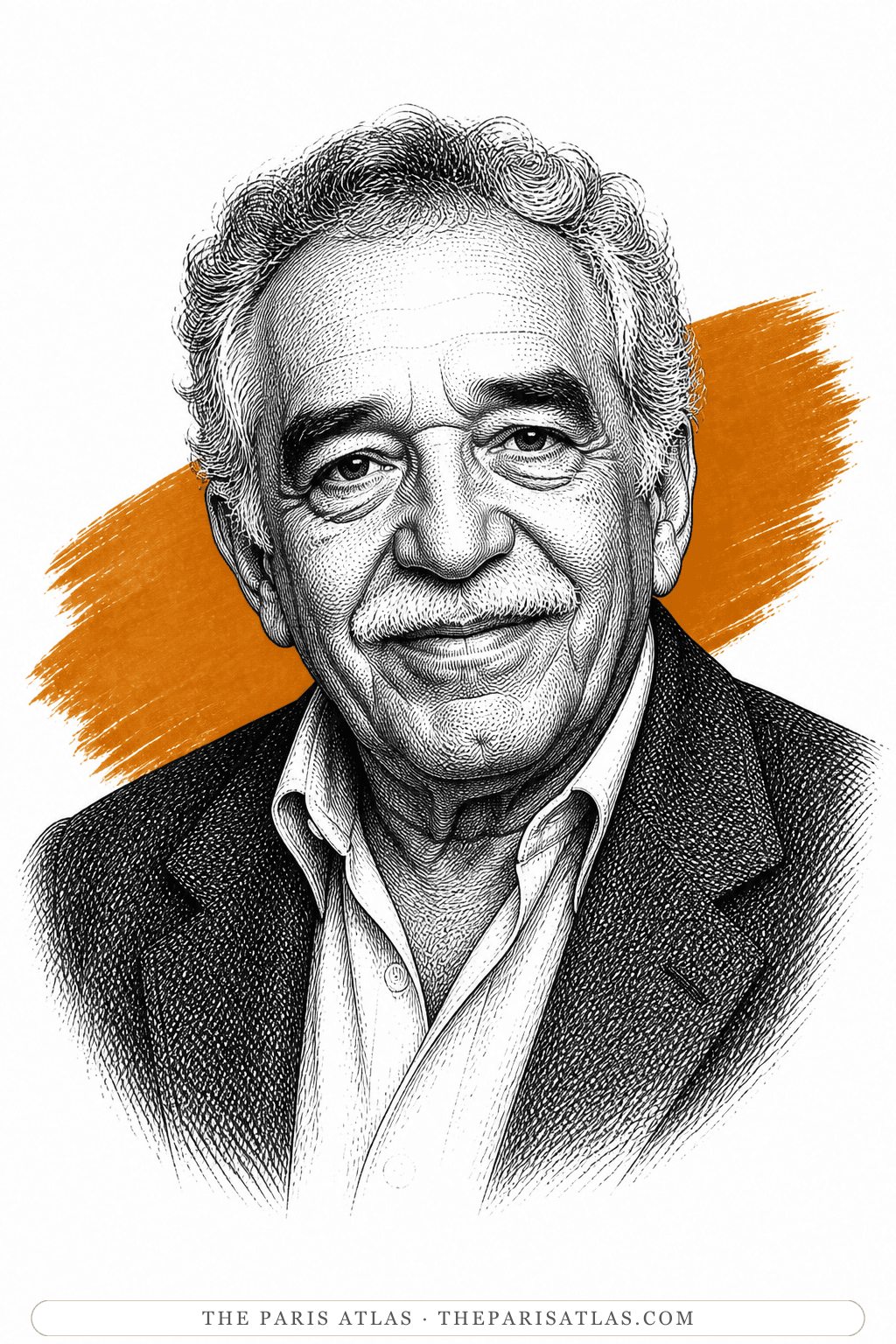
About Gabriel García Márquez
The story, briefly
Spoiler-freeThe Vicario twins openly announce that they will kill Santiago Nasar. Decades later, an unnamed narrator reconstructs how warnings, officials, neighbors, family honor, and terrible timing all failed to save a man whose guilt is never established.
The story, in more detail
Everyone seems to know that Santiago Nasar is going to be killed. The Vicario twins announce their intention openly. They tell shopkeepers, priests, police, neighbors, and anyone else who will listen. Somehow, the warning never reaches Santiago in time.[1]
Years later, an unnamed narrator reconstructs the murder from interviews, memories, official records, contradictions, and gossip. The mystery is not who killed Santiago; the killers are known from the beginning. The question is how an entire town allowed a publicly announced murder to happen.[1]
Gabriel García Márquez writes the book like a report, a family story, and a nightmare at once. Time loops repeatedly around the morning of the killing, showing the same events from different angles until certainty becomes harder rather than easier.[1]
The full plot
The day before the murder, the town celebrates the wedding of Bayardo San Román and Angela Vicario. Bayardo is a wealthy, mysterious outsider who decided he wanted to marry Angela after seeing her. Their courtship is brief and shaped as much by his confidence and her family’s expectations as by Angela’s wishes.[1]
After the wedding, Bayardo discovers that Angela is not a virgin and returns her to her family. Her mother beats her and her brothers demand a name. Angela identifies Santiago Nasar as the man responsible, but the novel never establishes whether the accusation is true or explains why she chooses him.[1]
Angela’s twin brothers, Pedro and Pablo Vicario, take pig-killing knives and announce that they must kill Santiago to restore the family’s honor. They sharpen the knives in public and repeatedly tell people what they plan to do, almost as if they hope someone with greater authority will stop them.[1]
Many townspeople hear the threat. Some assume the brothers are too drunk or decent to carry it out. Others send messages that arrive late, tell the wrong person, or become trapped in the confusion surrounding the bishop’s visit. Colonel Aponte takes one set of knives but lets the twins go, and they simply obtain another set. Clotilde Armenta keeps asking for stronger intervention because she sees that the men need to be prevented from doing what the honor code demands.[1]
Santiago moves through the morning unaware of the full danger. A warning note remains unseen beneath the door. Cristo Bedoya searches for him but reaches the wrong places at the wrong times. When Santiago finally runs toward home, his mother, Plácida Linero, closes the front door because she believes he is already safely inside. The twins catch him beside the house and stab him repeatedly in view of the town.[1]
How it ends — spoilers ahead
Mortally wounded, Santiago walks around the outside of the house and enters through the kitchen, holding his exposed injuries before collapsing. The terrible physical detail ends the investigation’s abstract talk of warnings, honor, and responsibility in the reality of one body destroyed.
The narrator’s reconstruction never produces one clean explanation for why the murder was allowed to happen or whether Santiago was guilty of what Angela accused him of. Contradictory weather, memories, routes, and motives remain in the record. The town can describe nearly every failure without turning those details into repair.
Angela’s life continues in an unexpected direction. She writes letters to Bayardo for years and develops a sustained love or obsession independent of their brief marriage. Bayardo eventually returns carrying the accumulated letters, still sealed. Their reunion offers persistence and possible renewal, but the town produces no comparable act of restoration for Santiago.
Themes and analysis
Collective responsibility
No single bystander causes the murder, but dozens of small failures make it possible. The mayor underestimates the twins, messages do not arrive, friends search in the wrong direction, and witnesses assume someone else has acted. The town’s guilt is distributed so widely that each person can describe an excuse.
Honor
Pedro and Pablo believe public expectation requires them to kill even though they make their plan conspicuous and repeatedly delay. Honor functions less like a private conviction than a role the town has assigned them. Other people disapprove of the murder while continuing to accept the code that makes it seem necessary.
Uncertainty
The narrator gathers testimony, court records, autopsy details, and family memories without producing perfect truth. Whether Santiago had a relationship with Angela remains unresolved. The missing certainty does not make the murder unreal; it reveals how confidently a society can punish someone on a story it never proves.
Time and memory
The book returns to the same morning from different years and points of view. Each repetition adds information but also produces contradiction. The murder feels inevitable because the reader already knows the ending, yet every new missed warning shows another moment when the outcome might have changed.
Gender
Angela is punished and returned as damaged property because of her sexual history. Her brothers are pushed toward violence as proof of masculinity, while Bayardo’s authority to reject her goes largely unquestioned. The honor system harms women and men differently while giving men the power to turn shame into public violence.
Fate
The title calls the death foretold, and the narrator’s backward-looking structure makes each event appear to point toward it. Yet the novel keeps displaying preventable choices. ‘Fate’ may be less a supernatural force than the name the town gives an outcome after its institutions and neighbors fail.
Writing style
García Márquez uses journalistic clarity inside a nonlinear structure. Dates, weather, testimony, autopsy detail, family history, and social gossip arrive with the authority of a report even when witnesses contradict one another.
The prose is less openly fantastical than One Hundred Years of Solitude, but ordinary behavior becomes so coordinated and strange that reality develops a dreamlike pressure. Repetition does not slow the story: each return to the murder tightens the reader’s sense of disbelief and dread.
Editions and translations
Gregory Rabassa’s English translation is widely read and preserves the novel’s controlled shifts between report, gossip, comedy, and horror. Editions should identify the translator because recurring phrases and journalistic rhythm are central to how the investigation accumulates force.
Major adaptations
Francesco Rosi directed the best-known screen adaptation in 1987. Film must show actions in a visible sequence, so the adaptation necessarily makes different choices from a novel that lets contradictory testimony repeatedly reorganize the same morning.
Why we recommend it
A mystery about responsibility
The killers and victim are known immediately; suspense comes from asking how public knowledge never becomes effective action.
Nonlinear but clear
Repeated testimony lets readers follow the morning while seeing how memory changes what appears certain.
A whole town under examination
Private excuses accumulate into a portrait of collective failure rather than a simple story about two murderers.
What this book explores
The people in its pages

Santiago Nasar
The young man whose publicly announced murder becomes the center of the town’s unresolved history.
Also in the book

Angela Vicario
The returned bride whose accusation sets the murder in motion and whose later letters transform her life.

Pedro Vicario
Angela’s twin brother, whose military experience and honor duty pull him toward the announced killing.

Pablo Vicario
Angela’s other twin brother, who helps revive the plan after Pedro’s hesitation.

Bayardo San Román
The wealthy outsider who chooses Angela, returns her after the wedding, and reappears years later with her letters.

Plácida Linero
Santiago’s mother, a respected interpreter of dreams whose final mistake closes the door on her son.

Cristo Bedoya
Santiago’s friend, who searches urgently for him after finally understanding that the threat is real.

Clotilde Armenta
The shopkeeper who recognizes that the twins need to be stopped and persistently asks authorities to act.

The narrator
The unnamed former resident who returns decades later to reconstruct the murder from damaged records and conflicting memories.
Bring it to book club
- Who bears the greatest responsibility for Santiago’s death?
- Do Pedro and Pablo actually want someone to stop them?
- Does it matter whether Santiago was guilty of Angela’s accusation?
- How does the honor code distribute responsibility across the town?
- Why is Angela’s later love for Bayardo important?
- What does the nonlinear structure accomplish that a chronological account could not?
- How reliable is memory in the narrator’s investigation?
- Is ‘fate’ an excuse the town invents afterward?
Timeline
1981
Crónica de una muerte anunciada is first published in Spanish.
1982
Gabriel García Márquez receives the Nobel Prize in Literature.
1983
Gregory Rabassa’s English translation is published in the United States.
1987
Francesco Rosi directs a feature-film adaptation.
2003
Vintage publishes the current Rabassa paperback edition, ISBN 9781400034710.
Book editions
Hardcover
- Hardcover
- La Oveja Negra
- 1981
Hardcover
- Hardcover
- Knopf
- 1983
- Gregory Rabassa

- Paperback
- Vintage
- 2003
- 9781400034710
- Gregory Rabassa
Reader reviews
Readers may also like

The Trial
A different kind of judgment proceeds without stable truth or accountable authority.
Read our take
The Death of Ivan Ilyich
Death is announced early so attention can shift from suspense to meaning and social response.
Read our take
The Metamorphosis
Ordinary family and civic behavior becomes absurd under sustained pressure.
Read our take
No Longer Human
A life is reconstructed through documents, testimony, and unstable judgments about guilt.
Read our takeChronicle of a Death Foretold: frequently asked questions
Did Santiago sleep with Angela?
The novel never confirms it. Angela names him, but the investigation produces no conclusive evidence that they had a sexual relationship.
Why do the twins tell everyone?
They believe the honor code requires the killing but repeatedly create opportunities for someone else to stop them. Public declaration lets them perform duty while making intervention possible.
Does anyone try to warn Santiago?
Yes. Several people send messages or search for him, but the warnings fail through bad timing, misunderstanding, delay, and assumptions that someone else has already acted.
Why does Santiago’s mother lock the door?
Plácida believes Santiago is already inside and bolts the door to protect him from the approaching twins. In fact, she cuts off his closest escape route.
Does Bayardo return to Angela?
Yes. After many years, he appears at her door carrying the letters she sent him.
Did Bayardo read Angela’s letters?
They are returned still sealed, suggesting that he did not, although his decision to preserve and bring them remains meaningful.
Is the narrator García Márquez?
The narrator has autobiographical connections and resembles a journalist, but he is a constructed voice inside a novel rather than a transparent transcript of the author.
Is this magical realism?
It is more journalistic and realist than García Márquez’s most famous magical-realist work. Its repeated time, coincidences, contradictions, and collective behavior nevertheless create an uncanny atmosphere.
If you like Gabriel García Márquez
Explore authors with a similar voice, perspective, and influence.
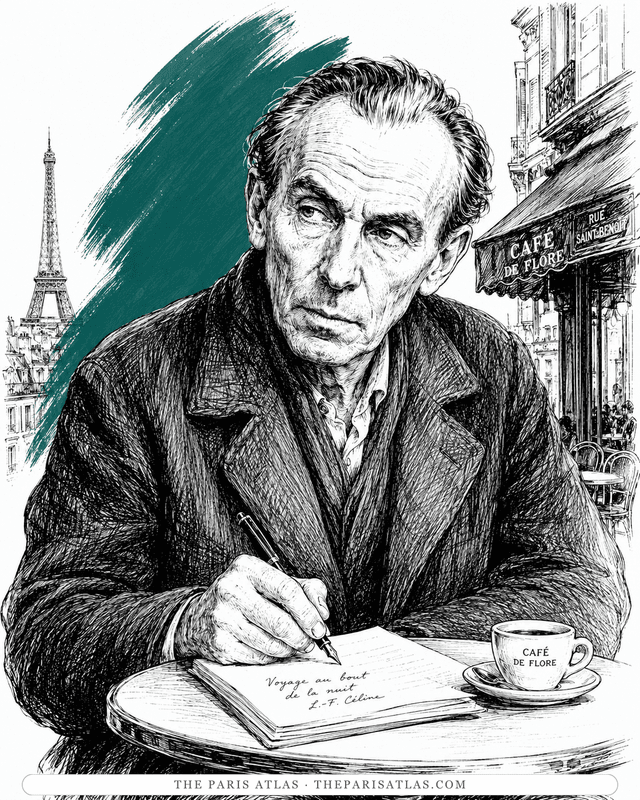
Louis-Ferdinand Céline
The doctor of the Paris slums who wrote the century's blackest, funniest novel — and changed the sound of French prose.
View author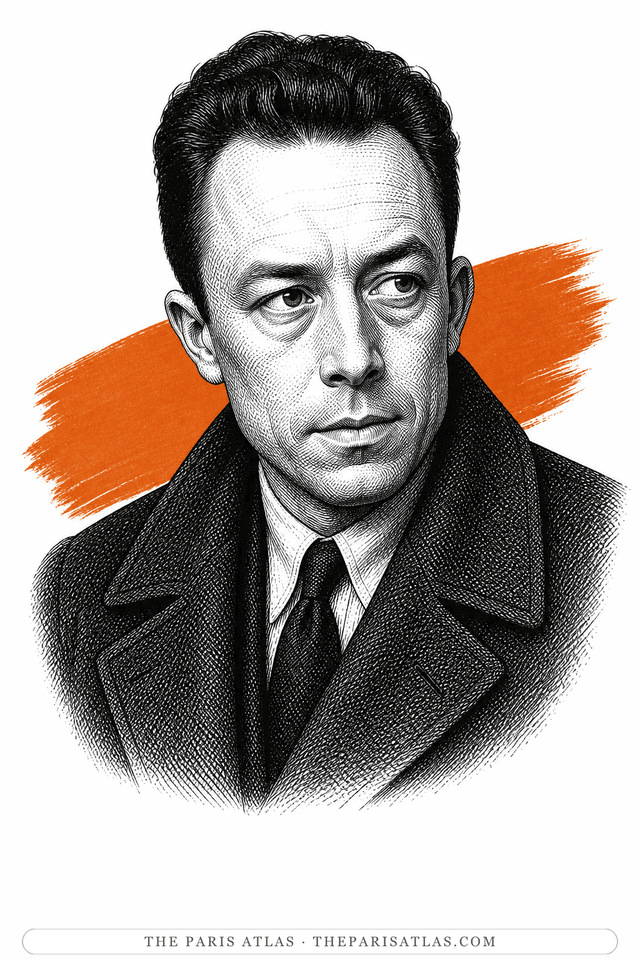
Albert Camus
French Algerian novelist, essayist, journalist and playwright who used the absurd and revolt to ask how people should live without false consolation.
View author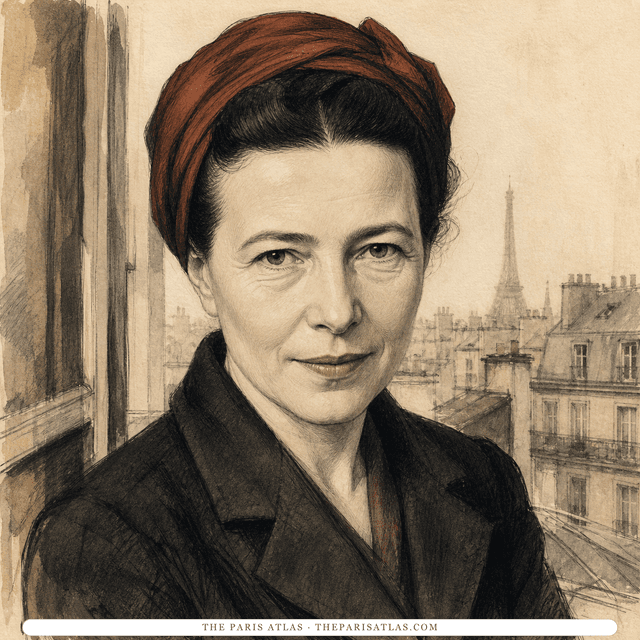
Simone de Beauvoir
French writer and philosopher whose novels, memoirs, and social analysis examined freedom, gender, responsibility, aging, and the material conditions that shape a life.
View author
References
References
The sources below include the primary text, editions, scholarship, archival materials, and other records that informed this page. They document Chronicle of a Death Foretold, its publication, and its place in literary history.

2Chronicle of a Death Foretold — Google Books catalogue
Official recordGoogleUsed forGoogle Books catalogue record used to cross-check the title and edition metadata.
3Chronicle of a Death Foretold — Internet Archive ISBN catalogue
Official recordInternet ArchiveUsed forInternet Archive ISBN catalogue used to cross-check the edition and its availability in library holdings.
4Chronicle of a Death Foretold — Library of Congress books catalogue
Official recordLibrary of CongressUsed forLibrary of Congress catalogue used to cross-check the bibliographic record by ISBN.
5Chronicle of a Death Foretold
Official recordPenguin Random House, 2003Used forPublisher record used to verify the Rabassa translation, 2003 Vintage edition, ISBN, and collective-responsibility framing.
6The Nobel Prize in Literature 1982
Official recordNobel Prize Outreach, 1982Used forOfficial Nobel Prize record used to verify the author’s 1982 award and chronology.
i
Why these sources are here
The primary text is the baseline reference for every book page. Additional references document publication history, interpretation, and historical context where that evidence is available.
 Explore more resources