
Haydée
The daughter of Ali Pasha of Yanina, bought by the count at a slave market, whose testimony destroys Fernand.
She wants the man who sold her father to be named in public.
The book

At a glance
- Ali Pasha of Yanina
- Living in the count's house; legally free, in his words
Who they are in the book
Spoiler-freeHaydée is a Greek princess, the daughter of Ali Pasha, the ruler of Yanina, who was betrayed and killed when she was a child. She and her mother were sold into slavery, and the count bought her in Constantinople. In Paris she lives in her own apartments in his house and calls him her master, and he tells everyone she is free.
How Haydée Is Portrayed
- Her roomsIn Chapter 49 the count visits her in the Greek apartments of the Champs-Élysées house and tells her that in France she is free and can leave whenever she chooses.
- The story of YaninaIn Chapter 77 she tells Albert, without knowing who his father is, how a French officer named Fernand betrayed Ali Pasha to the Turks and sold his widow and daughter.
- At the OperaIn Chapter 53 the count brings her to the Opera during Robert le Diable, and she sees the Count of Morcerf across the house and turns pale.
- The Chamber of PeersIn Chapter 86 she appears before the committee of the Chamber with her birth certificate and the deed of her sale, signed by Fernand, and answers every question.
When the count means to send her away with his fortune, she refuses to leave him and says she loves him. In the last chapter she is on the yacht beside him as it sails out of sight.
If you like The Count of Monte Cristo


If you like Alexandre Dumas
Explore authors with a similar voice, perspective, and influence.

Mark Twain
The Missouri newspaperman who became America's most famous writer, and whose first book made its reputation partly out of Paris: in 1867 he arrived with a shipload of American tourists, renamed his guide Ferguson, watched the high-kicking can-can through his fingers and wrote it all down. He kept coming back — and was living in Paris in the mid-1890s, broke, while finishing the novel he considered his best, Personal Recollections of Joan of Arc.
View author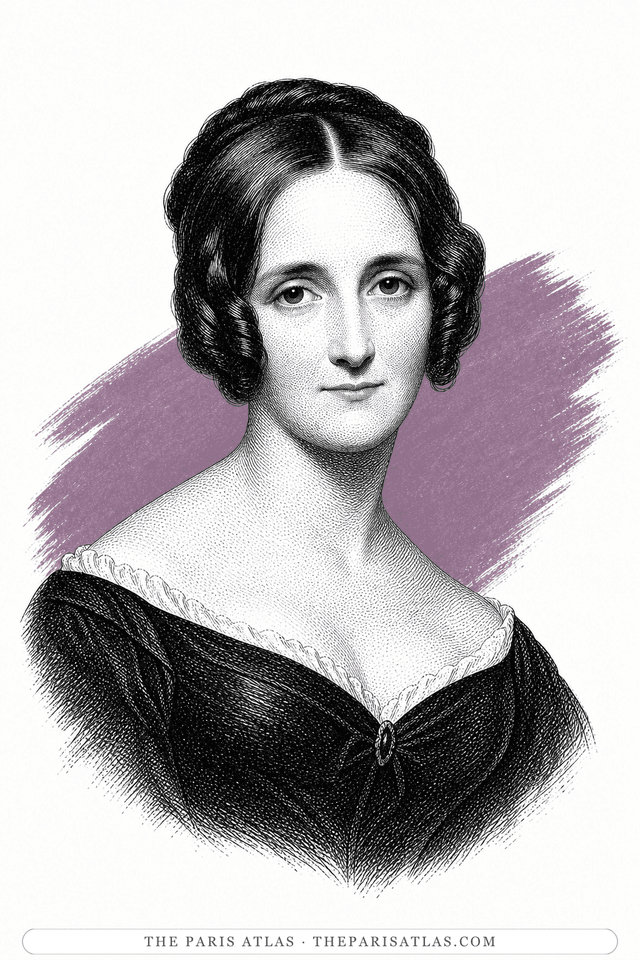
Mary Shelley
The author of Frankenstein, who first saw Paris at sixteen as a runaway. In the summer of 1814 she crossed from England to Calais with the poet Percy Bysshe Shelley and her stepsister Claire Clairmont, spent a week trapped in an expensive Paris hotel with no money, then bought a donkey and walked south-east across a France still wrecked by the Napoleonic wars. That journey became her first published book. Two years later, on a lake in Switzerland, she began her second.
View author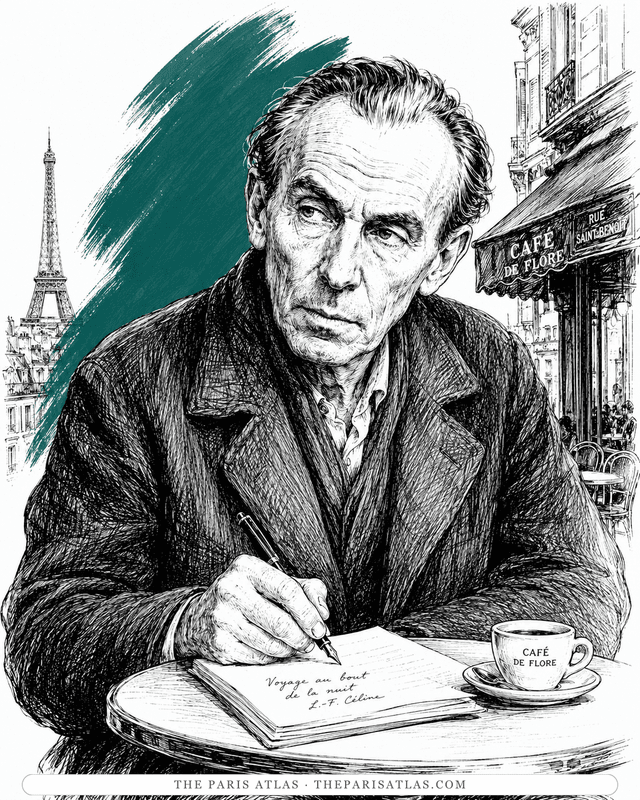
Louis-Ferdinand Céline
The doctor of the Paris slums who wrote the century's blackest, funniest novel — and changed the sound of French prose.
View author