
Maximilien Morrel
The shipowner's son, an army captain, whom the count treats as the one person in Paris he owes something to.
He wants to marry Valentine, whose father has promised her to someone else.
The book

At a glance
- Captain of Spahis
- No. 14 Rue Meslay, Paris
Who they are in the book
Spoiler-freeMaximilien is the son of Morrel, the Marseille shipowner who tried to save Dantès in 1815 and whom Dantès in turn saved from ruin. In Paris he is a captain of Spahis, in love with Valentine de Villefort, and the count's most trusted friend. The count's promise to him is the thread the last quarter of the book hangs on.
How Maximilien Morrel Is Portrayed
- The fifth of SeptemberIn Chapter 30 he arrives from his regiment on the day his father means to shoot himself, and is there when the Pharaon, rebuilt and paid for by an unknown hand, sails into the harbour.
- The Rue MeslayIn Chapter 50 the count visits the Morrels at No. 14 Rue Meslay and finds the red silk purse from 1829 kept under glass like a relic.
- The gate in the wallIn Chapter 51 he and Valentine meet through the iron fence of the Villefort garden in a lucerne field, a courtship conducted entirely through bars.
- The avowalIn Chapter 94, after Valentine is poisoned, he tells the count everything and threatens to kill himself if she dies. The count makes him promise to wait one month.
Maximilien Morrel quotes
until the day when God shall deign to reveal the future to man, all human wisdom is summed up in these two words,—‘Wait and hope.’
Valentine's death is staged by the count. On 5 October Maximilien comes to the island of Monte Cristo expecting to die and finds her alive. The count leaves the couple his island, his fortune and the letter that ends the book.
If you like The Count of Monte Cristo


If you like Alexandre Dumas
Explore authors with a similar voice, perspective, and influence.

Mark Twain
The Missouri newspaperman who became America's most famous writer, and whose first book made its reputation partly out of Paris: in 1867 he arrived with a shipload of American tourists, renamed his guide Ferguson, watched the high-kicking can-can through his fingers and wrote it all down. He kept coming back — and was living in Paris in the mid-1890s, broke, while finishing the novel he considered his best, Personal Recollections of Joan of Arc.
View author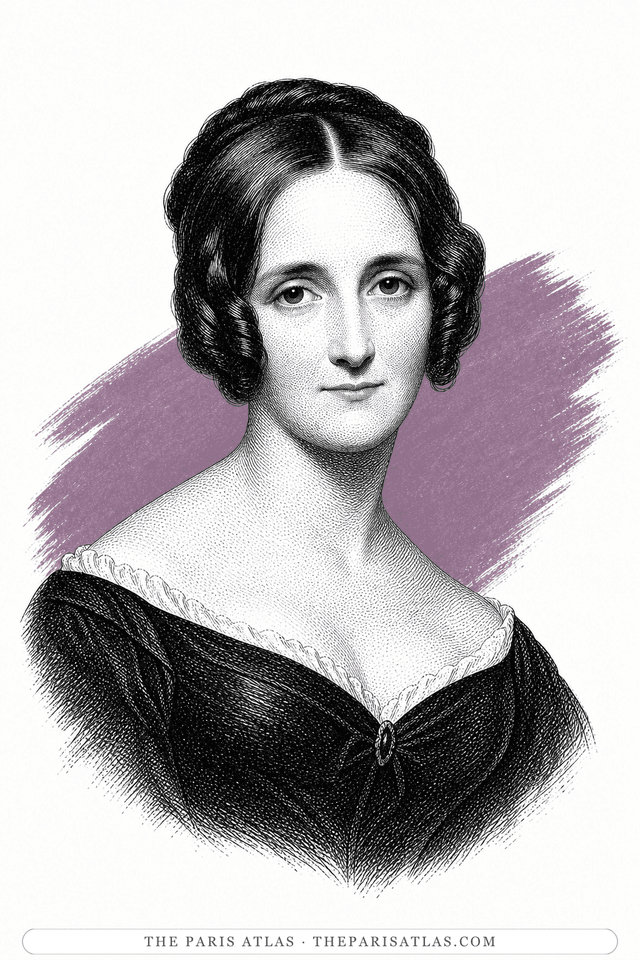
Mary Shelley
The author of Frankenstein, who first saw Paris at sixteen as a runaway. In the summer of 1814 she crossed from England to Calais with the poet Percy Bysshe Shelley and her stepsister Claire Clairmont, spent a week trapped in an expensive Paris hotel with no money, then bought a donkey and walked south-east across a France still wrecked by the Napoleonic wars. That journey became her first published book. Two years later, on a lake in Switzerland, she began her second.
View author
Louis-Ferdinand Céline
The doctor of the Paris slums who wrote the century's blackest, funniest novel — and changed the sound of French prose.
View author