
Mercédès
The Catalan girl Dantès was to marry, who becomes the Countess of Morcerf and recognises him the moment he walks into her house.
She wants her son to live, and she is willing to give up her name, her house and her husband to make sure of it.
The book

At a glance
- The Catalan village near Marseille, then the Rue du Helder, Paris
- Fernand Mondego, later Count of Morcerf
- Albert de Morcerf
Who they are in the book
Spoiler-freeMercédès lives in the Catalan village outside Marseille, a settlement of Spanish fishermen who marry among themselves. Her cousin Fernand wants her; she has promised herself to Edmond Dantès. When Dantès disappears into the Château d'If she waits, then, believing him dead, marries Fernand and leaves Marseille with him.
By 1838 she is the Countess of Morcerf, the mother of Albert, and the only person in Paris who knows the count on sight. She says nothing, and her silence holds until her son challenges the count to a duel. Then she goes to the count at night and speaks his real name.
How Mercédès Is Portrayed
- In the Catalan villageIn Chapter 3 she is a beautiful girl with hair as black as jet and eyes as velvety as a gazelle's, leaning against the wall of a cottage. Fernand, a tall young man of twenty or twenty-two, is begging her to marry him.
- The betrothal feastIn Chapter 5 the feast at La Réserve is her wedding day in all but the ceremony. The commissary of police arrives before the couple can leave for the church.
- What Caderousse tells the priestIn Chapter 27 Caderousse, telling the disguised Dantès the story, describes Mercédès coming again and again to the old father's room, nursing him, and finally marrying Fernand after long waiting.
- The recognitionIn Chapter 41, when Albert presents the count at the Rue du Helder, the countess turns white and has to be asked whether the heat of the room has made her ill. The count, the text says, is paler than she is.
- At night, by his nameIn Chapter 89 she comes alone to the count's house the night before the duel, kneels, and says: Edmond, you will not kill my son. It is the first time in the book anyone in Paris has called him Edmond.
- Leaving the houseIn Chapter 91 she and Albert leave the Rue du Helder refusing every part of the Morcerf fortune. Albert has already given up his father's name.
Mercédès quotes
Edmond, you will not kill my son!
After Fernand's suicide she goes back to Marseille with Albert and lives in the small house on the Allées de Meilhan where Dantès's father died. In Chapter 112 the count visits her there. She tells him she has found the small sum of money he had buried long before, in the place he described, and that it will be enough to live on. Albert enlists in the army in Africa under his mother's name. She and the count part without any suggestion that they will meet again.
If you like The Count of Monte Cristo


If you like Alexandre Dumas
Explore authors with a similar voice, perspective, and influence.

Mark Twain
The Missouri newspaperman who became America's most famous writer, and whose first book made its reputation partly out of Paris: in 1867 he arrived with a shipload of American tourists, renamed his guide Ferguson, watched the high-kicking can-can through his fingers and wrote it all down. He kept coming back — and was living in Paris in the mid-1890s, broke, while finishing the novel he considered his best, Personal Recollections of Joan of Arc.
View author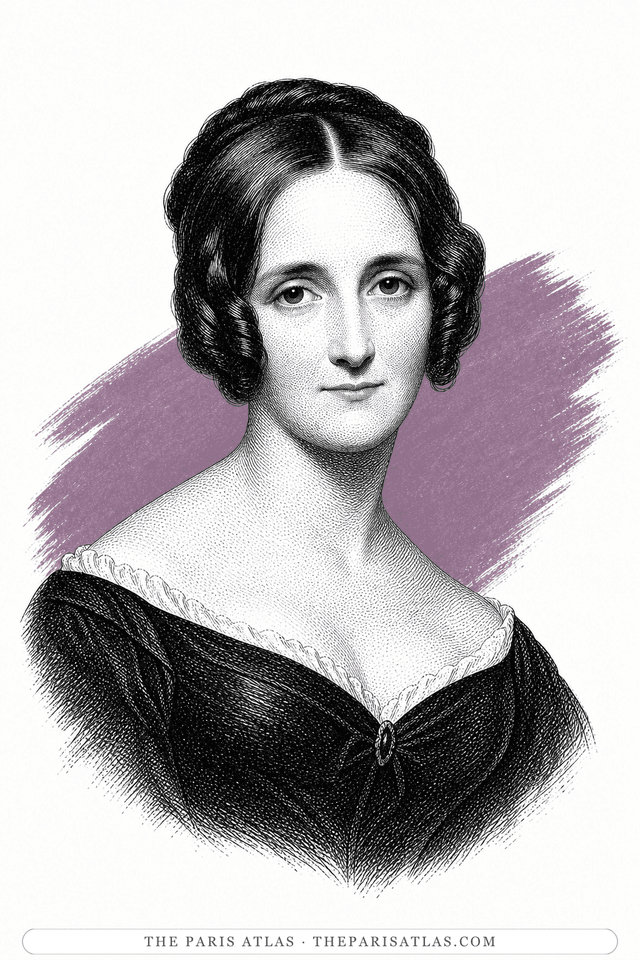
Mary Shelley
The author of Frankenstein, who first saw Paris at sixteen as a runaway. In the summer of 1814 she crossed from England to Calais with the poet Percy Bysshe Shelley and her stepsister Claire Clairmont, spent a week trapped in an expensive Paris hotel with no money, then bought a donkey and walked south-east across a France still wrecked by the Napoleonic wars. That journey became her first published book. Two years later, on a lake in Switzerland, she began her second.
View author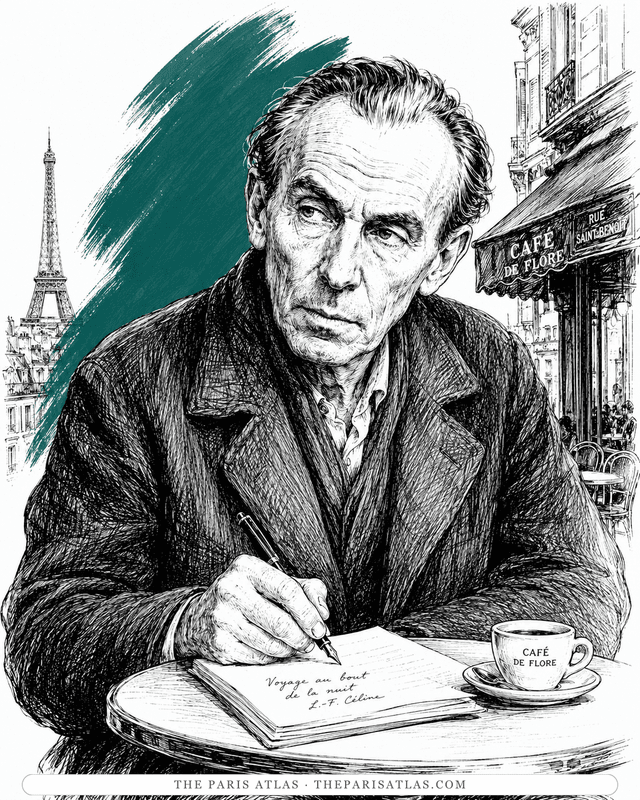
Louis-Ferdinand Céline
The doctor of the Paris slums who wrote the century's blackest, funniest novel — and changed the sound of French prose.
View author