
The duc de Beaufort
A royal prince locked in the keep at Vincennes, whose escape by rope ladder starts the Fronde chapters.
The book

At a glance
- A prince of the blood, prisoner at Vincennes, then a leader of the Fronde
- François de Vendôme, duc de Beaufort, 1616–1669
Who they are in the book
Spoiler-freeFrançois de Vendôme, duc de Beaufort, a grandson of Henri IV and a real leader of the Fronde, has been held in the keep at Vincennes for five years when the novel opens. Dumas plays him as a brave man of no learning, popular with the Paris crowd, whose escape is engineered by Athos and Aramis through Grimaud.
How The duc de Beaufort Is Portrayed
- Portraits in charcoalIn Chapter XVII, having failed at poetry, he draws portraits of Cardinal Mazarin on the walls of his cell with a piece of coal.
- Grimaud as gaolerIn Chapter XVIII he takes Grimaud, placed among his guards, for an enemy, and comes to trust him only when he understands that the man's stupidity is a blind.
- Forty methods of escapeChapter XXIII is titled for one of the forty methods he claims to have of getting out. The method is a rope ladder, a pie, and two horses waiting beyond the moat.
- Free!The same chapter ends with him outside the walls, shouting the word three times.
If you like Twenty Years After


If you like Alexandre Dumas
Explore authors with a similar voice, perspective, and influence.

Mark Twain
The Missouri newspaperman who became America's most famous writer, and whose first book made its reputation partly out of Paris: in 1867 he arrived with a shipload of American tourists, renamed his guide Ferguson, watched the high-kicking can-can through his fingers and wrote it all down. He kept coming back — and was living in Paris in the mid-1890s, broke, while finishing the novel he considered his best, Personal Recollections of Joan of Arc.
View author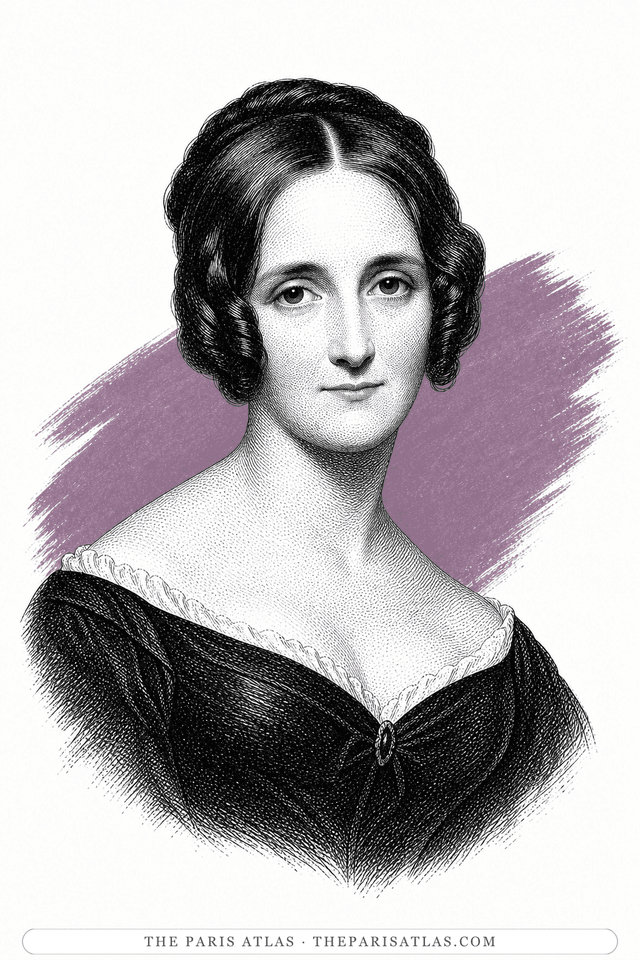
Mary Shelley
The author of Frankenstein, who first saw Paris at sixteen as a runaway. In the summer of 1814 she crossed from England to Calais with the poet Percy Bysshe Shelley and her stepsister Claire Clairmont, spent a week trapped in an expensive Paris hotel with no money, then bought a donkey and walked south-east across a France still wrecked by the Napoleonic wars. That journey became her first published book. Two years later, on a lake in Switzerland, she began her second.
View author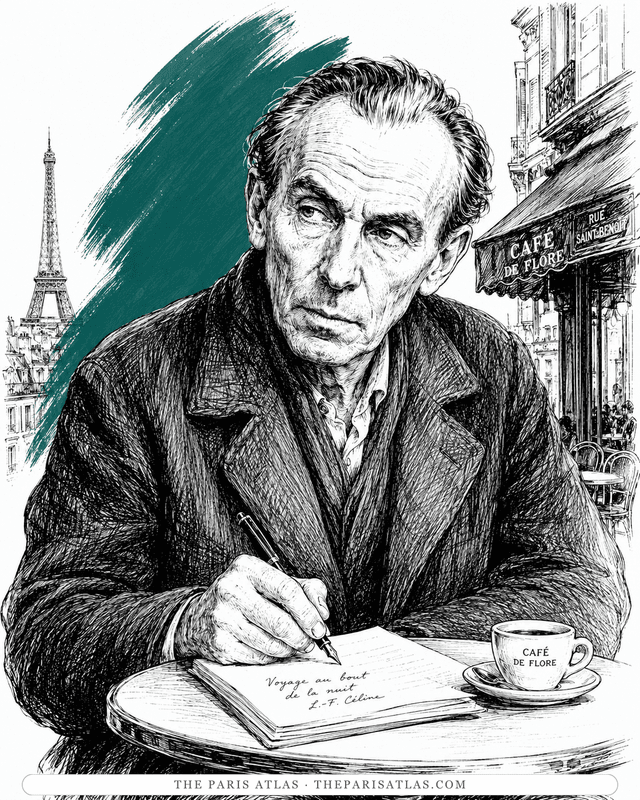
Louis-Ferdinand Céline
The doctor of the Paris slums who wrote the century's blackest, funniest novel — and changed the sound of French prose.
View author