
Porthos, Monsieur du Vallon de Bracieux de Pierrefonds
Rich, widowed, enormously strong, and unhappy for want of a barony.
A barony, so that the neighbours who look down on a rich commoner will have to bow.
The book

At a glance
- Monsieur du Vallon de Bracieux de Pierrefonds, a widower
- The château de Pierrefonds, with Mousqueton
- Cardinal Mazarin, with d'Artagnan
Who they are in the book
Spoiler-freePorthos married money in the first book and has been left with it. He owns three estates, signs himself with all three names, and lives at Pierrefonds with his servant Mousqueton, who has grown fat. D'Artagnan expects to fail with him as he failed with Aramis, and instead finds him bored, snubbed by the local nobility, and ready to follow anyone who will make him a baron.
He is the book's strength and much of its comedy. He is the man who wants to pull out a window bar at Rueil, who throws his servants into the sea to save them, and who stands guard over Mazarin while d'Artagnan dictates. He gets the barony, and the last chapter shows him trying to remember where he has seen the cardinal's face before.
How Porthos, Monsieur du Vallon de Bracieux de Pierrefonds Is Portrayed
- Three estates and no titleIn Chapters X and XI he explains that Bracieux was once a barony and that nothing but the title stands between him and the respect of the country gentlemen who snub him. He says he would give anything to be a baron.
- The promise on paperIn Chapter XXIV, at the Palais Royal, d'Artagnan asks Mazarin to erect one of Porthos's three estates into a barony. Porthos steps forward crying that he will be a baron, and the cardinal tells him his barony is on the back of the Duc de Beaufort's horse: he has only to overtake it.
- Servants overboardIn Chapter LXXII, escaping the gunpowder felucca, he seizes Blaisois by neck and heels and pushes him out of the window into the sea, then supports the terrified Mousqueton with one hand until he reaches the boat.
- A bar and a doorIn Chapter LXXXIII, locked up at Rueil, his own plan for escape is to pull out a window bar and push down a door. D'Artagnan talks him into something quieter.
- The shoulder on the panelIn Chapter LXXXV a door that will not open for d'Artagnan gives way when Porthos puts his shoulder to one panel, which lets them into the corridor where Mazarin keeps his treasury.
- The patent of nobilityIn Chapter LXXXVIII the queen says that here goes the barony and signs his patent. In Chapter XC he rides home to a triumphal arch his tenants have built, promising his neighbours will die of envy.
Porthos, Monsieur du Vallon de Bracieux de Pierrefonds quotes
’tis not civil war that disunites us. It is that we are each of us twenty years older; it is that the honest emotions of youth have given place to suggestions of interest, whispers of ambition, counsels of selfishness.
He becomes a baron and goes home to Pierrefonds. In the last pages of Chapter XC he turns back to ask d'Artagnan where he has seen Mazarin's face before, and cannot place it. The joke, and the man, return in the next novel.
If you like Twenty Years After


If you like Alexandre Dumas
Explore authors with a similar voice, perspective, and influence.
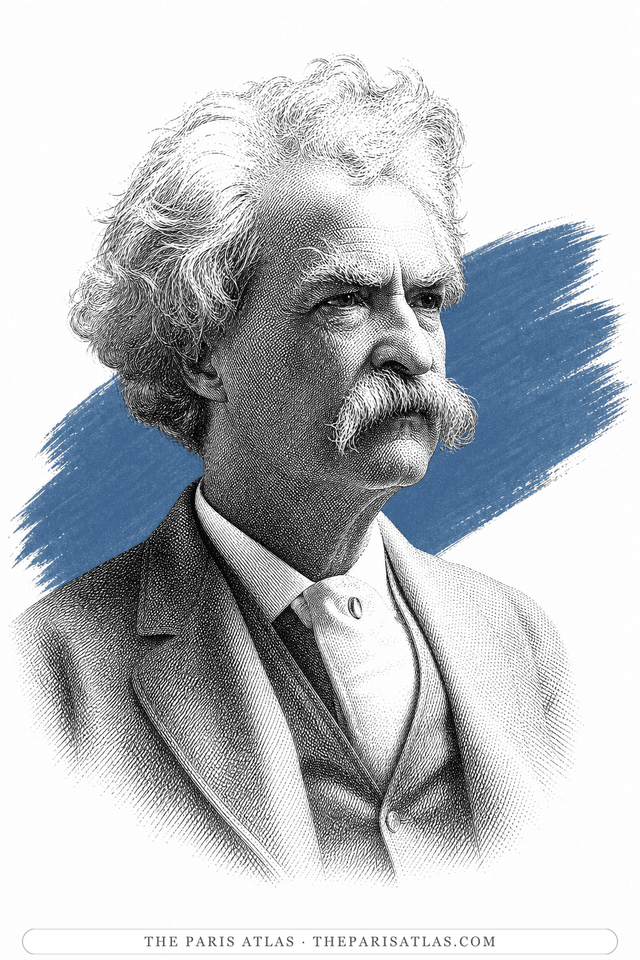
Mark Twain
The Missouri newspaperman who became America's most famous writer, and whose first book made its reputation partly out of Paris: in 1867 he arrived with a shipload of American tourists, renamed his guide Ferguson, watched the high-kicking can-can through his fingers and wrote it all down. He kept coming back — and was living in Paris in the mid-1890s, broke, while finishing the novel he considered his best, Personal Recollections of Joan of Arc.
View author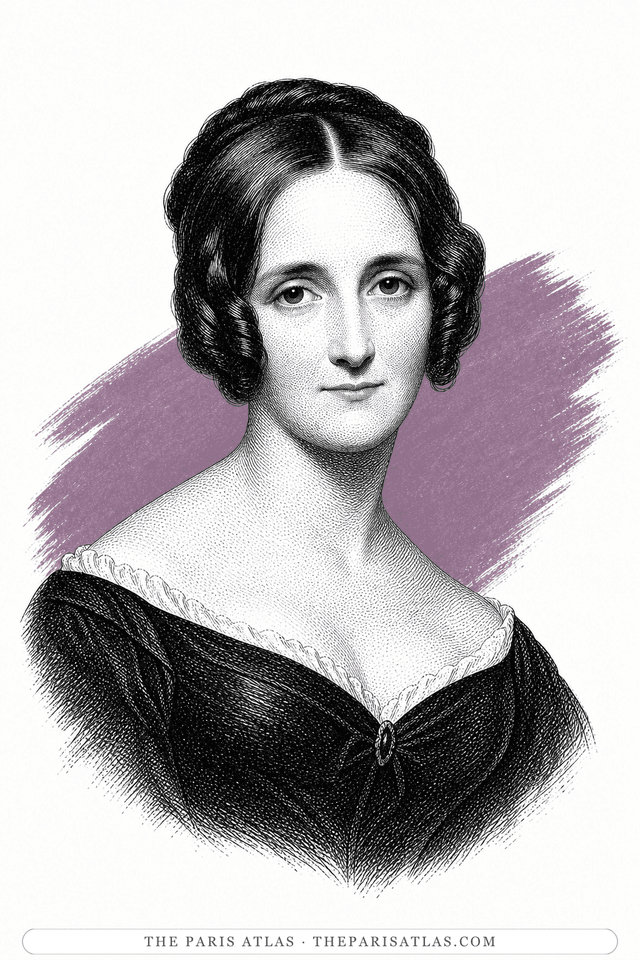
Mary Shelley
The author of Frankenstein, who first saw Paris at sixteen as a runaway. In the summer of 1814 she crossed from England to Calais with the poet Percy Bysshe Shelley and her stepsister Claire Clairmont, spent a week trapped in an expensive Paris hotel with no money, then bought a donkey and walked south-east across a France still wrecked by the Napoleonic wars. That journey became her first published book. Two years later, on a lake in Switzerland, she began her second.
View author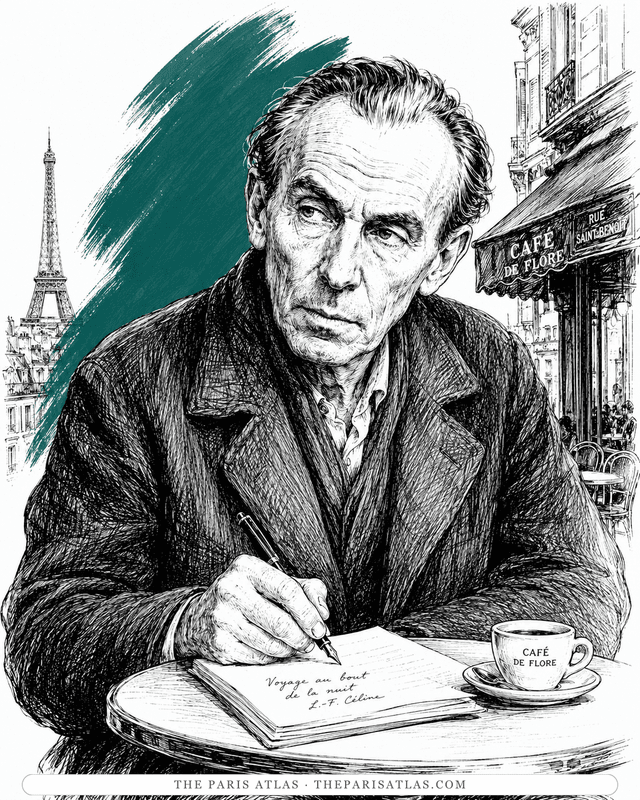
Louis-Ferdinand Céline
The doctor of the Paris slums who wrote the century's blackest, funniest novel — and changed the sound of French prose.
View author