
The Diary of a Drug Fiend
The closest structural comparison: lovers, shared drugs, and dependence.
Read our take
by Luke Davies
A love story in which heroin becomes a third partner, then narrows two lives into dependence and collapse.
A young Australian couple organize their romance around heroin until intimacy, desire, money, withdrawal, and desperation become impossible to separate.
Luke Davies’s Candy is narrated by a young man who falls in love with Candy and then helps turn heroin into the center of their relationship. At first, the drug seems to intensify everything they want from each other: sex, intimacy, rebellion, escape, and the feeling that ordinary life belongs to other people.
Then addiction’s practical demands take over. Money runs out. Finding heroin becomes the first task of every day. Love does not disappear, but it must compete with withdrawal, desperation, crime, sex work, and constant calculations about the next dose.
Davies writes in vivid, immediate prose that explains why heroin can feel beautiful before showing what dependence does to a couple over time. He refuses to flatten addiction into either glamour or a moral lesson, and that balance gives the novel much of its power.
The unnamed narrator meets Candy in Sydney and quickly becomes infatuated with her. Their early relationship is sexually intense and emotionally exuberant. He is already using heroin and gradually brings Candy into that world.
Candy begins using heroin with him. For a while, they have enough money to experience the drug as an extension of romance. Their days become slower, softer, and organized around shared intoxication.
As dependence grows, heroin stops being optional. They spend more time finding money, securing drugs, enduring withdrawal, and recovering from each cycle. Their former pleasures narrow into maintenance.
Financial desperation changes the relationship. Candy turns to sex work, while the narrator becomes involved in schemes and crimes connected to obtaining drugs. Jealousy, shame, and fear enter what once felt like a private love story.
They attempt treatment and withdrawal but relapse repeatedly. Their bodies, finances, and trust deteriorate. The narrator gradually recognizes that love alone cannot overpower the structure of addiction.
The relationship cannot survive in its original form. Their attempts to stay together repeatedly pull them back toward heroin.
Candy moves toward recovery in a way that requires separation. The narrator must face the possibility that loving her means not following her.
The ending is painful rather than nihilistic. Survival remains possible, but only after they reject the fantasy that love and heroin can coexist indefinitely.
Heroin becomes part of the relationship itself. It demands time, money, attention, secrecy, and loyalty that might otherwise belong to either partner.
The couple initially mistakes sharing everything for intimacy, even when what they share is destructive. Participation feels like devotion until refusal becomes the more loving act.
Addiction turns economics into plot. Emotional decisions become questions about what can be sold, borrowed, stolen, or traded, and financial need reshapes the couple’s ideas of choice.
Withdrawal, sex, sleep, appetite, overdose risk, and physical deterioration keep the story grounded in bodily experience. The drug’s promise and its cost are never merely abstract.
The novel refuses the fantasy that one partner can rescue the other through devotion. Recovery may require distance from the person who shares the pattern, even when love remains.
The narrator looks back with enough tenderness to explain why the relationship mattered without pretending the damage was beautiful. Remembering attraction does not erase responsibility.
The opening briefly divides the past into early sweetness and later damage, then corrects that comforting sequence: the descent began sooner than the narrator first suggests. His extended comparison with driving downhill turns the couple’s apparent resourcefulness into a warning. They learn to handle dangerous conditions rather than leave the car, encouraging each other while excluding passengers. Getting better at the journey is therefore not the same as gaining control of it. Looking back lets him expose a mistake that, at the time, felt like shared competence.
Davies’s prose is vivid and sensory, often lyrical without becoming vague. He is especially good at showing how addiction changes the scale of time: a whole life narrows to the next hour, dose, or attempt to avoid withdrawal.
The voice is intimate and self-implicating. The narrator does not present himself as an innocent observer of Candy’s decline. He knows that he helped build the world that trapped them.
When Mason offers him a business opportunity conditional on stopping heroin, the narrator celebrates his imagined recovery by using again. The following sequence measures the distance between that confident promise and his actions: each supposed last day gives way to another. Parenthetical corrections sharpen the irony. He acknowledges that treatment belonged to the original plan, but that postponing it did not. The voice records its own evasions in miniature, allowing the reader to see how a changed deadline can be presented as loyalty to an unchanged intention.
Davies wrote the novel in English. Australian first-edition details remain distinct from the Ballantine edition commonly found by U.S. readers, and Penguin Random House later issued an American ebook.
Neil Armfield directed the 2006 film Candy, starring Heath Ledger and Abbie Cornish. It preserves the central relationship but changes pacing, narration, and details, so it cannot replace the novel’s first-person interior voice.
Irvine Welsh’s Trainspotting also portrays addiction, but through a very different social world and linguistic style. It is included here in prose because The Paris Atlas does not yet have a full Trainspotting record to support a structured related-book link.
Davies follows shared intoxication from romance and private freedom into codependency, withdrawal, and desperation.
Money, sleep, appetite, sex, and time all narrow around the need for the next dose.
The first-person voice understands that witnessing Candy’s decline does not make him innocent of helping create it.

Candy’s unnamed lover and the first-person voice who acknowledges that he is both partner and enabler.

The intelligent and expressive young woman whose shared heroin use becomes dependence and eventually demands separation.

A more experienced drug-world figure associated with heroin supply and the routines surrounding it.

Parents, doctors, and others who represent the outside world trying to interrupt the couple’s closed system.
1997
The novel is first published in Australia.
1998
Ballantine publishes a major U.S. edition.
2006
Neil Armfield directs the film adaptation starring Heath Ledger and Abbie Cornish.
2010
Penguin Random House issues a U.S. ebook edition.

The closest structural comparison: lovers, shared drugs, and dependence.
Read our take

Addiction without romance, rendered through the routines of finding, using, and withdrawing.
Read our take
Davies drew on knowledge of addiction and Australian drug culture, but the novel should be treated as fiction unless a specific autobiographical claim is reliably sourced.
Candy’s unnamed male lover narrates it. His perspective shapes how readers understand both the romance and the addiction.
Yes, but it is also about the limits of love when addiction becomes the organizing force in a relationship.
The ending moves her toward recovery, but not through a neat cure or romantic rescue.
Money for heroin becomes increasingly difficult to obtain, and sex work becomes part of the couple’s survival economy.
The early sections explain heroin’s attraction, but the novel steadily shows dependence, withdrawal, and loss.
It preserves the central relationship but necessarily changes pacing, narration, and some details.
Yes. Drug use, withdrawal, sex, and bodily deterioration are described directly.
Explore authors with a similar voice, perspective, and influence.

American novelist and composer whose expatriate fiction explores dislocation, unstable intimacy, fatalism, and North Africa.
View author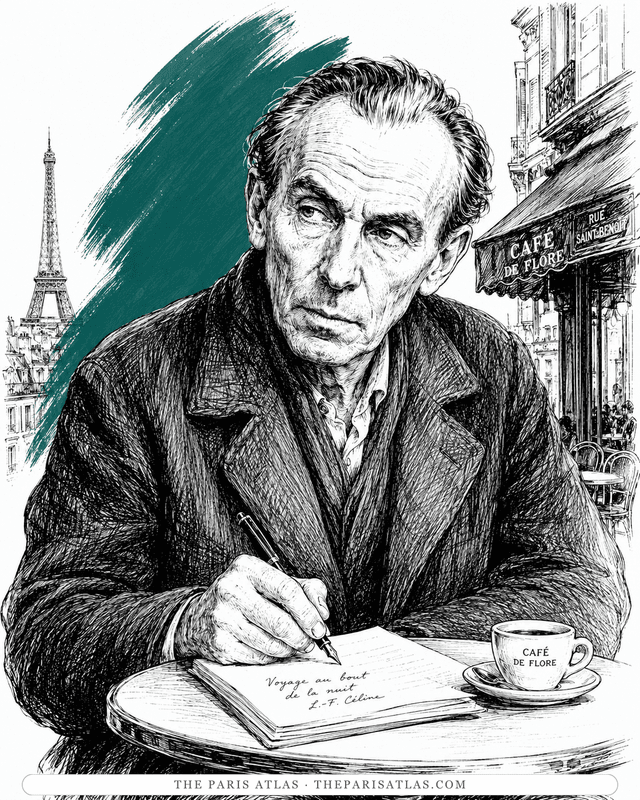
The doctor of the Paris slums who wrote the century's blackest, funniest novel — and changed the sound of French prose.
View author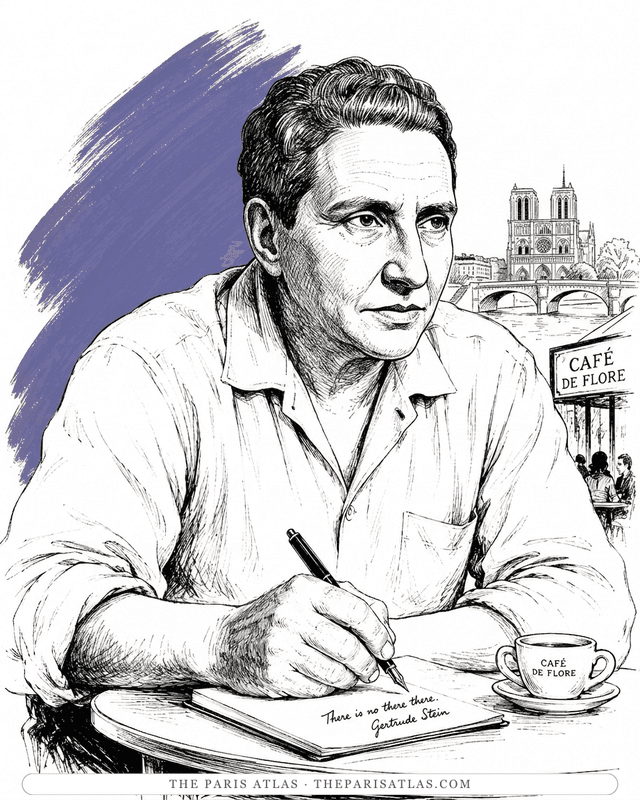
Writer, collector, and host of the rue de Fleurus salon where modern art and the Lost Generation were curated in the same room.
View authorThe sources below include the primary text, editions, scholarship, archival materials, and other records that informed this page. They document Candy, its publication, and its place in literary history.


The primary text represented by this page, used for descriptions of the work’s contents and for any quoted passages shown here.

Publisher record for the U.S. edition, core plot, Sydney setting, and prose.
National bibliography evidence for edition and publication metadata.
Library catalog evidence for edition history.
National film-agency record for the 2006 adaptation, director, and cast.
Permissioned novel excerpt syndicated on the Ballantine edition's AbeBooks page; supports only the two added readings of the opening, not the film or the novel's ending.
The primary text is the baseline reference for every book page. Additional references document publication history, interpretation, and historical context where that evidence is available.
 Explore more resources