
Porthos
The loud one, who shows off a gold baldric that is plain buff at the back and courts a procurator's wife for her husband's strongbox.
To be equipped, admired and fed, and to reach Monsieur Coquenard's strongbox by way of Madame Coquenard.
The book

At a glance
- The Rue du Vieux-Colombier, near Tréville's hôtel
- Mousqueton, a Norman whose real name is Boniface
- Madame Coquenard, wife of a procurator in the Rue aux Ours
- Leaves the service and marries the widow Coquenard the following year
Who they are in the book
Spoiler-freePorthos talks for the pleasure of hearing himself talk, on every subject except the sciences, which he has hated since childhood. He dresses to eclipse Athos and never manages it. His servant Mousqueton, a Norman born Boniface, is clothed in his master's turned cast-offs by a clever tailor. His love affairs, as he tells them in Tréville's antechamber, have climbed from lawyers' wives to a foreign princess.
The truth is Madame Coquenard, the elderly wife of a procurator in the Rue aux Ours, whose husband's strongbox Porthos means to reach. The book is fond of him and never lets him be a fool for long: he fights, he holds the bastion, he sits as a judge on the Lys.
How Porthos Is Portrayed
- The baldric, Chapters II and IVIn Tréville's antechamber he wears a magnificent baldric worked in gold and a long crimson cloak. When d'Artagnan tangles himself in it the cloak flies open and the secret is out: the baldric is gold in front and plain buff behind.
- The talker, Chapter VIIHe talks loudly whether anyone listens or not, on all subjects except the sciences. He fills the antechamber and the guardroom of the Louvre with accounts of his love scrapes, up to a foreign princess who is enormously fond of him.
- Athos's sword, Chapter VIIHe would give ten years of his life for the Francis I sword on Athos's wall. When he tries to borrow it for an appointment with a duchess, Athos empties his pockets and offers him everything but the sword.
- Left at Chantilly, Chapters XX and XXVOn the road to London he quarrels with a stranger at the inn and is left behind. When d'Artagnan finds him weeks later he is laid up with what he calls a strained knee and has lost his money to the same man at dice.
- The procurator's dinner, Chapter XXXIIHe dines at the Coquenards' in the Rue aux Ours: thin soup, a scrawny hen, and the procurator watching every mouthful. He goes home hungry and in bad humour, but closer to the strongbox.
- The wedding suit, Chapter LXVII and epilogueOffered the lieutenancy, he is found admiring himself in a splendid embroidered suit and refuses: his procurator has died during the expedition to Béthune and he is trying on his wedding clothes. The coffer holds eight hundred thousand livres.
Porthos quotes
All for one, one for all.
He sits as a judge at Milady's trial and pronounces the sentence of death with Aramis. In the epilogue he leaves the Musketeers, marries Madame Coquenard, and Mousqueton gets the gilded carriage he has always wanted to stand behind.
If you like The Three Musketeers


If you like Alexandre Dumas
Explore authors with a similar voice, perspective, and influence.
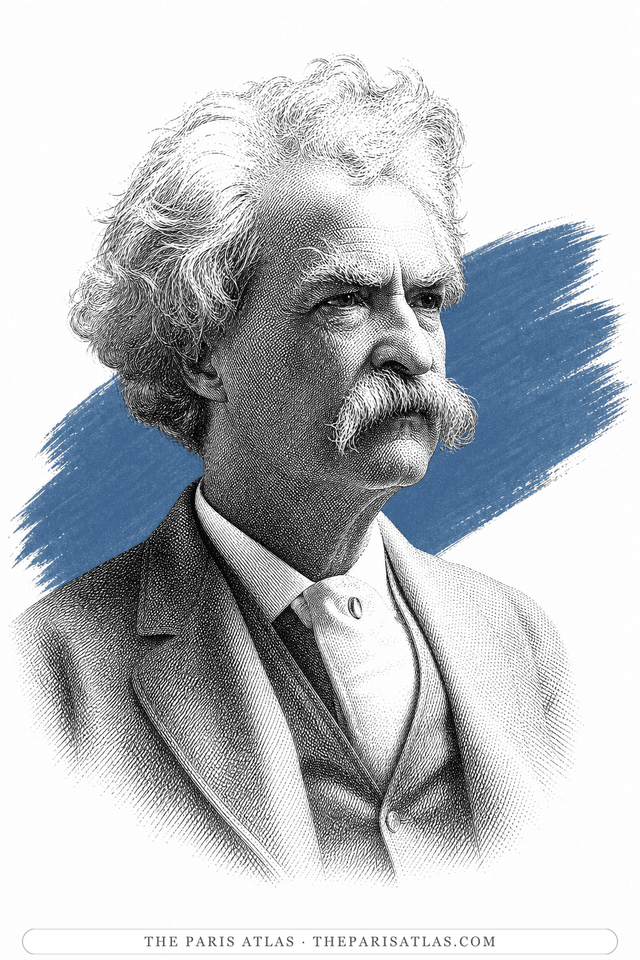
Mark Twain
The Missouri newspaperman who became America's most famous writer, and whose first book made its reputation partly out of Paris: in 1867 he arrived with a shipload of American tourists, renamed his guide Ferguson, watched the high-kicking can-can through his fingers and wrote it all down. He kept coming back — and was living in Paris in the mid-1890s, broke, while finishing the novel he considered his best, Personal Recollections of Joan of Arc.
View author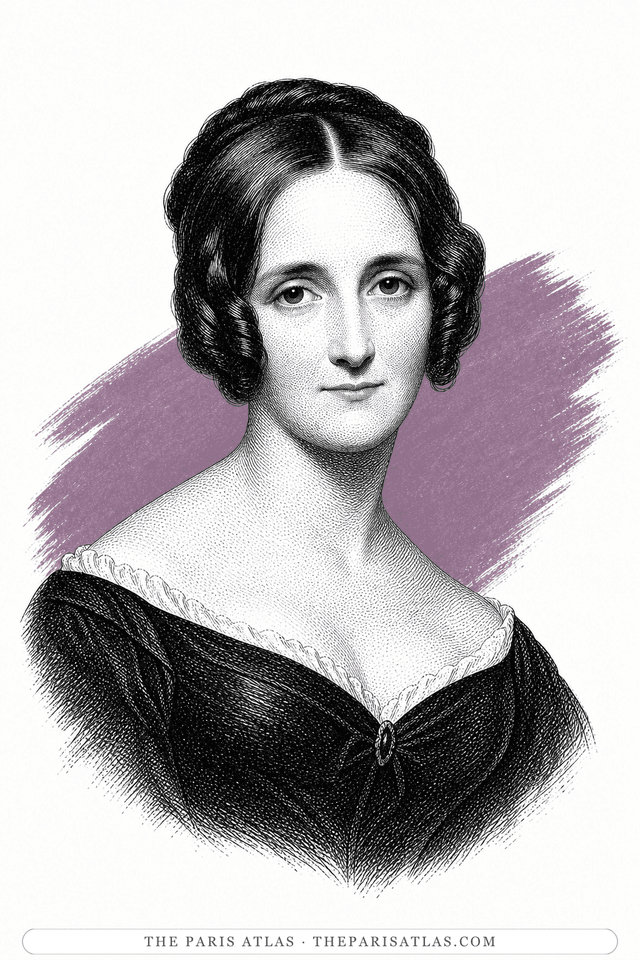
Mary Shelley
The author of Frankenstein, who first saw Paris at sixteen as a runaway. In the summer of 1814 she crossed from England to Calais with the poet Percy Bysshe Shelley and her stepsister Claire Clairmont, spent a week trapped in an expensive Paris hotel with no money, then bought a donkey and walked south-east across a France still wrecked by the Napoleonic wars. That journey became her first published book. Two years later, on a lake in Switzerland, she began her second.
View author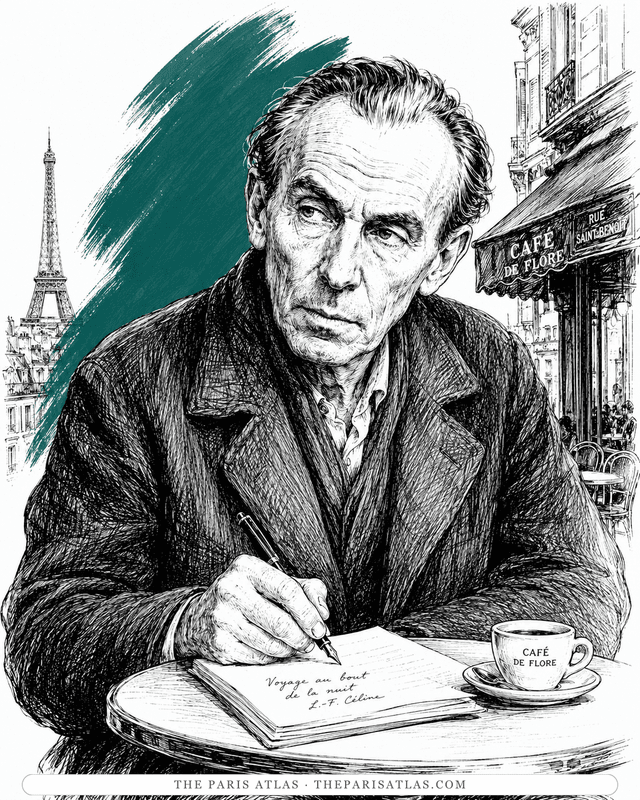
Louis-Ferdinand Céline
The doctor of the Paris slums who wrote the century's blackest, funniest novel — and changed the sound of French prose.
View author