
The Comte de Rochefort
The man of Meung: the cardinal's equerry with a scar on his temple, who steals d'Artagnan's letter in the first chapter and arrests him in the last.
To serve the cardinal and to avoid, as long as possible, the young Gascon who keeps trying to fight him.
The book

At a glance
- Equerry to Cardinal Richelieu
- A scar on his temple
Who they are in the book
Spoiler-freeRochefort is the stranger in the violet doublet who laughs at d'Artagnan's horse at the inn in Meung, has him beaten, and takes the letter to Tréville out of his doublet. He is not named until the last chapter, and for most of the book d'Artagnan knows him only as the man with the scar on his temple. He is the cardinal's equerry and Milady's contact; he arrives at the Béthune convent minutes after she has poisoned Constance.
How The Comte de Rochefort Is Portrayed
- The man of Meung, Chapter IA gentleman of forty or forty-five in a violet doublet, who rarely laughs, mocks the yellow pony from an inn window and, when d'Artagnan draws, has the host's men beat him senseless.
- The scar, Chapters VIII and XBonacieux describes him: a noble of lofty carriage, black hair, swarthy complexion, piercing eye, white teeth and a scar on his temple. D'Artagnan cries out that it is his man of Meung.
- At Béthune, Chapter LXIThe chapter ends on spurs on the stairs and a man in the doorway; Milady cries out with joy. He is her brother, she has just told Constance.
- The arrest and the handshake, Chapter LXVII and epilogueHe arrests d'Artagnan in the king's name on the road to La Rochelle and, at the cardinal's order, greets him as a friend. In the epilogue they fight three times, d'Artagnan wounds him three times, and they embrace.
If you like The Three Musketeers


If you like Alexandre Dumas
Explore authors with a similar voice, perspective, and influence.
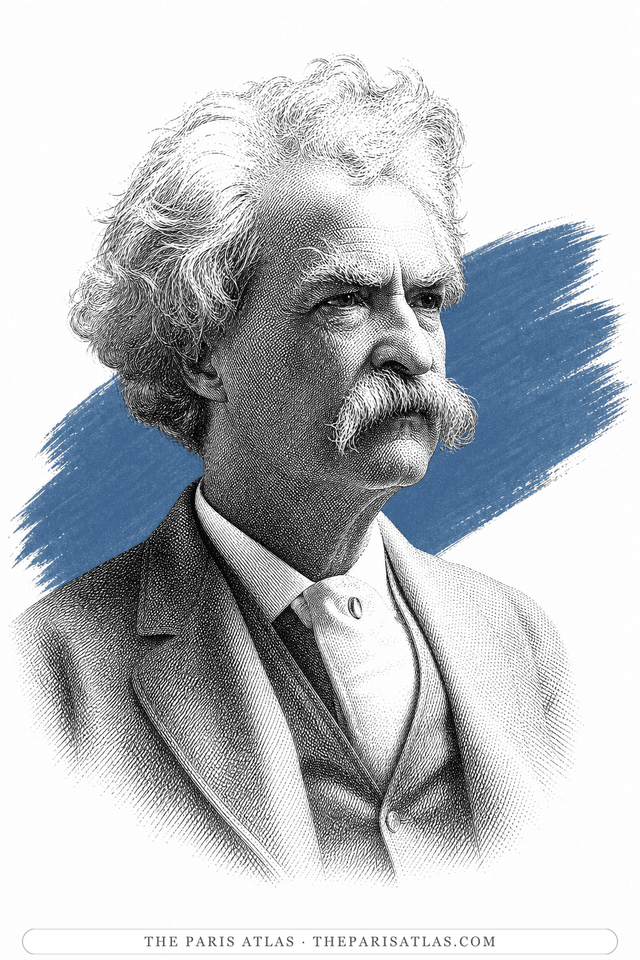
Mark Twain
The Missouri newspaperman who became America's most famous writer, and whose first book made its reputation partly out of Paris: in 1867 he arrived with a shipload of American tourists, renamed his guide Ferguson, watched the high-kicking can-can through his fingers and wrote it all down. He kept coming back — and was living in Paris in the mid-1890s, broke, while finishing the novel he considered his best, Personal Recollections of Joan of Arc.
View author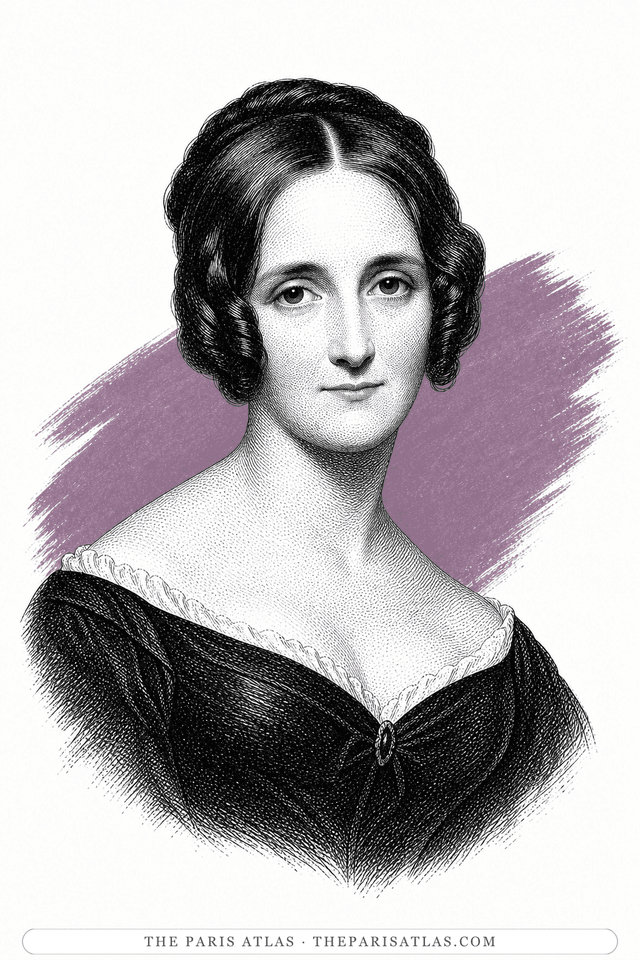
Mary Shelley
The author of Frankenstein, who first saw Paris at sixteen as a runaway. In the summer of 1814 she crossed from England to Calais with the poet Percy Bysshe Shelley and her stepsister Claire Clairmont, spent a week trapped in an expensive Paris hotel with no money, then bought a donkey and walked south-east across a France still wrecked by the Napoleonic wars. That journey became her first published book. Two years later, on a lake in Switzerland, she began her second.
View author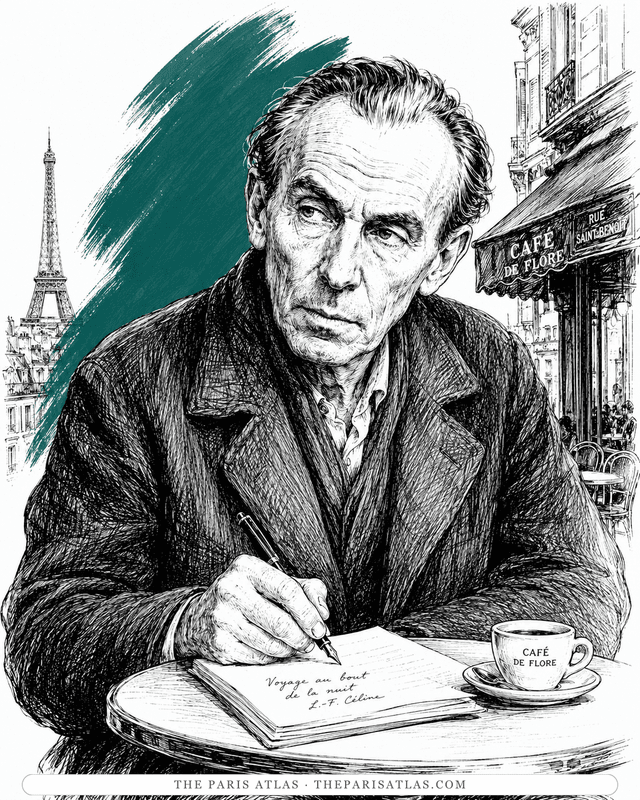
Louis-Ferdinand Céline
The doctor of the Paris slums who wrote the century's blackest, funniest novel — and changed the sound of French prose.
View author