
Ivan Kilgas
Kilgas is a Latvian prisoner and skilled bricklayer who works beside Shukhov.
The book

Who they are in the book
Spoiler-freeKilgas is a Latvian prisoner and skilled bricklayer who works beside Shukhov. He is strong, capable, humorous, and comparatively well supplied because he receives parcels. His practical competence makes him one of Shukhov’s closest peers at the work site. He survives the day and returns with the squad.
If you like One Day in the Life of Ivan Denisovich


If you like Aleksandr Solzhenitsyn
Explore authors with a similar voice, perspective, and influence.
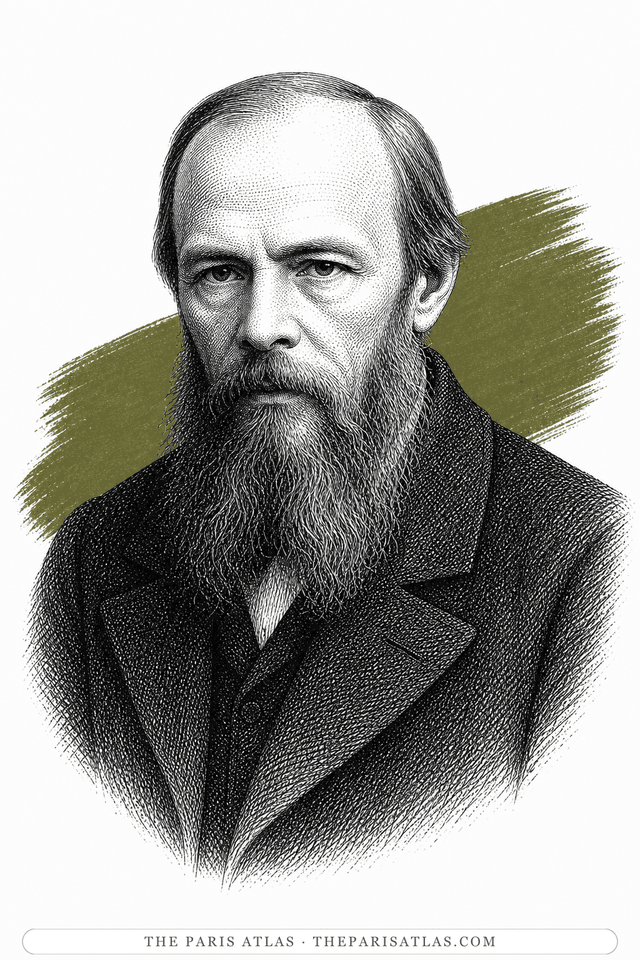
Fyodor Dostoevsky
The Russian novelist who came to Paris twice in the 1860s, hated it with unusual precision, and wrote the result up as Winter Notes on Summer Impressions, a short, savage account of the French bourgeoisie that stands as the sharpest case ever made against the city by a writer passing through it.
View author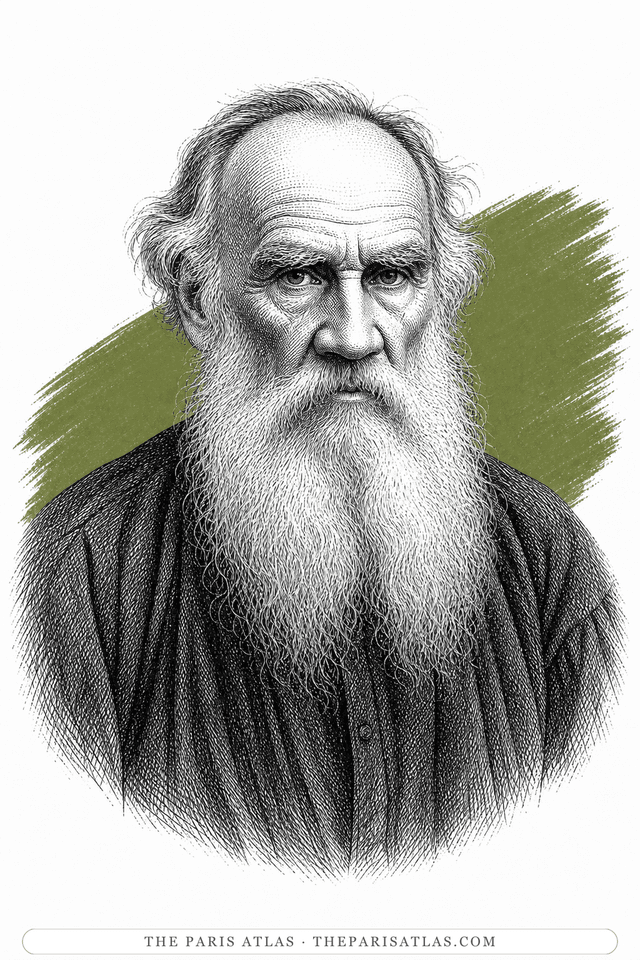
Leo Tolstoy
Russian novelist who wrote War and Peace and Anna Karenina, then renounced the life that produced them. He spent six weeks in Paris in 1857, and on one April morning went to watch a man beheaded in the street — an hour he said destroyed his belief in progress and in the state, and which he was still writing about twenty-two years later.
View author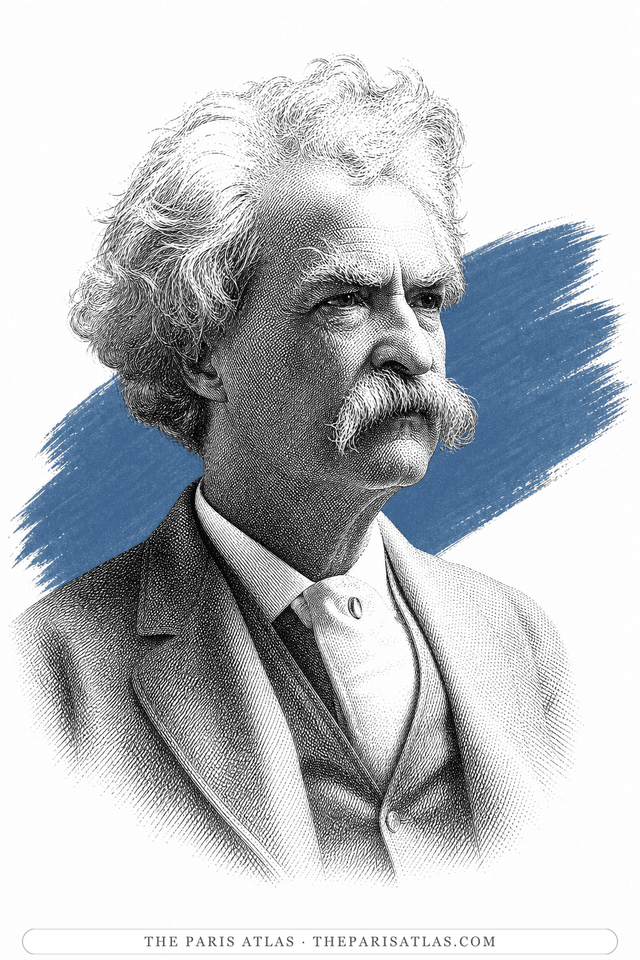
Mark Twain
The Missouri newspaperman who became America's most famous writer, and whose first book made its reputation partly out of Paris: in 1867 he arrived with a shipload of American tourists, renamed his guide Ferguson, watched the high-kicking can-can through his fingers and wrote it all down. He kept coming back — and was living in Paris in the mid-1890s, broke, while finishing the novel he considered his best, Personal Recollections of Joan of Arc.
View author