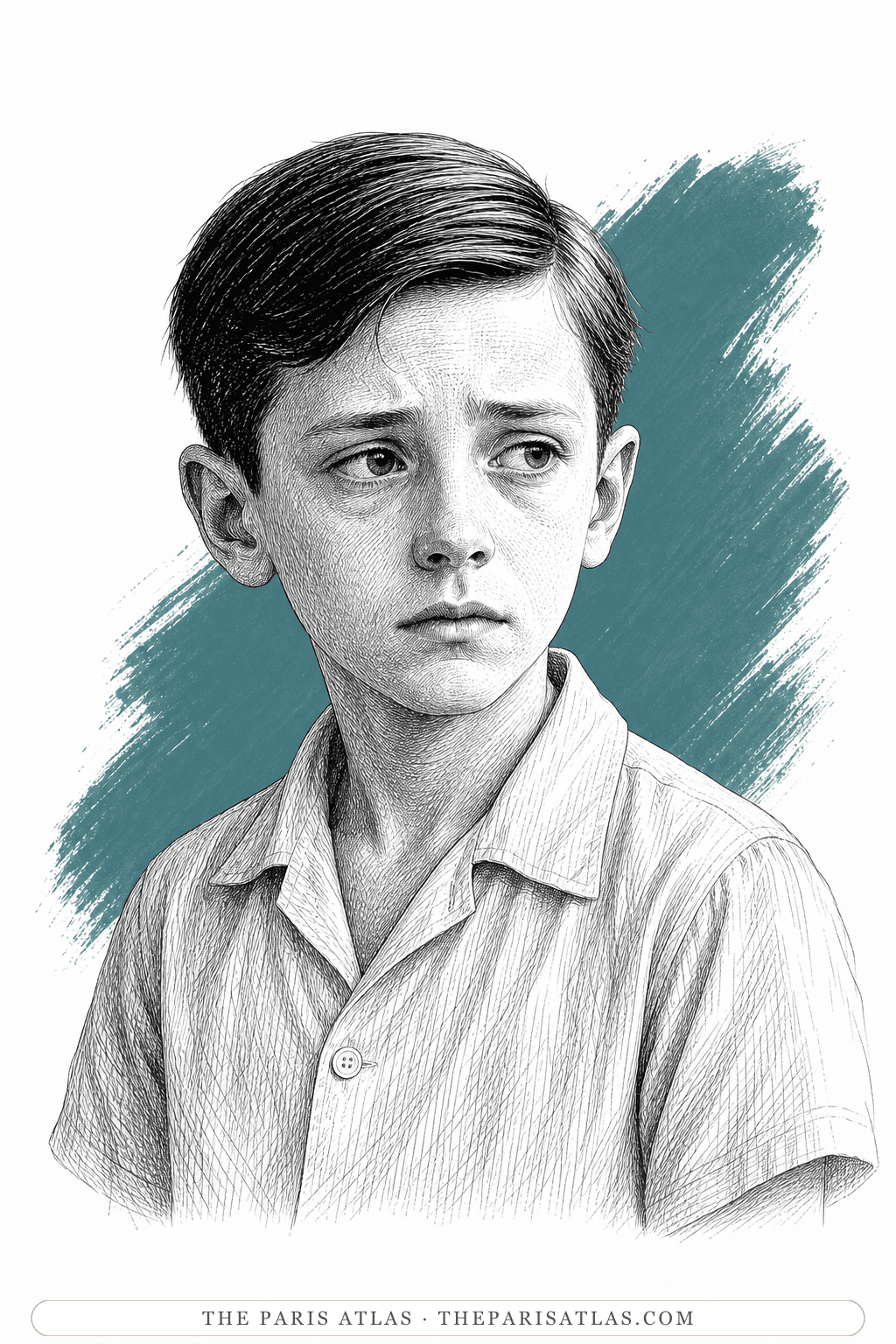
Pierrot Quincey
Jackson's twin and fellow runaway, a child trying to escape adult upheaval.
To escape family upheaval and recover safety with his twin.
The book

At a glance
- Nine
- Jackson Quincey
- Lola Quincey
Who they are in the book
Spoiler-freePierrot is Jackson's twin and Lola's younger brother. He arrives at the Tallis estate because his parents are separating.
He participates in Briony's failed play and in the twins' attempt to walk away from a household that has given their distress no stable place.
How Pierrot Quincey Is Portrayed
- Individual twinThe profile keeps him distinct within a paired role.
- Reluctant performerBriony's play cannot contain his distress.
- Shared letterThe boys try to explain their flight.
- Night pathRunning away turns domestic tension into danger.
The search for the twins becomes part of the circumstances around the assault. Pierrot later remains part of the extended family Briony revisits.
If you like Atonement


If you like Ian McEwan
Explore authors with a similar voice, perspective, and influence.
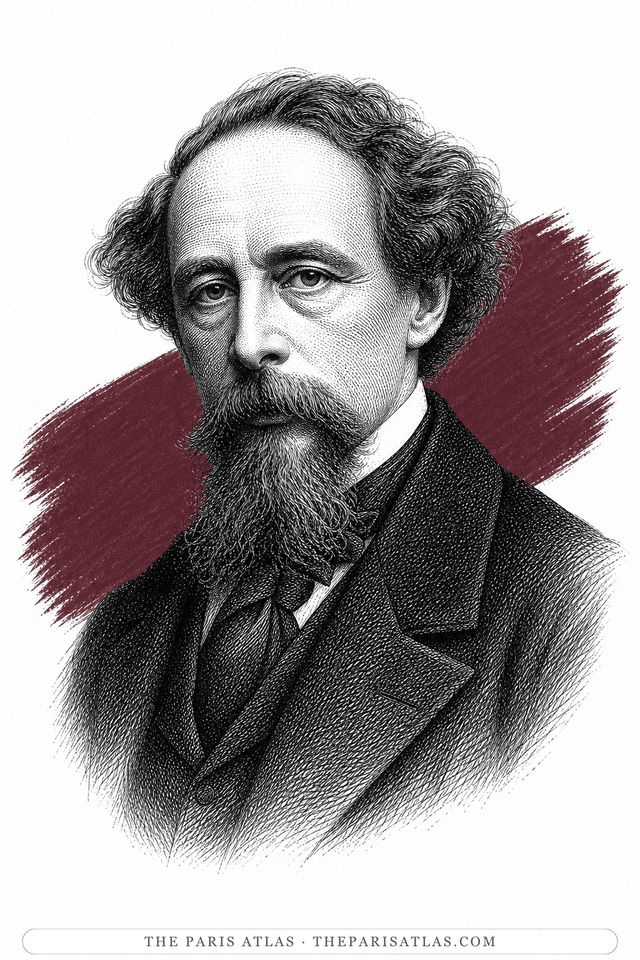
Charles Dickens
The most popular English novelist of the nineteenth century, who was never a Paris resident in the ordinary sense but kept coming back for twenty-five years: one winter in a rented mansion on the rue de Courcelles, a second winter on the Champs-Élysées writing Little Dorrit, repeated compulsive visits to the Paris Morgue — the riverside building where the city displayed its unidentified dead to the public — and a novel of the French Revolution, A Tale of Two Cities, that has shaped how English readers picture Paris ever since.
View author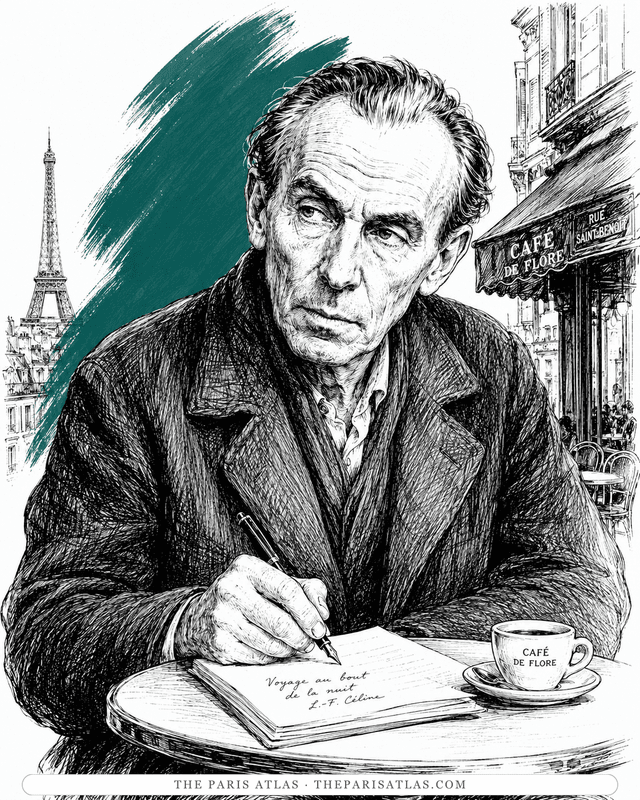
Louis-Ferdinand Céline
The doctor of the Paris slums who wrote the century's blackest, funniest novel — and changed the sound of French prose.
View author
Martha Gellhorn
War correspondent who covered the Spanish Civil War, D-Day, and conflicts across five more decades; Hemingway's third wife, 1940–1945.
View author