
Count László de Almásy / the English patient
The burned, unidentified patient whose desert memories reveal an affair, a dead woman, and wartime collaboration.
To recover Katharine and preserve a private world he believes should stand outside national claims.
The book

At a glance
- Count László de Almásy
- Hungarian
- Desert explorer and cartographer
- Hana's last patient
Who they are in the book
Spoiler-freeThe patient lies wrapped in bandages at Villa San Girolamo, speaks English, and possesses a heavily altered copy of Herodotus. His burns have removed ordinary visual evidence of identity. Hana accepts the name the hospital gave him, while Caravaggio listens for what the voice and memories conceal.
He is Count László de Almásy, a Hungarian desert explorer. Before the war he maps North Africa with an international group and begins an affair with Katharine Clifton. He imagines the desert as a place beyond nations, then uses its routes to help the German agent Eppler when national authorities block his effort to reach Katharine.
Ondaatje borrows the name and desert context from a real Hungarian explorer, but the affair and central private history are fictional. The character is not a reliable biography of the historical Almásy or the film's Ralph Fiennes figure.
How Count László de Almásy / the English patient Is Portrayed
- Burned beyond recognitionHis body is largely immobile and covered with bandages; the novel treats the injuries directly but does not turn them into a fixed face.
- A voice taken as EnglishAccent and fluent speech encourage the hospital name even though his nationality is Hungarian.
- A Herodotus filled with additionsMaps, letters, notes, and pasted fragments turn one printed history into his portable archive.
- Exact desert knowledgeHe remembers winds, routes, rock formations, water, and exploration records with professional precision.
- Dependent on morphineHana manages his pain, and Caravaggio uses the drug to draw out a less guarded account.
- Identity held in fragmentsBody, name, papers, accent, book, and memory point in different directions until Caravaggio assembles them.
After Geoffrey's crash, Almásy leaves the injured Katharine in the Cave of Swimmers and cannot return for years. He later guides Eppler across the desert, obtains a plane, finds Katharine dead, and is burned during the flight away.
The book identifies him but does not end with Hana deliberately killing him. Its opening places the villa during the months before his death; the final movement turns instead to Kip and Hana's separate futures.
If you like The English Patient


If you like Michael Ondaatje
Explore authors with a similar voice, perspective, and influence.
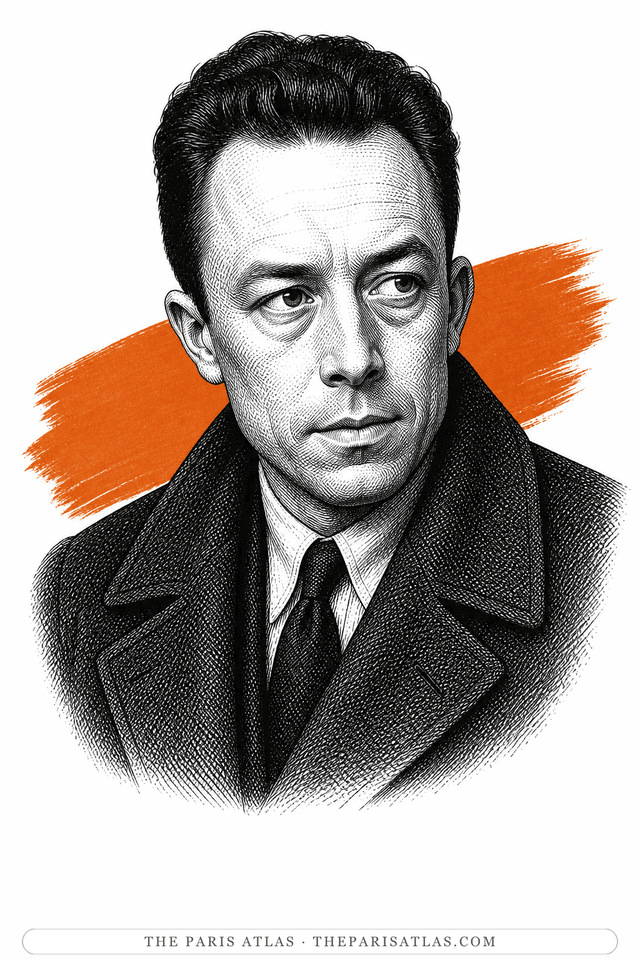
Albert Camus
French Algerian novelist, essayist, journalist and playwright who used the absurd and revolt to ask how people should live without false consolation.
View author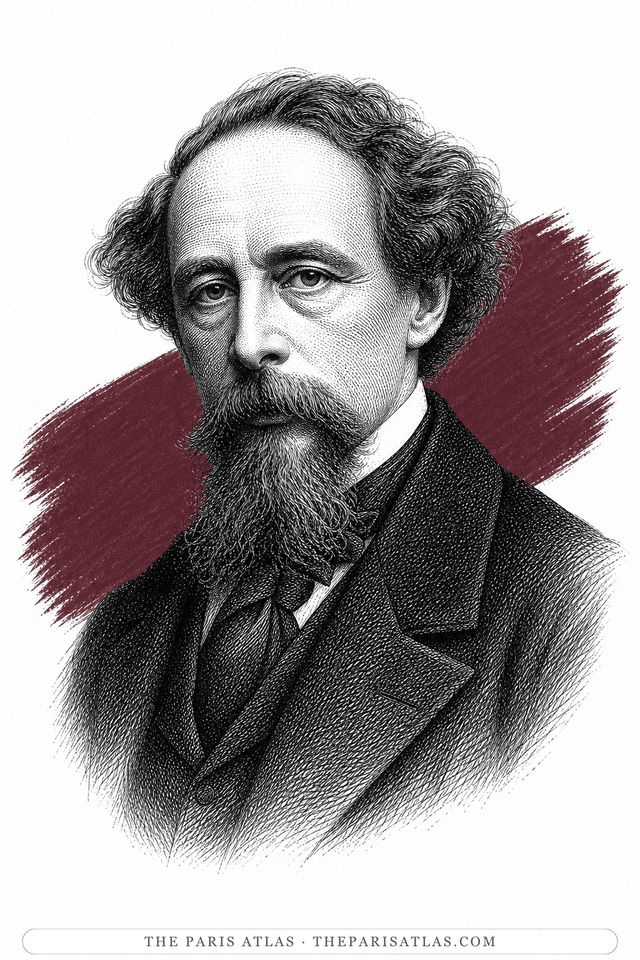
Charles Dickens
The most popular English novelist of the nineteenth century, who was never a Paris resident in the ordinary sense but kept coming back for twenty-five years: one winter in a rented mansion on the rue de Courcelles, a second winter on the Champs-Élysées writing Little Dorrit, repeated compulsive visits to the Paris Morgue — the riverside building where the city displayed its unidentified dead to the public — and a novel of the French Revolution, A Tale of Two Cities, that has shaped how English readers picture Paris ever since.
View author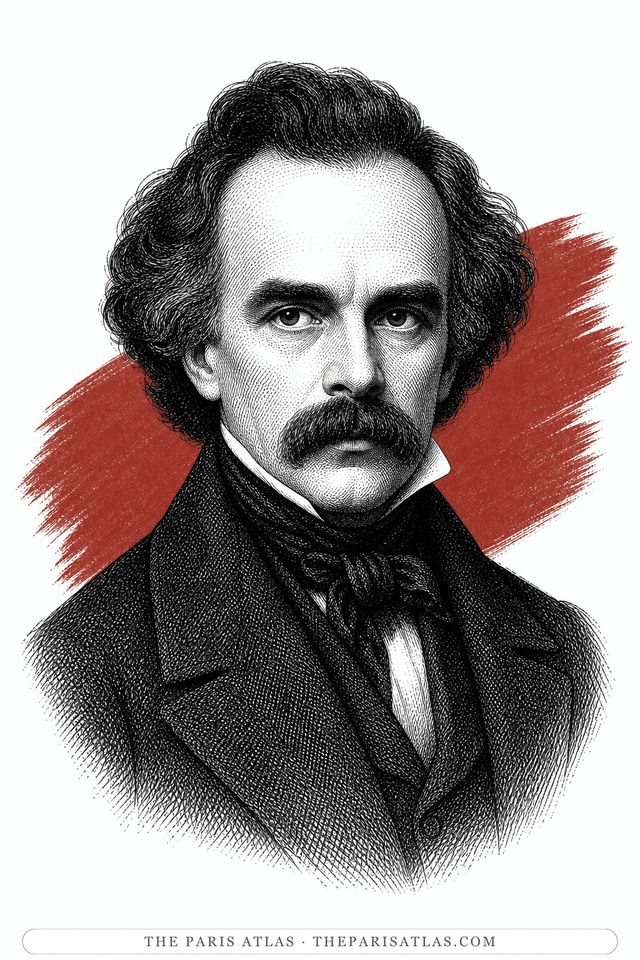
Nathaniel Hawthorne
Author of The Scarlet Letter, who passed through Paris for one week in January 1858 on his way from the American consulate at Liverpool to Italy — and wrote it all down. He found the city more magnificent than London and colder than anything in America: "new, bright, magnificent, and desperately cold." He left saying he was quite tired of Paris and longed for home.
View author