
Hana
The twenty-year-old Canadian nurse whose care for one patient creates both a refuge and a retreat from her own grief.
To keep the patient alive and make a small, livable world in which care is not immediately defeated by war.
The book

At a glance
- 20
- Canadian
- Military nurse
- Patrick
Who they are in the book
Spoiler-freeHana is only twenty but has spent years nursing badly wounded soldiers through Italy. She stays at the villa when the hospital moves north because the burned patient cannot travel safely and because caring for one person gives her an alternative to the endless sequence of dying men.
Her father Patrick has died from burns in Europe, and she has ended a pregnancy during the war. Both losses shape the withdrawn life she makes in the villa. She works in the garden, reads aloud, changes rooms, removes mirrors, and treats daily care as a structure that can keep grief from becoming shapeless.
Her relationship with Kip lets her imagine a future based on attention rather than nursing duty. Hiroshima breaks that future. Hana survives, but the novel does not offer a reunion or a simple account of recovery.
How Hana Is Portrayed
- Twenty years oldHer youth is repeatedly set against the experience accumulated in military hospitals.
- A nurse who leaves the uniform behindAt the villa, professional routines mix with garden work, found clothing, reading, and an improvised household.
- Mirrors removedShe gathers the villa's mirrors away, avoiding an image of herself while focusing on the bodies of others.
- Hands trained by careWashing, feeding, bandaging, measuring morphine, and turning pages define how other characters first know her.
- Movement between rooms and gardenShe refuses one fixed domestic place and makes the damaged building usable through repeated work.
- Grief expressed indirectlyPatrick, the abortion, and dead soldiers appear through memory and behavior rather than one explanatory confession.
Kip leaves after Hiroshima, and they do not reunite. Hana remains connected to him through memory. The closing pages imagine a small physical correspondence between their separate lives rather than a shared future.
If you like The English Patient


If you like Michael Ondaatje
Explore authors with a similar voice, perspective, and influence.
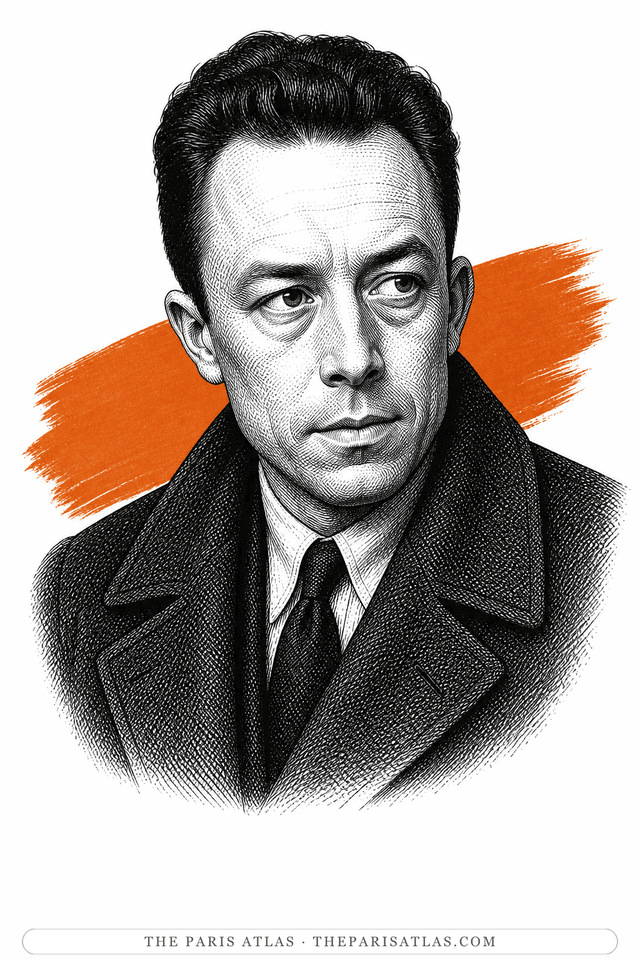
Albert Camus
French Algerian novelist, essayist, journalist and playwright who used the absurd and revolt to ask how people should live without false consolation.
View author
Charles Dickens
The most popular English novelist of the nineteenth century, who was never a Paris resident in the ordinary sense but kept coming back for twenty-five years: one winter in a rented mansion on the rue de Courcelles, a second winter on the Champs-Élysées writing Little Dorrit, repeated compulsive visits to the Paris Morgue — the riverside building where the city displayed its unidentified dead to the public — and a novel of the French Revolution, A Tale of Two Cities, that has shaped how English readers picture Paris ever since.
View author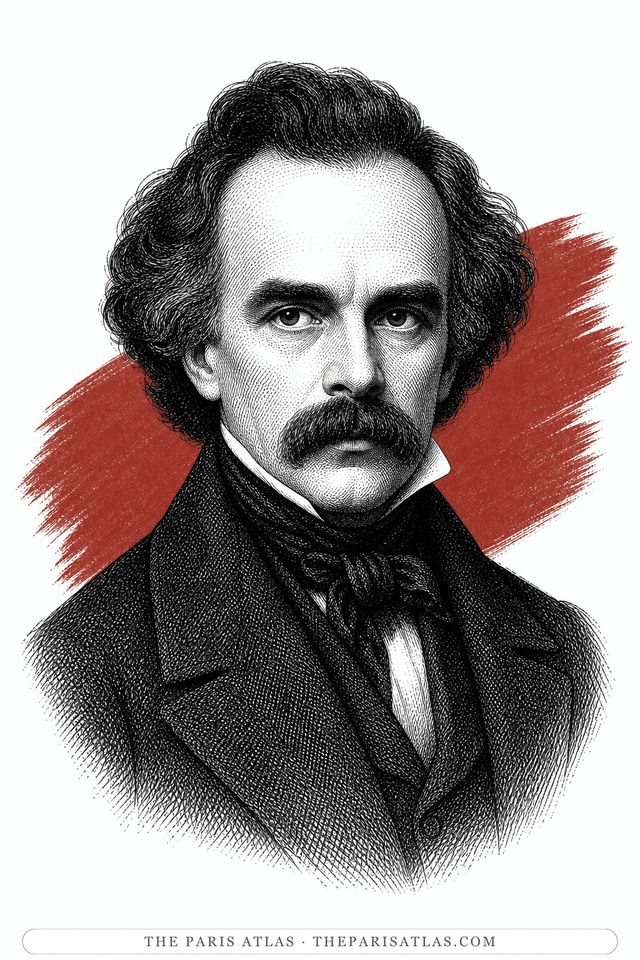
Nathaniel Hawthorne
Author of The Scarlet Letter, who passed through Paris for one week in January 1858 on his way from the American consulate at Liverpool to Italy — and wrote it all down. He found the city more magnificent than London and colder than anything in America: "new, bright, magnificent, and desperately cold." He left saying he was quite tired of Paris and longed for home.
View author